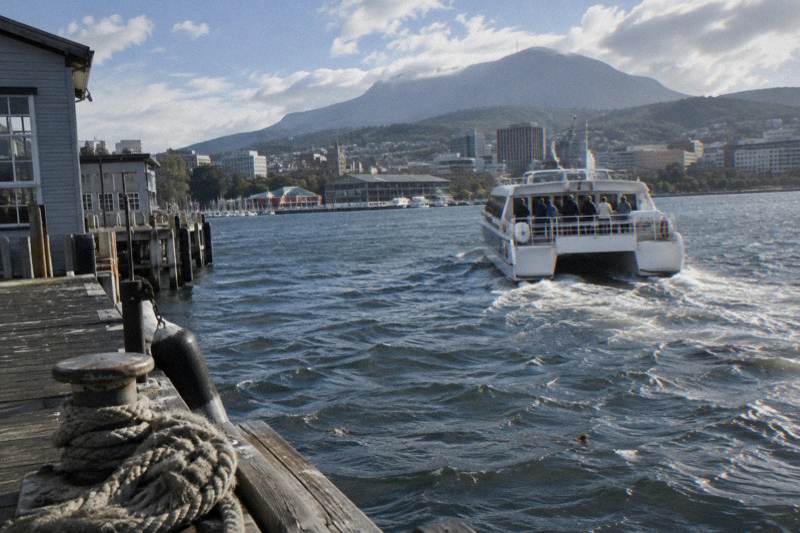
Mona Ferry Guide: The Boat Ride To The Museum Of Old And New Art
The Mona ferry is the museum's own boat from Brooke Street Pier: about 30 minutes each way, from A$32, with the museum ticket bought separately. Here is how it works and how it connects to the Derwent cruises leaving the same pier.
Short answer
The Mona ferry departs Brooke Street Pier and takes about 30 minutes each way, from A$32, with the return fare the same as one way. Children under 4 travel free but need a ticket, and museum entry is a separate ticket. It is the museum's own ferry, not one of the Derwent cruises covered on this site.
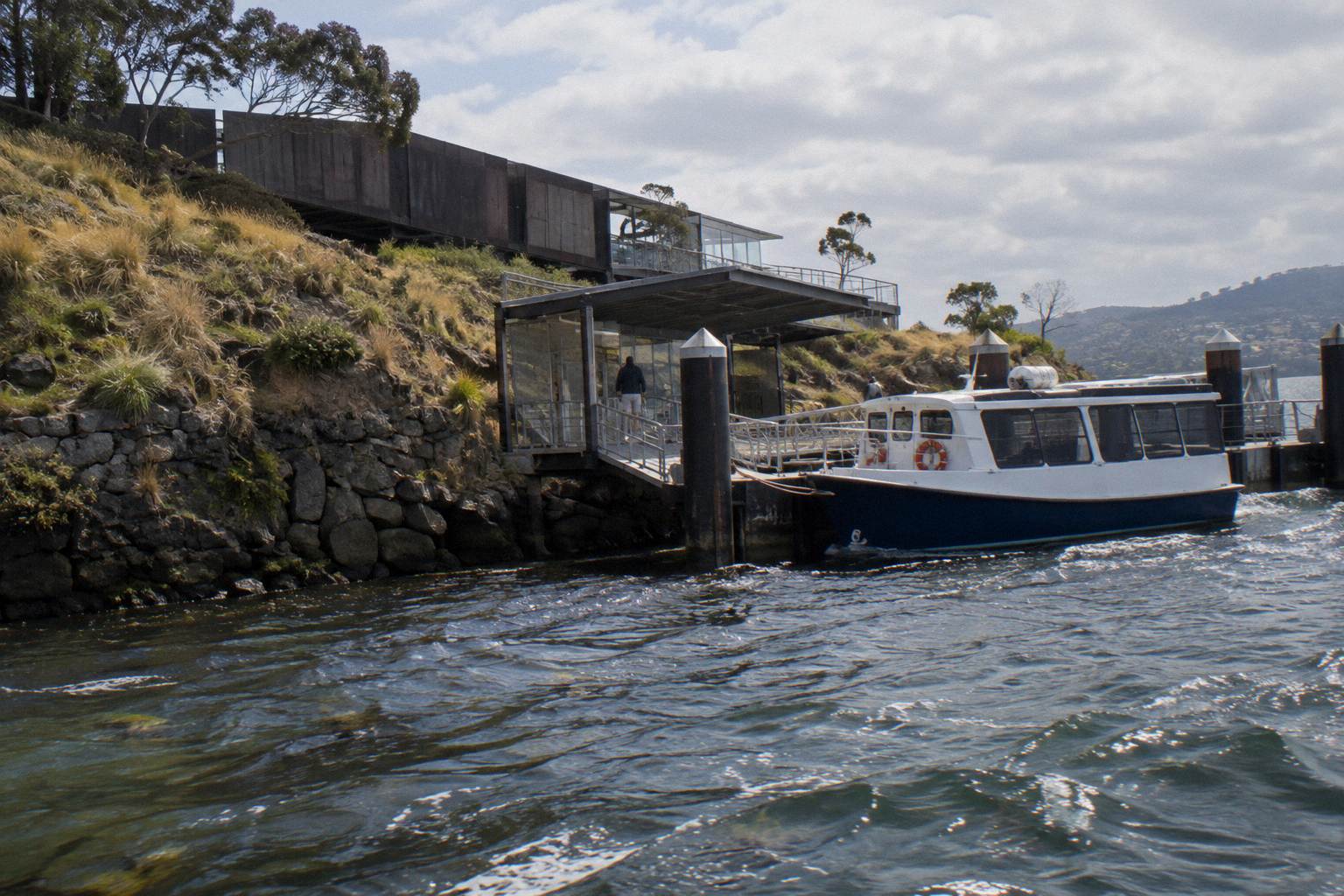
The Museum of Old and New Art sits on the Berriedale peninsula north of Hobart, and its ferry crosses the Derwent from Brooke Street Pier. The crossing is run by the museum itself, which matters more than it first sounds: the fare structure, the boarding arrangements and the accessibility details all come from the museum's own pages, and the ferry is a transport service rather than a sightseeing product. That distinction shapes this whole guide. The site you are reading, Hobart River Cruises, covers the Derwent cruises that leave the city's piers, and the Mona ferry is the bridge between the two worlds: same pier, different purpose. If your question is what time the ferry to Mona leaves, that timetable is loaded dynamically on the museum's site rather than printed here, so this page concentrates on the things that do not move: the fare, the pier, the boat's accessibility and how a museum day pairs with a river cruise.
There is a practical reason a visitor ends up researching both at once. Hobart's waterfront is compact, and a single morning walk along Franklin Wharf passes the departure points for nearly every boat product in the city: the ferry and the Peppermint Bay catamarans at Brooke Street Pier, Pennicott's booking centre at the Dock Head Building, the historic boats at Murray Street Pier. A traveller who came for the museum often leaves wanting time on the water, and a traveller who booked a cruise often discovers the ferry as a bonus. This guide treats the two as one planning problem rather than two unrelated purchases.
What Is The Mona Ferry And Who Runs It?
The Mona ferry is the Museum of Old and New Art's own boat service across the Derwent, departing Brooke Street Pier and taking about 30 minutes each way. It is not a sightseeing cruise and not one of the bookable tour products covered on this site. The fare starts at A$32, and museum entry is a separate ticket that the ferry fare does not include.
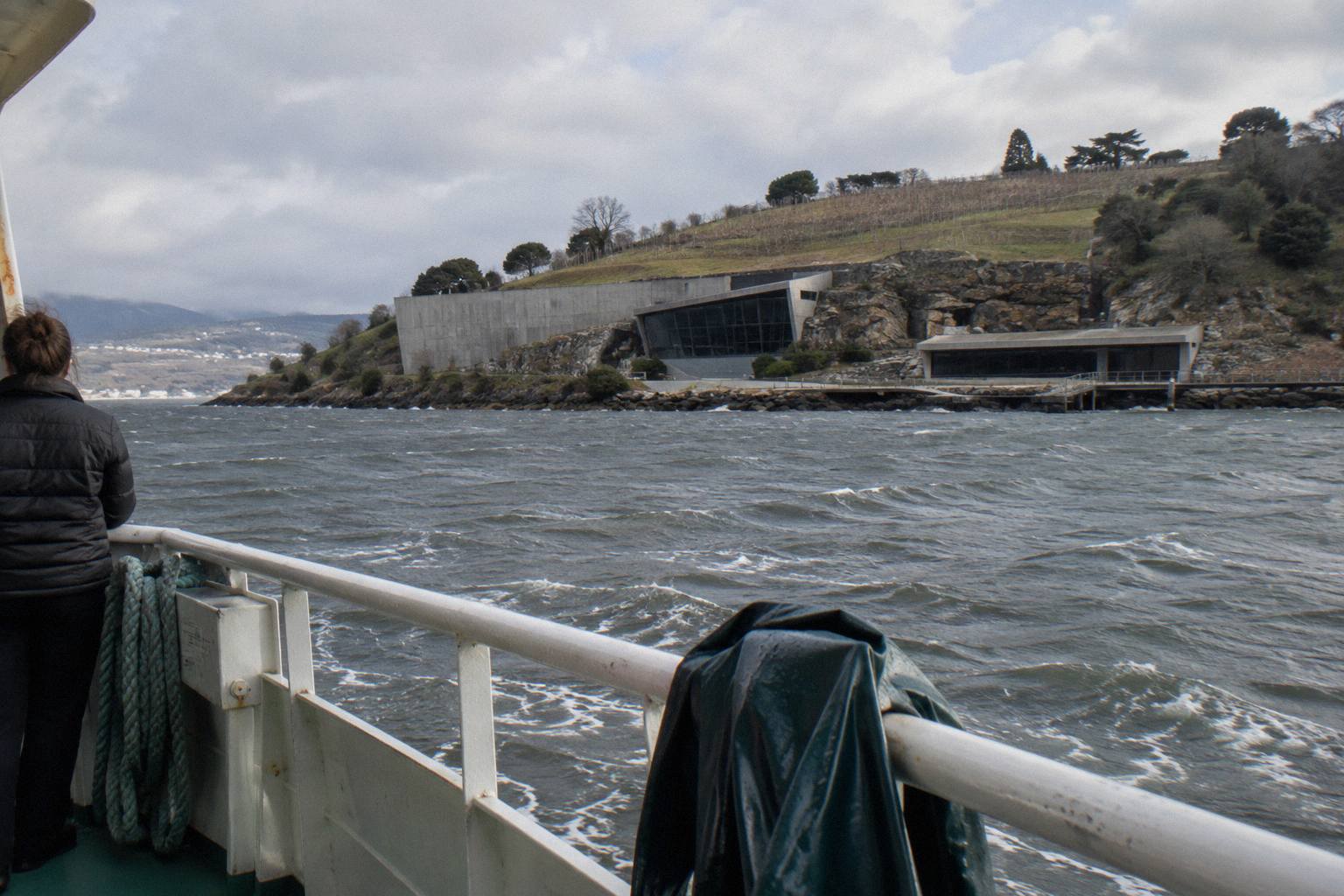
The museum describes the ferry plainly: it departs Brooke Street Pier, it takes about 30 minutes each way, and it exists to move visitors between the city waterfront and the museum's Berriedale site. The museum's own site is the source for every ferry figure in this guide, because the museum, not a tour operator, runs the service. That single fact explains several quirks that catch visitors out. The fare has no concessions, the return ticket costs the same as a one-way, and children under 4 travel free but still need a ticket. None of that follows the logic of a commercial cruise, because the ferry is not one.
The ownership question also determines where you go when something goes wrong. A cruise booking is made with an operator whose cancellation terms govern the purchase; the ferry is the museum's own service, so timetable changes, fare changes and boarding conditions are all set by the museum and published on its pages. The operator notes, for example, that a different timetable applies from 3 December, the kind of quiet seasonal adjustment a transport service makes without ceremony. Anyone booking months ahead should recheck the live timetable close to travel, for exactly that reason.
Why does a cruise site have a page about it? Because the ferry is a boat on the Derwent, and it leaves from the same pier as two of the cruises on this site's roster. Brooke Street Pier, at 12 Franklin Wharf on Sullivans Cove, is the departure point for the River Derwent Guided Cruise On A Catamaran, the Peppermint Bay Lunch Cruise and the Mona ferry. A traveller planning a Mona day is one pier away from a cruise, and a traveller finishing a morning cruise is standing at the ferry's front door. The two decisions belong in the same conversation.
One scope note, stated once: the ferry is a museum ferry, and the bookable products on this site are the Derwent cruises. There is no standalone MONA sightseeing cruise among the tours covered here, and this page does not describe or price one. What follows is the ferry on its own terms, then the pier it shares.
How Much Does The Mona Ferry Cost?
The fare structure is unusual enough to be worth reading twice. Most advance bookings carry a A$3.50 transaction fee, which means a family booking online should factor that fee into the total rather than discovering it at checkout. Children under 4 are free, but the museum still requires a ticket for them, so add the child to the booking even at zero cost. And the return fare matching the one-way fare means there is no saving calculation to do: you simply buy the crossing.
| Item | Operator's stated figure |
|---|---|
| Adult fare | from A$32 |
| Return fare | same as one way |
| Concessions | none |
| Children under 4 | free, ticket required |
| Transaction fee | A$3.50 on most advance bookings |
| Museum entry | separate ticket |
| Crossing time | about 30 minutes each way |
What the fare does not buy is the museum. Entry is a separate ticket even with a ferry ticket, a point the museum makes explicitly and which catches out visitors who assume the boat price bundles the gallery. The museum's entry price and opening hours are not stated here; check the museum's own pages for those, since they sit outside the ferry figures this guide reports. If you are weighing the ferry against the cost of a cruise, the comparison is not like for like: a cruise ticket is the product, while the ferry ticket is transport toward a second ticketed attraction.
The Posh Pit, the ferry's premium option, is covered in full further down this page; its price is not stated on the operator's page, so none is printed here. For a broader look at what Hobart's boat trips charge across the board, the Hobart cruise prices guide sets out the verified operator figures for the Derwent products, including Pennicott's Iron Pot price of A$150 adult and A$130 child for ages 1 to 16, the only roster cruise with a published operator price of its own.
Where Does The Mona Ferry Leave From?
The ferry departs Brooke Street Pier, 12 Franklin Wharf, on Sullivans Cove. The same pier serves the River Derwent Guided Cruise On A Catamaran and the Peppermint Bay Lunch Cruise, with drop-off in front of the pier. For the catamaran cruise, boarding is level one, gate one, 15 minutes before departure.
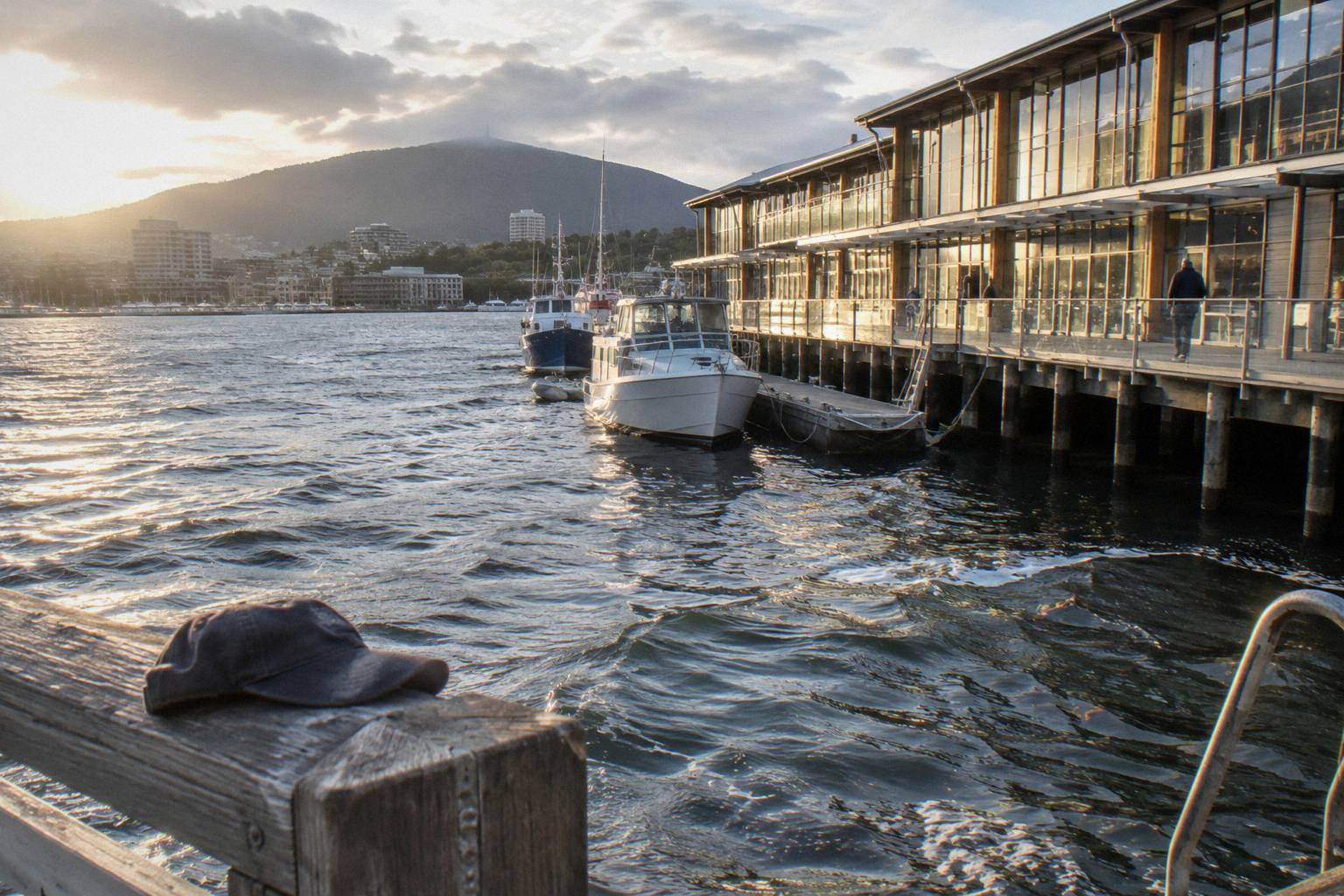
Brooke Street Pier is one of the most useful addresses on the Hobart waterfront for a boat day, precisely because three services share it. The ferry leaves for the museum; the catamaran cruise leaves for the Derwent; the Peppermint Bay boats leave for the channel. If you are staying central, you can reach all three on foot from the Sullivans Cove hotels and apartments without needing a car for the day. The Brooke Street Pier departures guide covers the pier in detail for anyone planning a multi-boat itinerary.
Parking is the usual waterfront question. The museum's own parking guide lists the multi-storey car parks at Argyle Street, Centrepoint, Market Place and Dunn Place for stays of three hours or more, with Argyle Street and Market Place roughly a 10 to 15 minute walk from the pier area. Accessible parking sits along Franklin Wharf, Salamanca Place and Castray Esplanade. Parking prices are not stated, so check the car park operators directly. Anyone combining a museum visit with a longer cruise should read the three-hours-plus condition carefully: a 5.5-hour Peppermint Bay day needs a full-day spot, not a short-stay one.
| Departure point | Services | Boarding note |
|---|---|---|
| Brooke Street Pier, 12 Franklin Wharf | Mona ferry, River Derwent catamaran cruise, Peppermint Bay Lunch Cruise | Catamaran: boarding level, gate one, 15 minutes before departure |
| Franklin Wharf (Dock Head Building) | Pennicott Iron Pot cruises | Booking centre next to the Constitution Dock lifting bridge |
| Murray Street Pier, 28 Morrison Street | Morning River Cruise, Historic Lunch Cruise | Hobart Historic Cruises departures |
This is where the ferry-versus-cruise decision becomes practical. The catamaran cruise, run by Peppermint Bay Cruises, shares the pier with the museum ferry, and its booking page lists the Shot Tower, Alum Cliffs and Iron Pot Lighthouse on its route, a proper sightseeing loop of the river's lower reaches. Its price is not stated; check the booking page. A morning on the catamaran followed by an afternoon ferry to the museum is a full Hobart water day built from a single pier. The catamaran also has three outdoor decks and two indoor levels with floor-to-ceiling windows, so the sightseeing happens whether or not the weather cooperates.
Whether that stacking works depends on the ferry's timetable, which the museum loads dynamically rather than publishing as a fixed sheet, and the operator notes a different timetable applies from 3 December. No departure time is printed here for that reason. Check the live timetable when you plan the pairing, and treat the two bookings as independent: the ferry ticket and the cruise ticket do not connect. If the morning slot does not line up, the fallback is simple, since the other piers are a short walk along the wharf, and several cruises run in the afternoon.
What Is The Posh Pit?
The concept is simple: an enclosed private space at the premium end of the boat, with its own bar service and a deck, aimed at visitors who want the crossing to feel like an occasion rather than a commute. The museum describes complimentary drinks and small food, and beyond that the details live on its own pages. Anyone with a dietary requirement should read the allergy notice closely: the ferry states it cannot cater for coeliac or severe allergies, and it wants 24 hours notice for dietary needs it can meet. That is a hard limit, not a guideline, and it applies to the Posh Pit as much as the main deck.
Is it worth the upgrade? Without a stated price, this guide cannot run the numbers, and it will not guess. The honest framing is a decision tree rather than a verdict. If the crossing is your only boat time in Hobart and you want comfort, the Posh Pit delivers a lounge experience on the water. If you are also taking one of the Derwent cruises, the marginal value drops, because the cruise itself is the comfort purchase. A traveller weighing that trade-off should read whether the Posh ferry option to Mona is worth it, which works through the same question in detail.
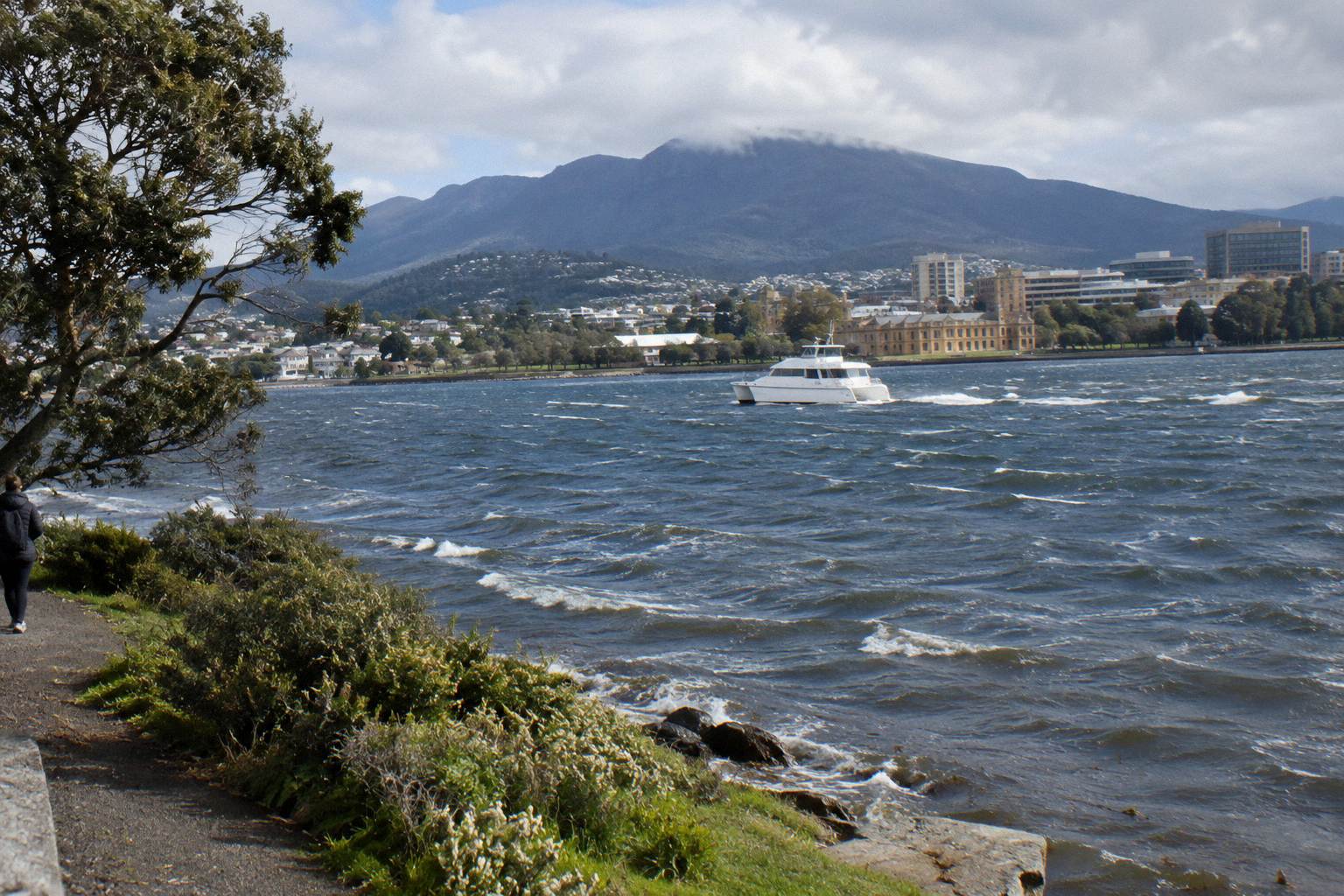
The 30-minute crossing length is the other variable in that calculation. A lounge, a bar and a private deck are easier to enjoy on a longer passage; on a half-hour hop, the value depends entirely on how much the occasion matters to you. Couples marking something, visitors on a short stopover who want every hour of Hobart to count, and anyone who simply prefers a quiet corner over a shared cabin are the natural audience. Everyone else can put the difference toward a cruise ticket instead.
One practical note for families: the Posh Pit is a private space, and the ferry's family pricing rules (children under 4 free with a ticket) are stated for the standard fare, not itemised for the Posh Pit. Ask the operator before booking if you are travelling with small children and want the lounge.
Is The Ferry Accessible, And What About The 99 Steps?
The ferry's lower deck is accessible for mobility aids and prams, with a bar and an accessible toilet on that level. Arrival at the museum involves 99 steps, but there is an accessible entrance via a tunnel, and onboard staff need to be told so the tunnel entrance is used. Prams are welcome on the lower deck.
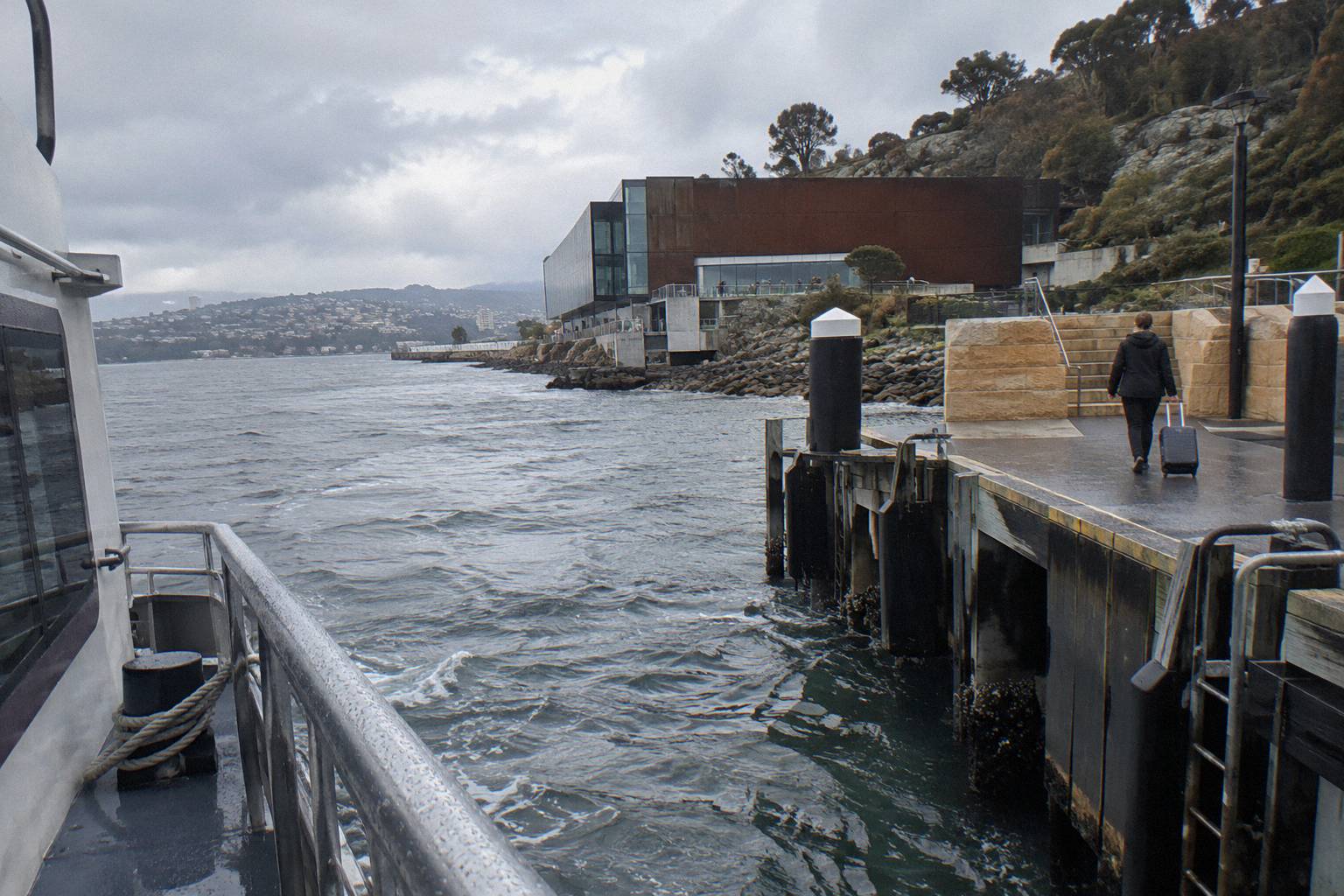
This is the section where the museum's own documentation earns its keep, because the ferry and the museum site are two different accessibility problems bolted together. The crossing itself is good news: the lower deck takes mobility aids and prams and has its own bar and accessible toilet, so the 30 minutes on the water is manageable for most travellers without any special arrangement.
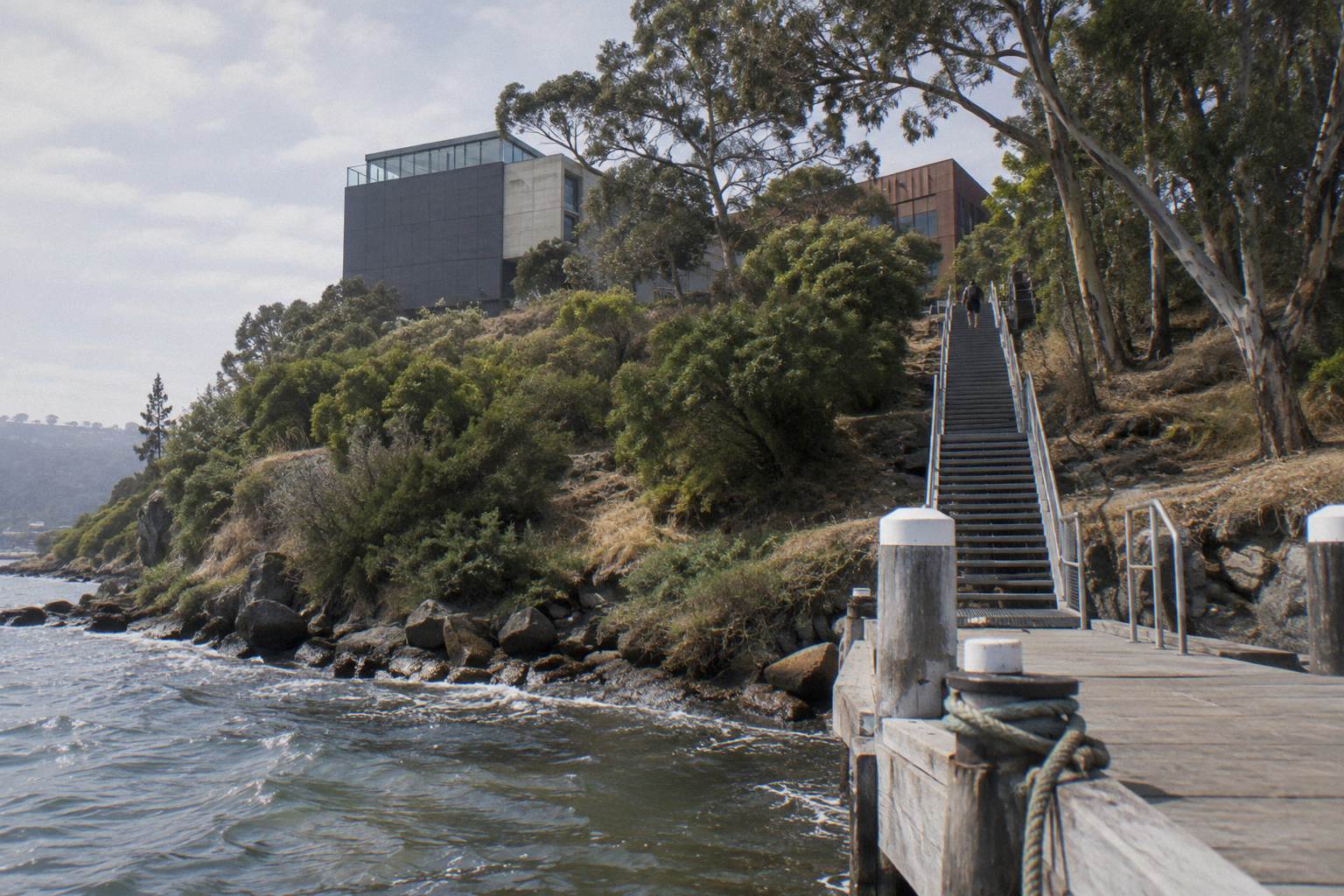
The arrival is the complication. The museum's dramatic entrance involves 99 steps up the hillside, which is fine for able-bodied visitors and a barrier for anyone who cannot climb them. The accessible alternative is an entrance via a tunnel, and the critical detail is that onboard staff need to be told, so that the boat berths and disembarks in a way that connects to the tunnel route. Tell the crew when you board, not when you arrive. That single piece of advance notice is the difference between a smooth arrival and an awkward one, and it costs nothing.
For comparison, the catamaran cruise that shares Brooke Street Pier states on its booking page that the vessel is wheelchair friendly on the main deck, with children, prams and service animals welcome and two indoor levels with floor-to-ceiling windows. That is the booking page's claim for that boat alone and is not extended to any other cruise here. The wheelchair facts for the Historic, seafood, yacht and Peppermint Bay Lunch cruises are not stated; ask the operators. Pennicott, for its part, publishes an accessibility guide for the Iron Pot cruise, though that vessel is not in the operator's list of named wheelchair-accessible boats, so call (03) 6234 4270 rather than assuming.
For a fuller treatment of accessible boating on the Derwent, including which claims are operator-verified and which are gaps, the Hobart cruise wheelchair access guide works through the whole roster. The short version for this page: the ferry's lower deck is the best-documented accessible deck on the water shared by this guide's subjects, and the 99 steps are the catch that comes with it.
Ferry Or Cruise: Which Derwent Trip Suits Your Day?
This is the decision the whole page builds toward. The ferry and the cruises are not competitors; they are different products on the same body of water. The ferry's job is to deliver you to a gallery. A cruise's job is the water: the Iron Pot cruise runs down the Derwent past Battery Point, Wrest Point Casino and the Shot Tower toward Storm Bay and Tasmania's oldest lighthouse, built by convicts in 1832. Its operator's price is A$150 adult, A$130 child for ages 1 to 16, and it carries a 4.9 rating across 248 reviews. The Morning River Cruise takes about an hour from Murray Street Pier, a short, low-commitment taste of the harbour. The River Derwent catamaran runs about 1.5 to 2 hours.
| Trip | Departs | Duration | The point of it |
|---|---|---|---|
| Mona ferry | Brooke Street Pier | about 30 min each way | transport to the museum |
| Morning River Cruise | Murray Street Pier | about 1 hour | a short harbour loop |
| River Derwent catamaran cruise | Brooke Street Pier | about 1.5 to 2 hours | guided river sightseeing |
| Iron Pot Lighthouse cruise | Franklin Wharf | about 2.5 hours | the river mouth and the lighthouse |
| Peppermint Bay Lunch Cruise | Brooke Street Pier | about 5.5 hours | a full day south to Woodbridge |
The stacking question follows naturally. Can you cruise and still make a ferry? Often yes, but it depends entirely on the ferry's live timetable, which this page does not print, and on the cruise's start time, which for everything except the Iron Pot cruise (10.00am December to April, 2.00pm daily) is a check-availability matter. The safe structure is a morning cruise and an afternoon museum slot, or the museum on one day and the water on the next.
There is also a taste question underneath the timetable. The ferry crossing is a means to an end, and travellers who want commentary, history and a close look at the river's landmarks will find it only on the cruises. The Iron Pot cruise includes live commentary from the skipper and the city's maritime past in its route story; the catamaran is a guided cruise by name. The ferry promises transport, a bar and a view from the deck, which is a perfectly good thing to want, just a different one.
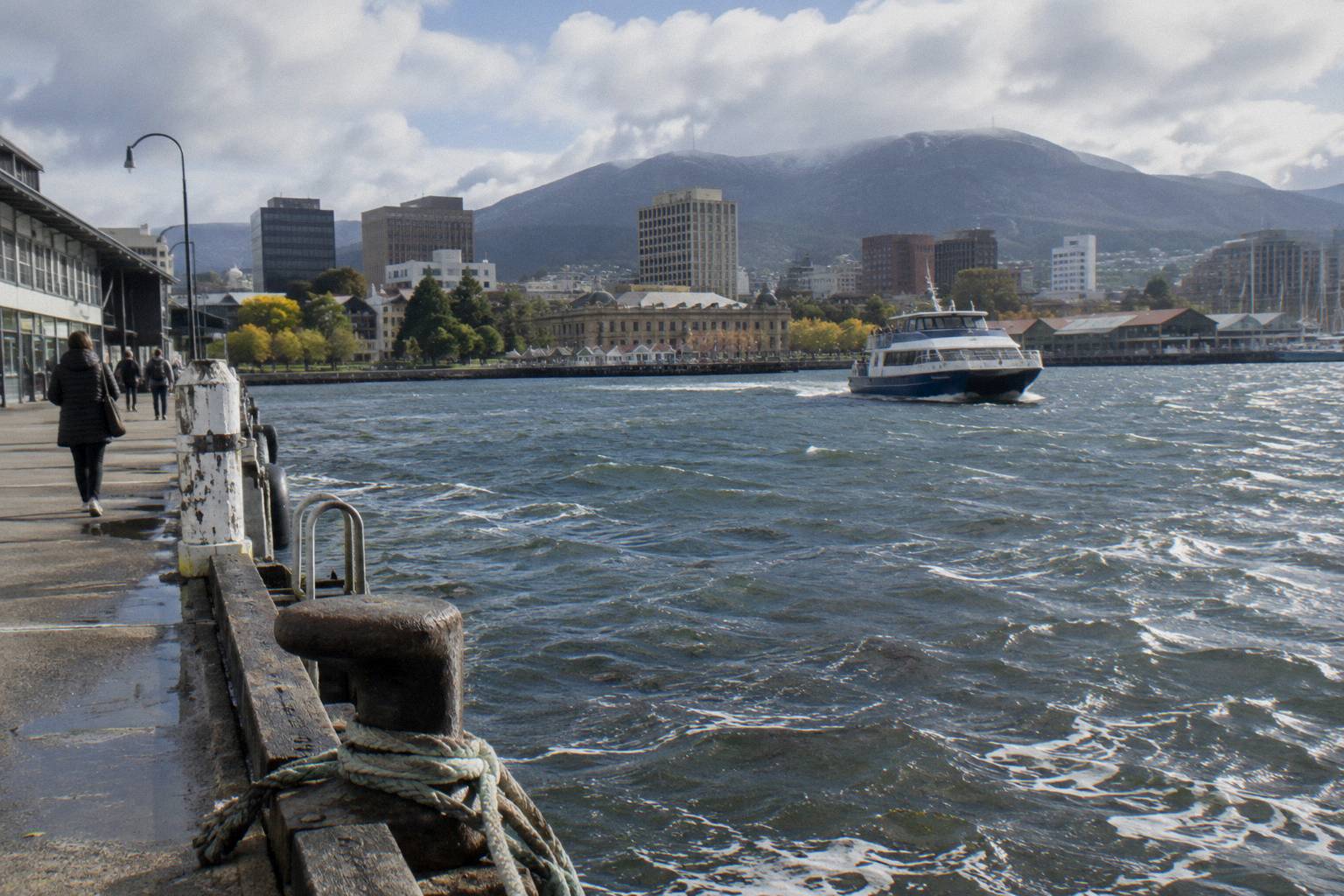
For the fuller water day, the Peppermint Bay Lunch Cruise runs about 5.5 hours from the shared pier down the Derwent and the channel to Peppermint Bay at Woodbridge, with lunch at the restaurant there. Peppermint Bay Cruises also runs its own Sunday Cruise And Lunch, departing the same pier at 10.30am on select Sundays for a leisurely 90-minute cruise down the D'Entrecasteaux Channel, at the operator's price of A$195 adult, A$125 child; that Sunday figure belongs to the operator's own Sunday product and not to the roster's 5.5-hour lunch cruise, whose price is not stated. The operator's site carries the Sunday season dates, live from Sunday 8 November.
When Should You Plan The Crossing?
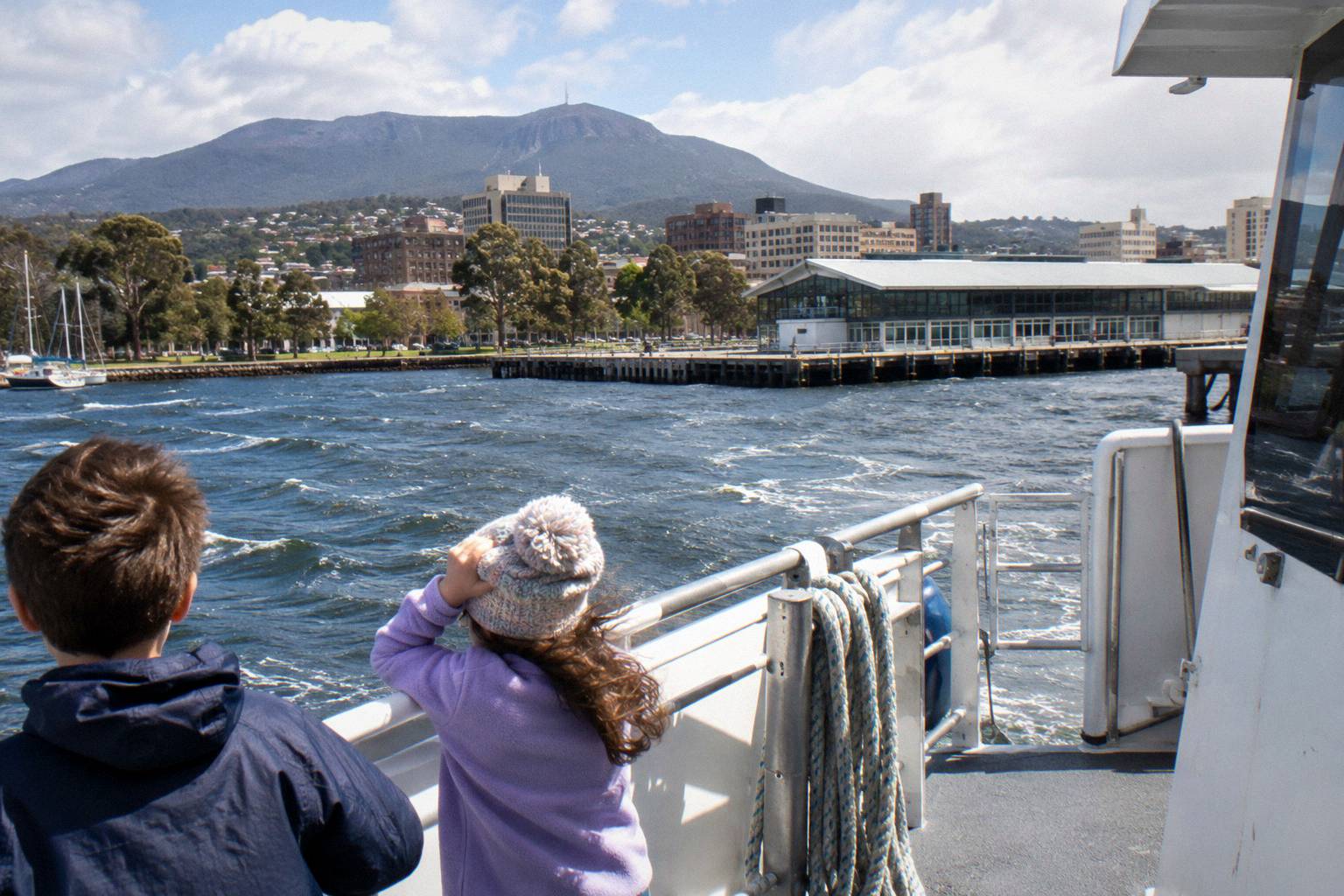
Any month works for the crossing itself, since the ferry runs year-round, but Hobart's land-station averages frame the day: summer mean maximums sit at 21.8 degrees in January and February, while July averages 11.9. Rainfall averages are modest, from 38.6mm in February to 61.8mm in October, and these are land figures, not conditions on the water.
The weather numbers come from the Bureau of Meteorology's Hobart station at Ellerslie Road, records running from 1882, and they describe the city, not the river. That caveat matters: a mild afternoon on land can still be a cold, blustery crossing on open water, and the operator of the Iron Pot cruise explicitly advises dressing children warmly "as it does get cold out on the water". Apply the same thinking to the ferry's open deck. Layers are the local uniform for a reason.
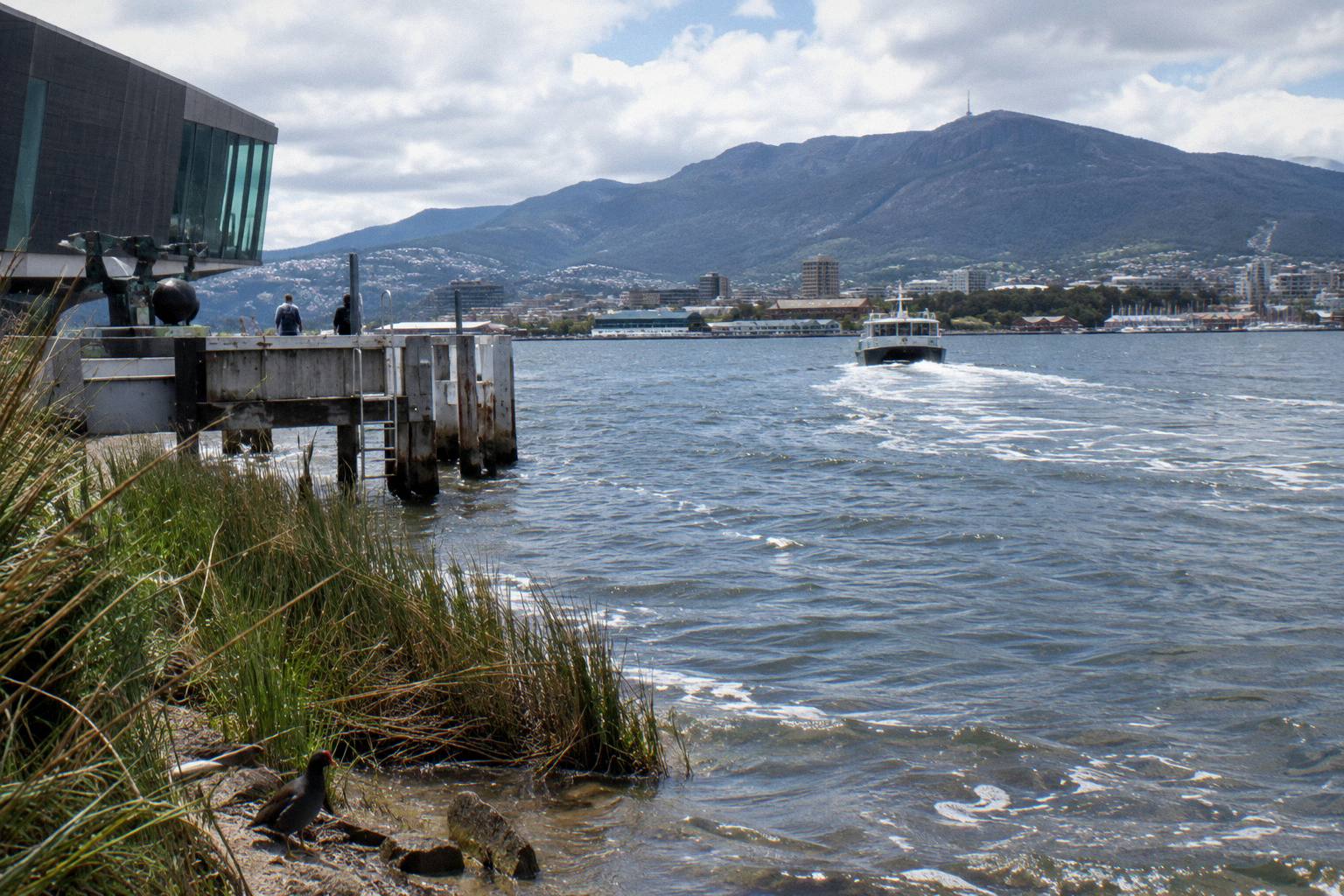
For pairing the ferry with a cruise, the seasons matter less than the daylight. A 5.5-hour lunch cruise plus a museum visit does not fit one short winter day; a summer itinerary absorbs both easily. The Iron Pot cruise's 10.00am summer departure (December to April) leaves the afternoon free for the museum, which is the cleanest single-day stack on the waterfront. Whatever the month, check the ferry's live timetable rather than assuming a departure, and book the cruise with the free-cancellation terms in mind: the roster's cruise booking pages allow cancellation up to 24 hours in advance for a full refund.
Common Questions About The Mona Ferry
How Much Is The Mona Ferry?
The operator's fare is from A$32, with the return fare the same as one way. There are no concessions, children under 4 travel free but need a ticket, and a A$3.50 transaction fee applies to most advance bookings.
How Long Does The Ferry To Mona Take?
About 30 minutes each way, departing Brooke Street Pier. Museum entry is a separate ticket even with a ferry ticket.
Where Does The Mona Ferry Leave From?
Brooke Street Pier, 12 Franklin Wharf, on Sullivans Cove. The same pier serves the River Derwent Guided Cruise On A Catamaran and the Peppermint Bay Lunch Cruise.
What Is The Posh Pit?
A private lounge, bar and deck on the ferry with complimentary drinks and small food. Its price is not stated; the ferry cannot cater for coeliac or severe allergies and wants 24 hours notice for dietary needs.
Is The Mona Ferry Accessible?
The lower deck takes mobility aids and prams, with a bar and an accessible toilet. Arrival involves 99 steps, but there is an accessible tunnel entrance; tell onboard staff so it can be used.
Is The Mona Ferry A Sightseeing Cruise?
No. It is the museum's own transport ferry and not one of the bookable Derwent cruises covered on this site. For a sightseeing trip, the cruises leaving Brooke Street Pier and the nearby Franklin Wharf piers are the options.