Do Hobart Cruises Run In Rain Or Wind?
No operator states a rain or wind cancellation policy for Hobart's Derwent cruises. Here is what the cancellation terms, the long-run Hobart weather averages and the boats themselves actually tell you.
Hobart sits close to the Southern Ocean, exposed to weather that has earned the city its four-seasons-in-one-day reputation. That makes a fair question of any boat booking: if the sky turns grey an hour before departure, does the cruise still leave, and what happens to your money if it does not? This page works through what is actually on the record, because the short version is that no operator here publishes a weather rule at all.
No operator of the Hobart cruises covered here states a rain or wind cancellation policy, in either direction. There is no published rule saying cruises run in all weather, and none setting a cancellation threshold. What exists in writing are the booking terms: Pennicott charges 100 percent within 24 hours of departure and 50 percent within 48 hours, while the roster's other booking pages allow cancellation up to 24 hours ahead for a full refund.
That gap between what travellers want to know and what operators publish is not unique to Hobart, but it is worth being blunt about. A search for a weather guarantee will not find one, and any page that promises "all-weather operation" for these boats is inventing it. The practical approach is to treat the departure decision as the operator's alone and to arrange your booking so that the decision does not cost you either way.
Three things genuinely help. First, the cancellation windows are reasonably generous: a full refund up to 24 hours before departure is the standard wording on these booking pages, which means the risky period is only the final day. Second, two of the main boats, Pennicott's Iron Pot vessels and the Full-Day Gourmet Seafood Cruise vessel, have enclosed cabins with seating behind glass, so a shower does not end the experience even if the departure goes ahead. Third, Hobart's own rainfall record is less dramatic than its reputation: the wettest month on the long-run averages is October, and even then the station averages 9.4 days of rain of one millimetre or more.
It also helps to separate two questions that tend to get tangled. One is whether the boat sails: that is the operator's call, made on the day, on the water, by people who run these routes constantly. The other is whether you are on it: that is your call, and it has a deadline attached. Once you see the problem in those two parts, the planning becomes straightforward, because only the second part is in your hands.
If you are weighing options now, these are the three departures that fit an uncertain forecast best: the lighthouse cruise with its clear refund window, the enclosed-cabin seafood cruise, and the covered catamaran.
The featured tour on this page, the Iron Pot lighthouse cruise from Hobart, is a useful anchor for the whole discussion because Pennicott publishes more operational detail than most: sailing times, booking terms, a phone number, and an accessibility guide. Departures are at 10.00am from December to April and at 2.00pm daily all year, with bookings essential and no sailings on Christmas Day. The adult fare is A$150 and the child fare for ages 1 to 16 is A$130, the operator's own figures. It carries a rating of 4.9 across 248 reviews, printed here with the count so you can weigh it yourself.
What The Cancellation Terms Actually Say
Pennicott's stated terms for the Iron Pot cruise are a 100 percent charge if you cancel within 24 hours of departure and a 50 percent charge within 48 hours, though the cruise's booking page separately offers free cancellation up to 24 hours in advance. Every other roster cruise's booking page says cancel up to 24 hours before for a full refund. A booking made through a third-party retailer carries that retailer's own policy, not the operator's.
Read together, those clauses are the real weather protection. You cannot force a departure and you cannot read an operator's mind about the morning's conditions, but you can position your booking so the free-cancellation window is still open when the forecast firms up.
One nuance deserves attention. The 100 percent charge within 24 hours applies to you cancelling, not to the operator cancelling you. What happens to your money if the operator calls off a sailing is simply not stated anywhere in the material these pages are built from, so do not assume a refund, and do not assume the opposite either. Ask before you book if this matters to you. Pennicott can be reached on (03) 6234 4270.
| Cruise (operator) | Stated cancellation terms | Where stated |
|---|---|---|
| 2.5-Hour Iron Pot Lighthouse Cruise (Pennicott Wilderness Journeys) | Free cancellation up to 24 hours in advance; operator's broader terms 100% within 24 hours, 50% within 48 hours | Booking page and operator terms |
| Full-Day Gourmet Seafood Cruise (Pennicott Wilderness Journeys) | Cancel up to 24 hours in advance for a full refund | Booking page |
| River Derwent Guided Cruise On A Catamaran (Peppermint Bay Cruises) | Cancel up to 24 hours in advance for a full refund | Booking page |
| Historic cruises from Murray Street Pier (Hobart Historic Cruises) | 24-hour terms read on a sister listing | Sister listing |
| Seafood, sailing and lunch cruises (other operators) | Cancel up to 24 hours in advance for a full refund | Booking pages |
The pattern is consistent enough to plan around: the day before departure is your decision point. Before that, walking away costs nothing on any of these bookings. After that, it costs the fare.
A detail worth noticing in that table is how little the terms vary across operators who otherwise differ a great deal. A five-and-a-half-hour lunch run to Woodbridge and a one-hour morning loop of the harbour carry the same 24-hour refund wording. That uniformity works in your favour, because it means you can compare cruises purely on vessel, route and duration without worrying that one booking locks you in harder than another. The single exception is the retailer caveat: if you book through any third-party seller rather than the operator's own channel, the seller's policy replaces the operator's, and those policies are not published here.
How Often Does It Rain In Hobart, Really?
Hobart is one of Australia's drier capitals on the long-run averages: 610.5 millimetres a year, spread over an average of 86.8 days of rain of one millimetre or more. January averages 46.3 millimetres across 5.6 such days; October is the wettest month at 61.8 millimetres across 9.4 days. These are land-station figures from the Bureau of Meteorology's Ellerslie Road site, and they say nothing about conditions on the water.
That station, number 094029, has been recording since 1882, which makes this one of the longest continuous weather records available for any Australian city. The averages in the table below come from that record, published by the Bureau of Meteorology's climate averages for Hobart.
| Month | Mean maximum (C) | Mean minimum (C) | Mean rainfall (mm) | Mean days of rain 1 mm or more |
|---|---|---|---|---|
| January | 21.8 | 12.1 | 46.3 | 5.6 |
| February | 21.8 | 12.1 | 38.6 | 4.9 |
| March | 20.3 | 11.0 | 44.1 | 6.1 |
| April | 17.5 | 9.0 | 49.1 | 6.8 |
| May | 14.6 | 7.0 | 47.6 | 7.0 |
| June | 12.1 | 5.2 | 53.6 | 7.2 |
| July | 11.9 | 4.7 | 51.9 | 7.8 |
| August | 13.2 | 5.3 | 53.8 | 8.4 |
| September | 15.2 | 6.5 | 52.8 | 8.5 |
| October | 17.1 | 7.9 | 61.8 | 9.4 |
| November | 18.8 | 9.4 | 54.0 | 7.9 |
| December | 20.4 | 10.9 | 56.6 | 7.2 |
| Year | 17.1 | 8.4 | 610.5 | 86.8 |
Two honest readings of those numbers. The reassuring one: even in the wettest month, the long-run average is under ten rain days out of thirty-one, and Hobart rain is frequently showers rather than all-day drizzle. The sobering one: these are averages taken inland at Ellerslie Road, and the Iron Pot route runs out to Storm Bay, where the operator's own route text describes swell at Hope Beach arriving straight from the Southern Ocean. A day that reads as a light shower on land can feel entirely different past the river mouth, and no published average tells you what the sea will be doing.
Notice too how flat the rainfall spread is across the year. Every single month falls between 38.6 and 61.8 millimetres, and the rain-day count never leaves the range of roughly five to nine and a half days. Hobart has no monsoon-style wet season and no bone-dry desert stretch either; it has a steady, modest drizzle profile that makes any month a reasonable cruise month on rainfall grounds alone. If you are choosing between, say, June and February for a visit, the rainfall difference is nine millimetres a month on average, which is close to meaningless for a single booked day.
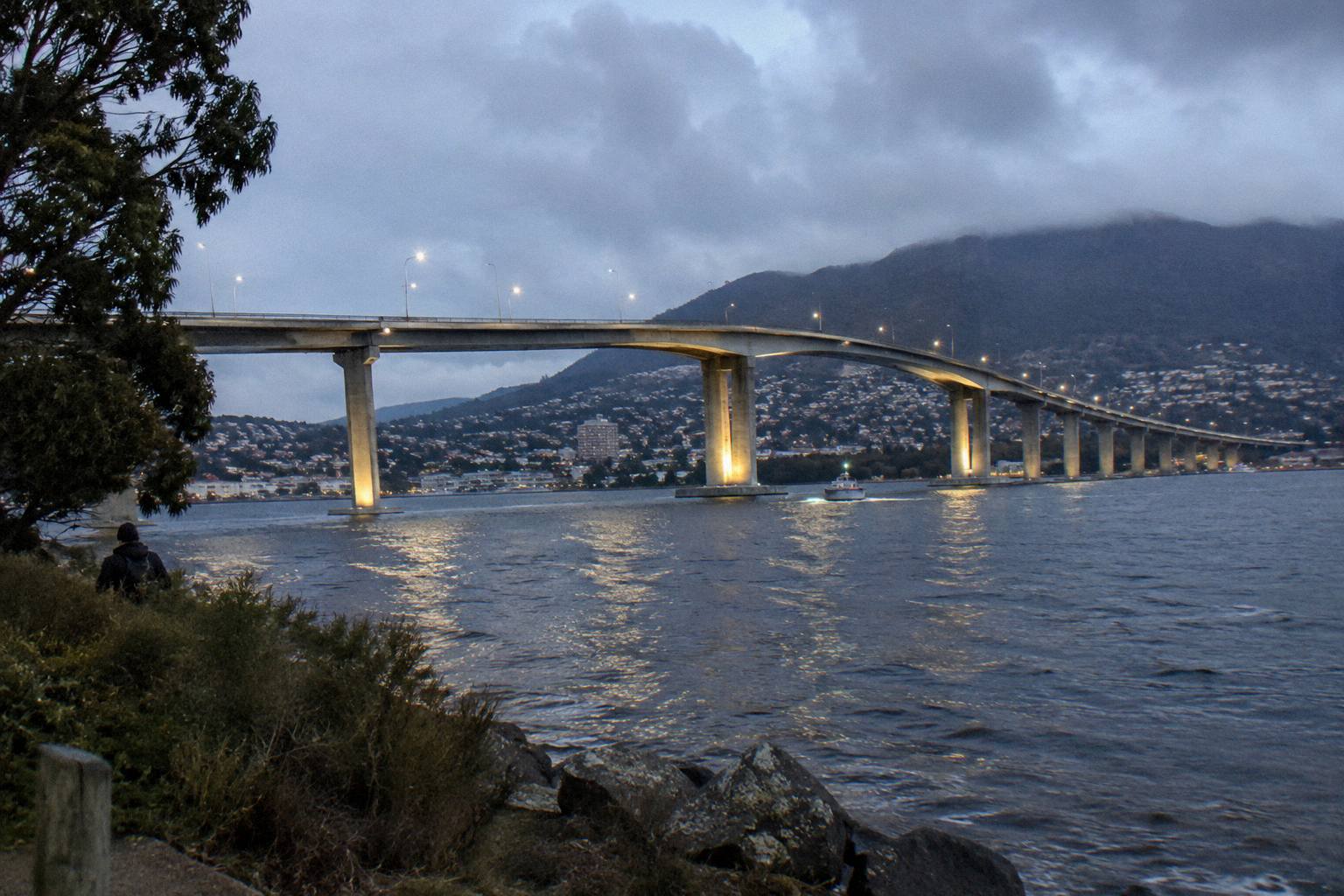
That is the whole reason the operator's advice to dress children warmly, "as it does get cold out on the water", exists alongside summer maximums above 21 degrees. Air temperature at the station is not wind chill on a moving deck. For more on layering, see the companion piece on what to wear on a Hobart cruise.
Which Boats Keep You Out Of The Weather
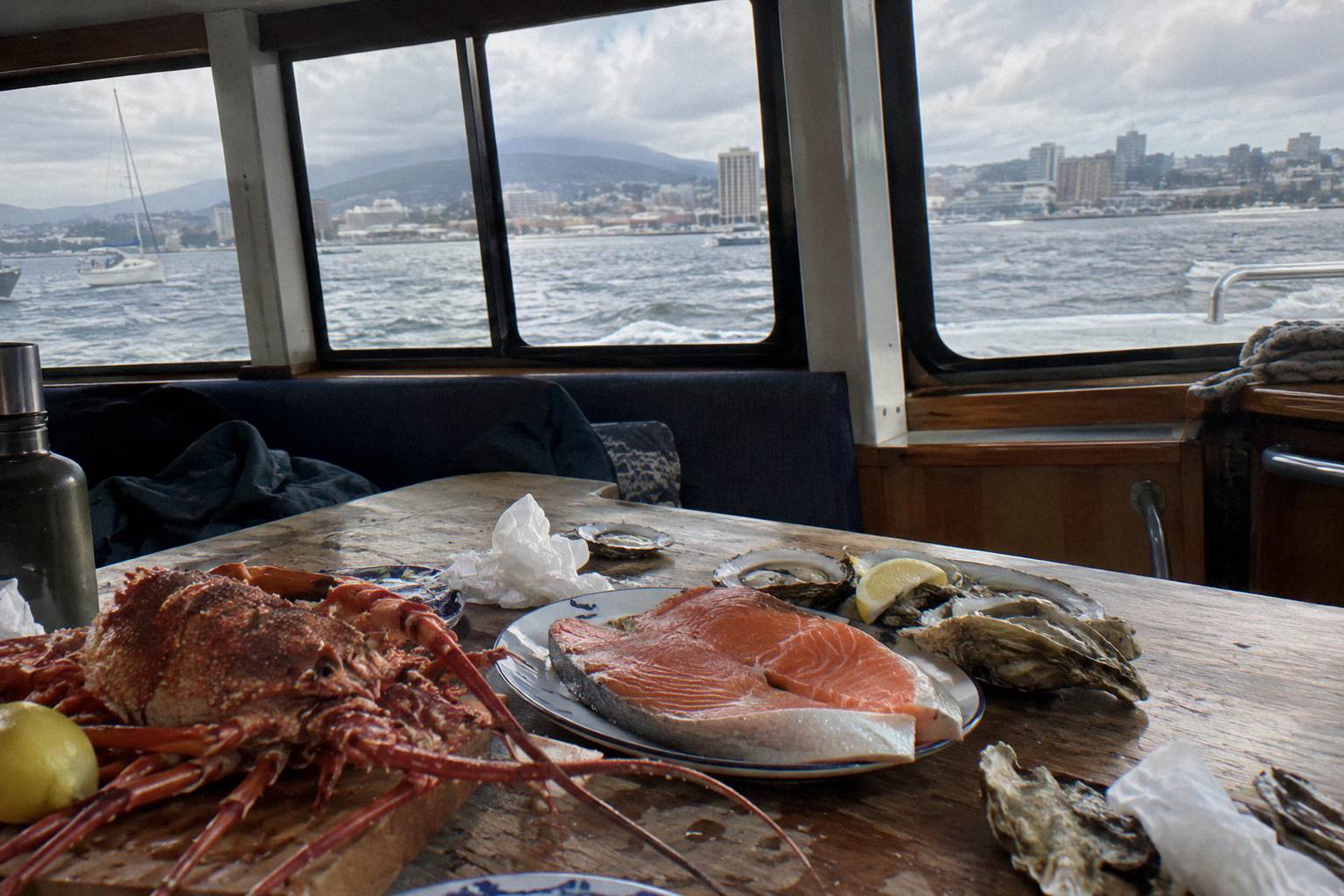
Two vessels on this roster are described with enclosed cabins: Pennicott's Iron Pot boats, with leather seats and large awning windows, and the custom-built Full-Day Gourmet Seafood Cruise vessel, also enclosed with leather seats. The River Derwent catamaran is described on its booking page as having two indoor levels with floor-to-ceiling windows plus three outdoor decks. The sailing yacht, by contrast, is open to the elements by nature of being a yacht.
If a grey-but-sailing day is your scenario, this is where the decision actually gets made, and it is worth reading vessel descriptions carefully rather than assuming all cruises are equally sheltered. The Peppermint Bay Cruises catamaran gives you a genuinely indoor option: the booking page describes a wheelchair-friendly main deck, children, prams and service animals welcome, and those floor-to-ceiling windows on two levels. A shower that sends everyone else below decks leaves you still watching the Shot Tower, Alum Cliffs and Iron Pot Lighthouse pass by. The duration question on that cruise has a wrinkle worth flagging once: the operator's homepage says 90 minutes and a booking page says an hour and three quarters, so treat it as about 1.5 to 2 hours and check availability for start times.
The seafood boats are the other sheltered category. The Full-Day Gourmet Seafood Cruise, about 7.5 hours from Constitution Dock on a custom-built vessel with an enclosed cabin, serves rock lobster, salmon and freshly shucked oysters with local wines, beers, ciders and juice, and carries a 5.0 rating across 20 reviews. The Ultimate Seafood Cruise, about 4.5 hours from Elizabeth Street Pier on a spacious catamaran crewed by commercial fishermen and women, lists a degustation running from abalone and sea urchin to periwinkles and Tasmanian Atlantic salmon, with drinks, a cheese platter and cake.
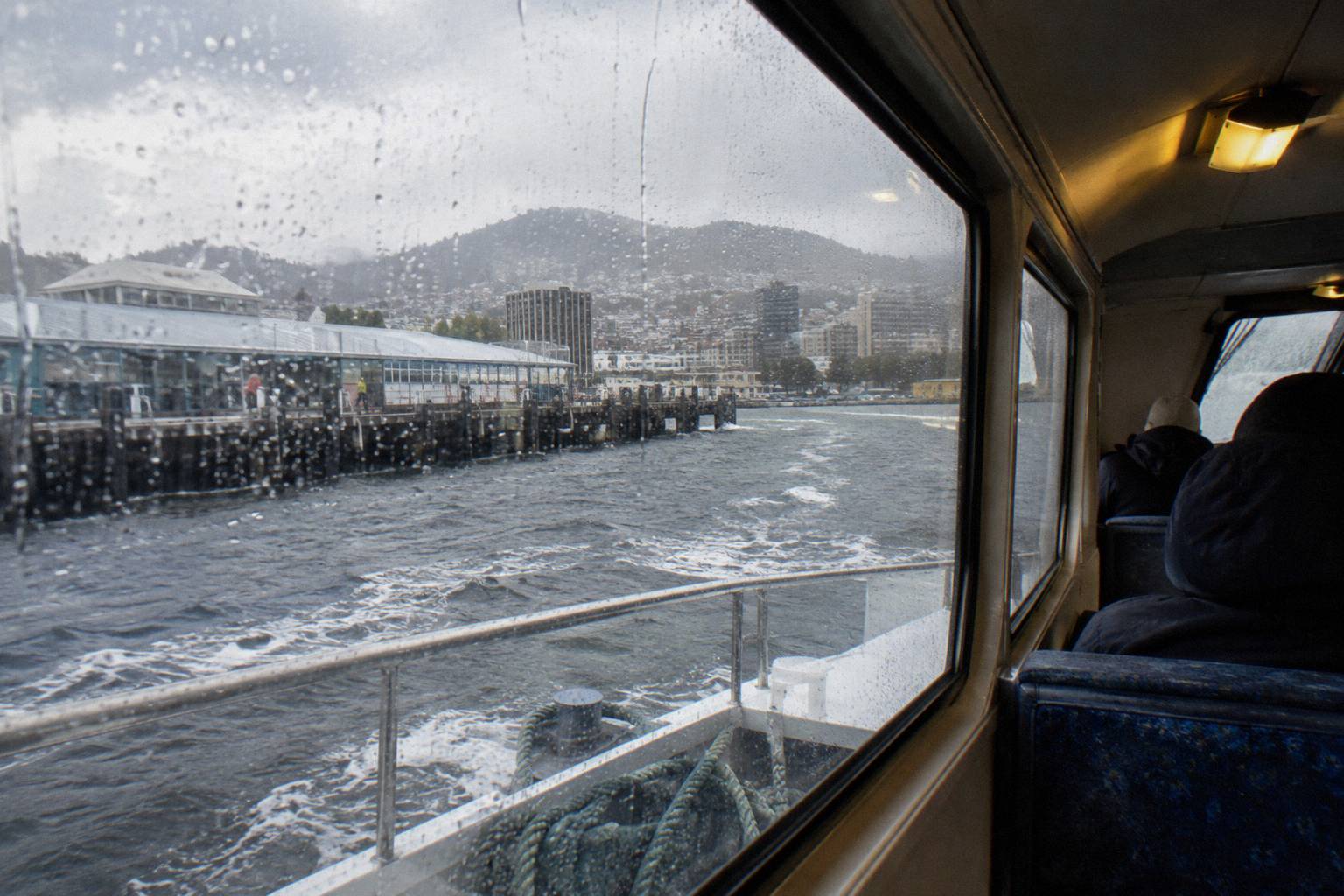
At the exposed end of the scale, the Luxury Yacht Scenic Sailing Tour With Snacks is a sailing yacht rather than a motor cruiser: about 3 hours from Kings Pier Marina, morning or afternoon, with snacks and non-alcoholic drinks. Sailing in Hobart is a magnificent thing on a good day and a wet one on a rough day, and there is no cabin claim anywhere in its listing. The Morning River Cruise, about an hour from Murray Street Pier, and the Historic Lunch Cruise from the same pier stay on the calmer river stretches south to Battery Point and Sandy Bay, which at least shortens the exposure.
The enclosed-cabin point is not purely about rain, either. Wind alone, on an otherwise clear day, is the more common reason a sheltered boat earns its keep: an awning-window cabin cuts the breeze while keeping the view, which matters on a route that takes in Betsey Island's gulls, cormorants and white-bellied sea eagle as the operator's route text describes. And for families, the practical details stack up on the sheltered boats too: every Pennicott vessel has an onboard toilet, and the operator says seasickness incidence is low, with Travel Calm Ginger tablets carried on board.
What If The Forecast Turns After You Book?
Work the 24-hour boundary. More than a day out, every booking page here allows a full refund on cancellation, so a worsening forecast costs you nothing but a rebooking. Inside 24 hours you are into Pennicott's 100 percent charge zone, so the forecast needs to have already convinced you before that window closes. Neither you nor the operator has any stated weather veto, only the clock.
A practical sequence for a trip with flexible days: book the cruise early in your stay rather than on your last day, so a cancellation leaves room to rebook. Watch the forecast from 48 hours out, which is when the 50 percent charge applies to the Iron Pot cruise under Pennicott's terms and when Bureau forecasts start to firm. Decide by the evening before, while the free window is open on every listing. On the day itself, take the operator's phone advice over any generalisation from a website, including this one: only the skipper knows what Storm Bay is doing.
Group bookings and tight itineraries deserve an extra caution. Nothing published here states how far ahead any cruise sells out, what the group sizes are, or what a rain-check arrangement looks like, so if you are coordinating more than a couple of households, a phone call to the operator the day before is cheaper than an assumption. The same applies to anyone travelling with a tight flight the same evening: build slack, because the only mechanism on the record for a late change is the cancellation clause, not a stated weather rebooking promise.
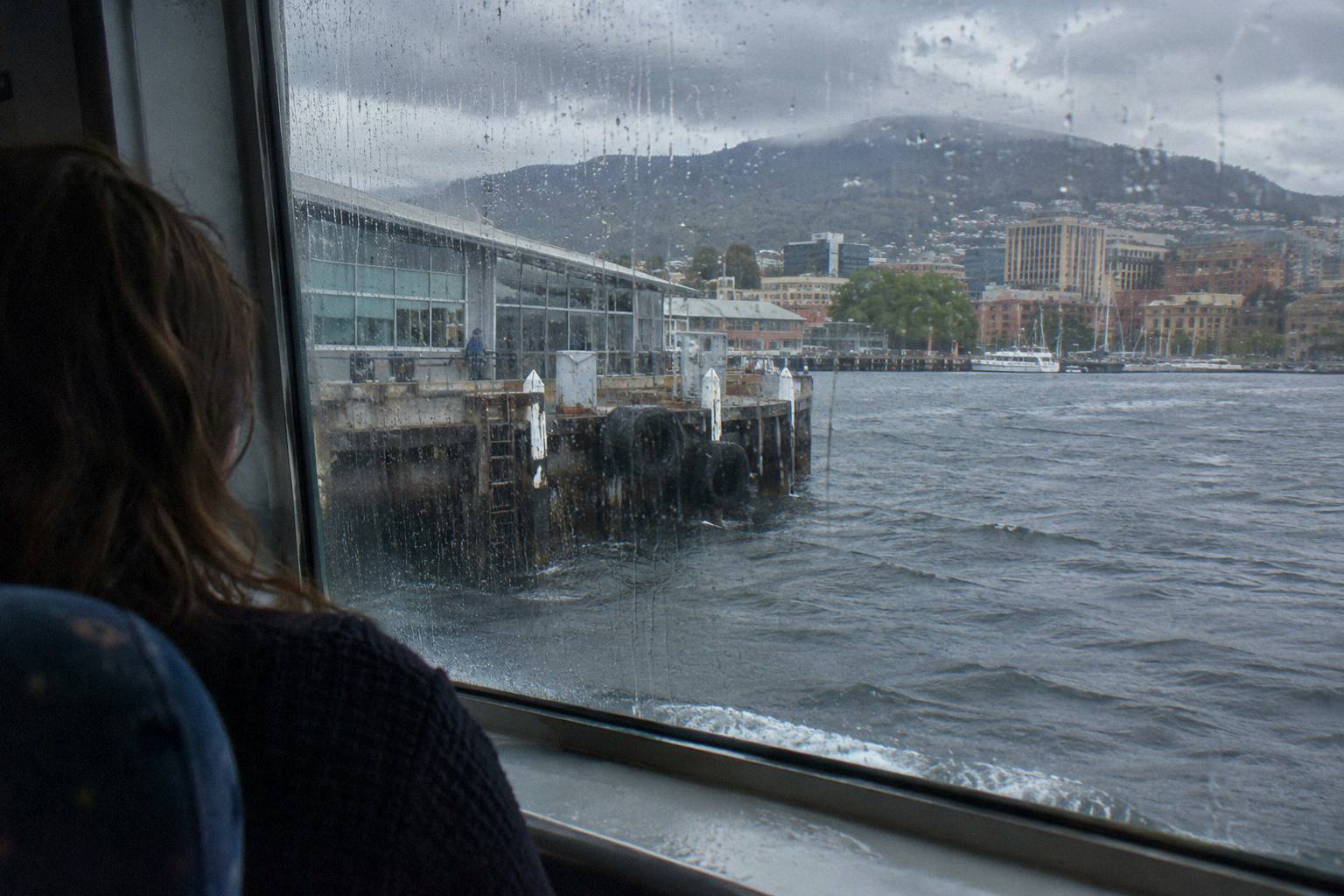
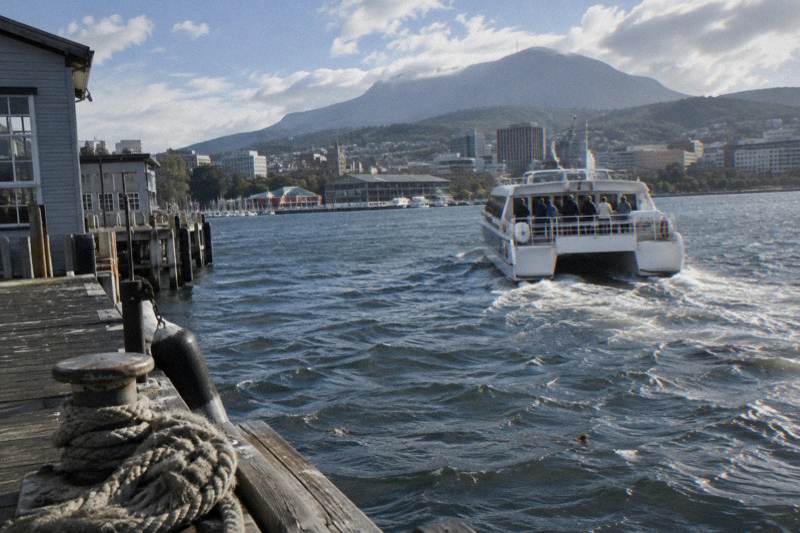
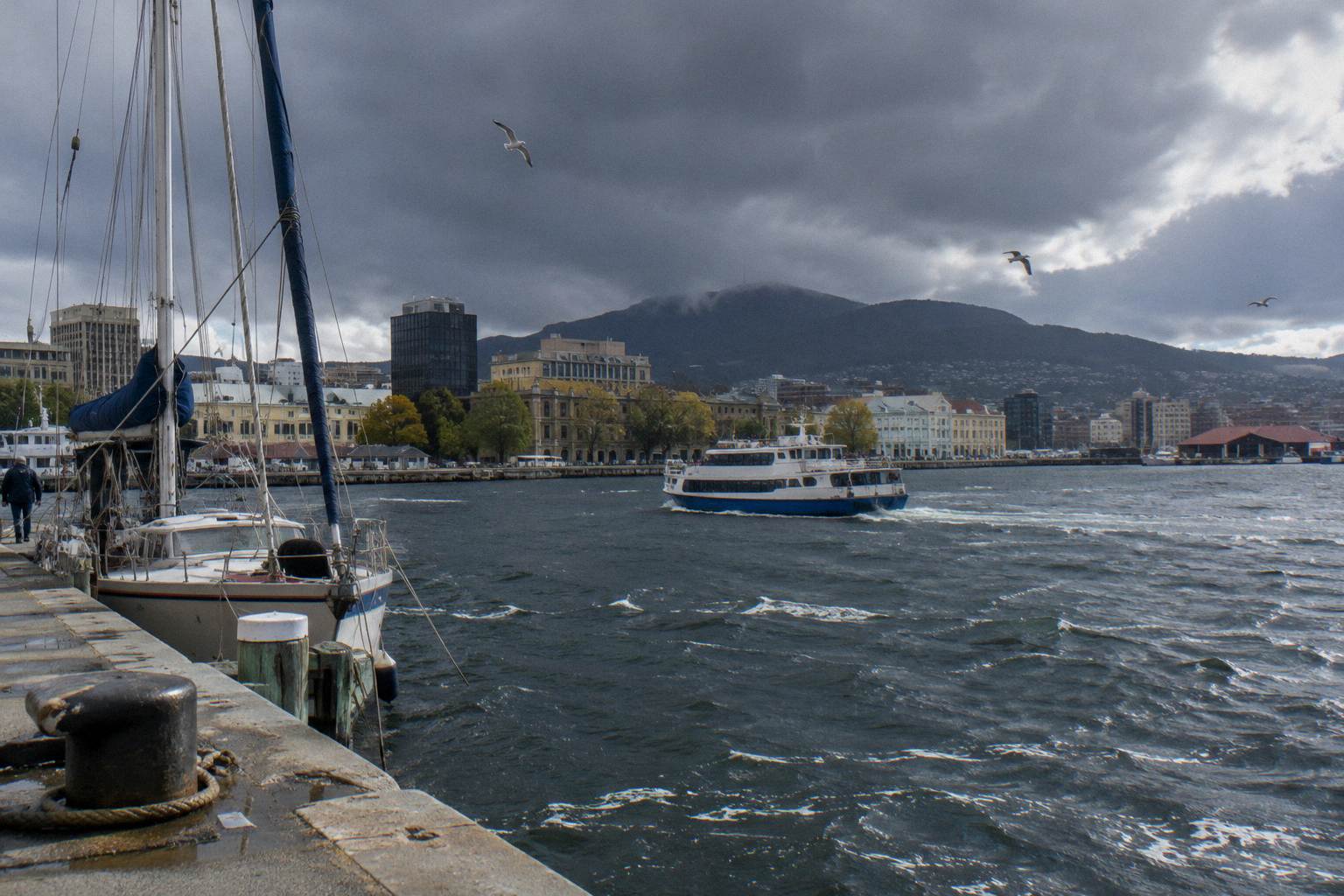
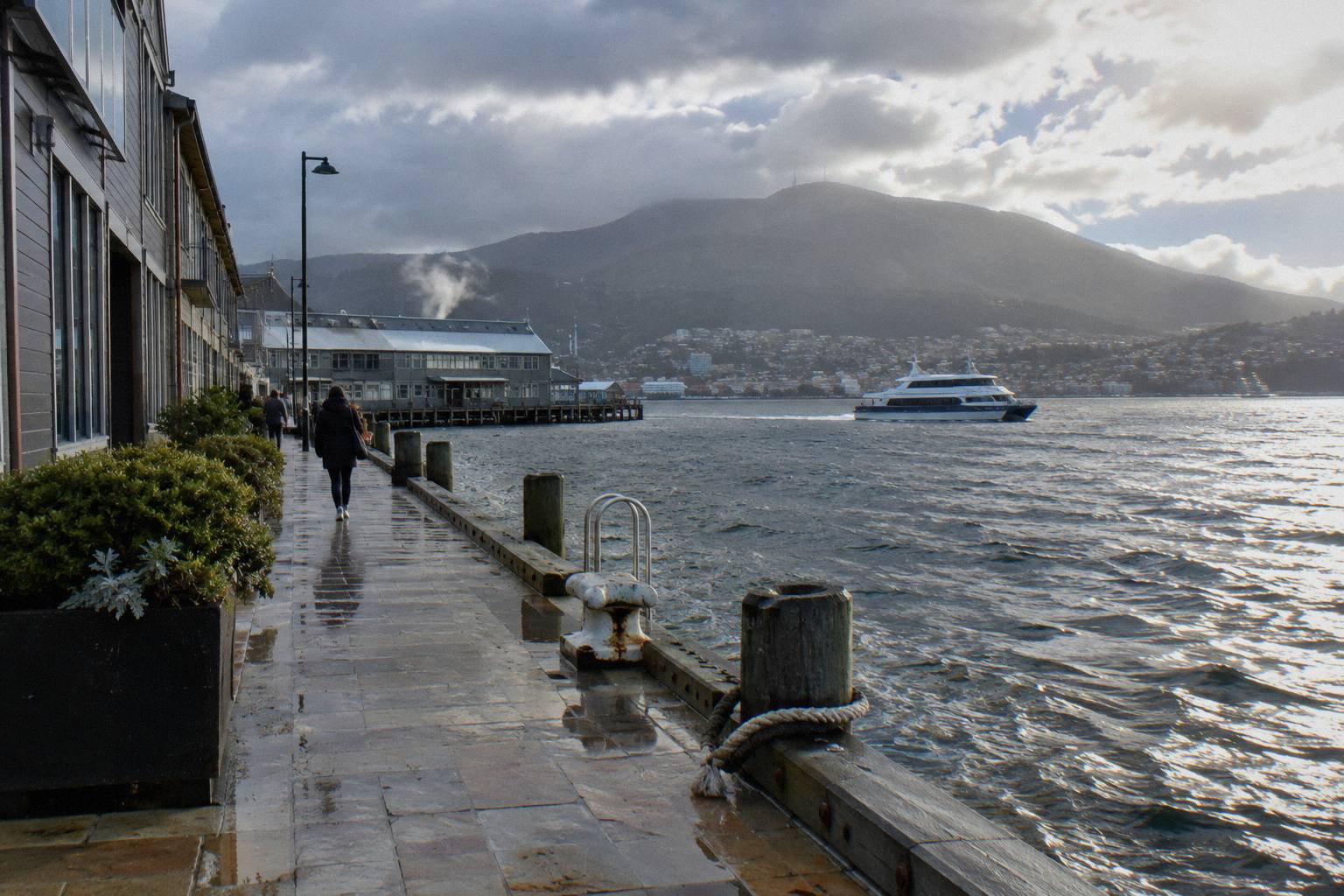
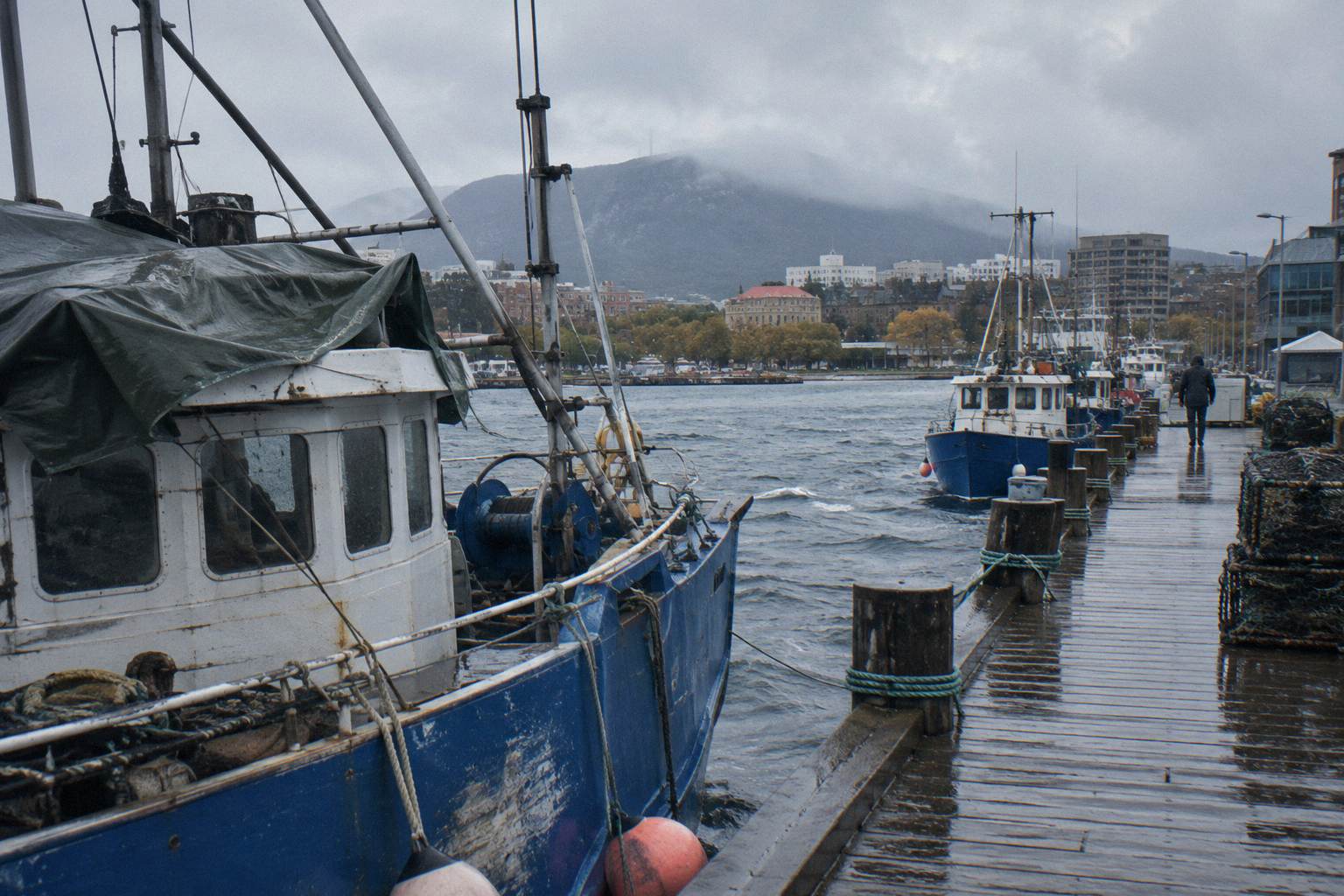
There is a reasonable case that the rainy-day cruise is undervalued. Mount Wellington towers over the city, as the operator's own route text puts it, and a cloud base halfway down the mountain with sun breaking over the water is a common Hobart tableau that clear-sky postcards never capture. Showers also thin the crowds at the piers. None of that is a promise of conditions, merely an observation that grey and ruined are not the same thing.
Booking Around Uncertain Weather
Treat departure-day weather as unbookable and the day before as your free exit. Pick an enclosed or indoor-heavy vessel if drizzle is likely, schedule the cruise early in your trip, and keep the operator's phone number with the booking confirmation. The 24-hour refund terms on these booking pages do the work that a missing weather policy leaves undone.
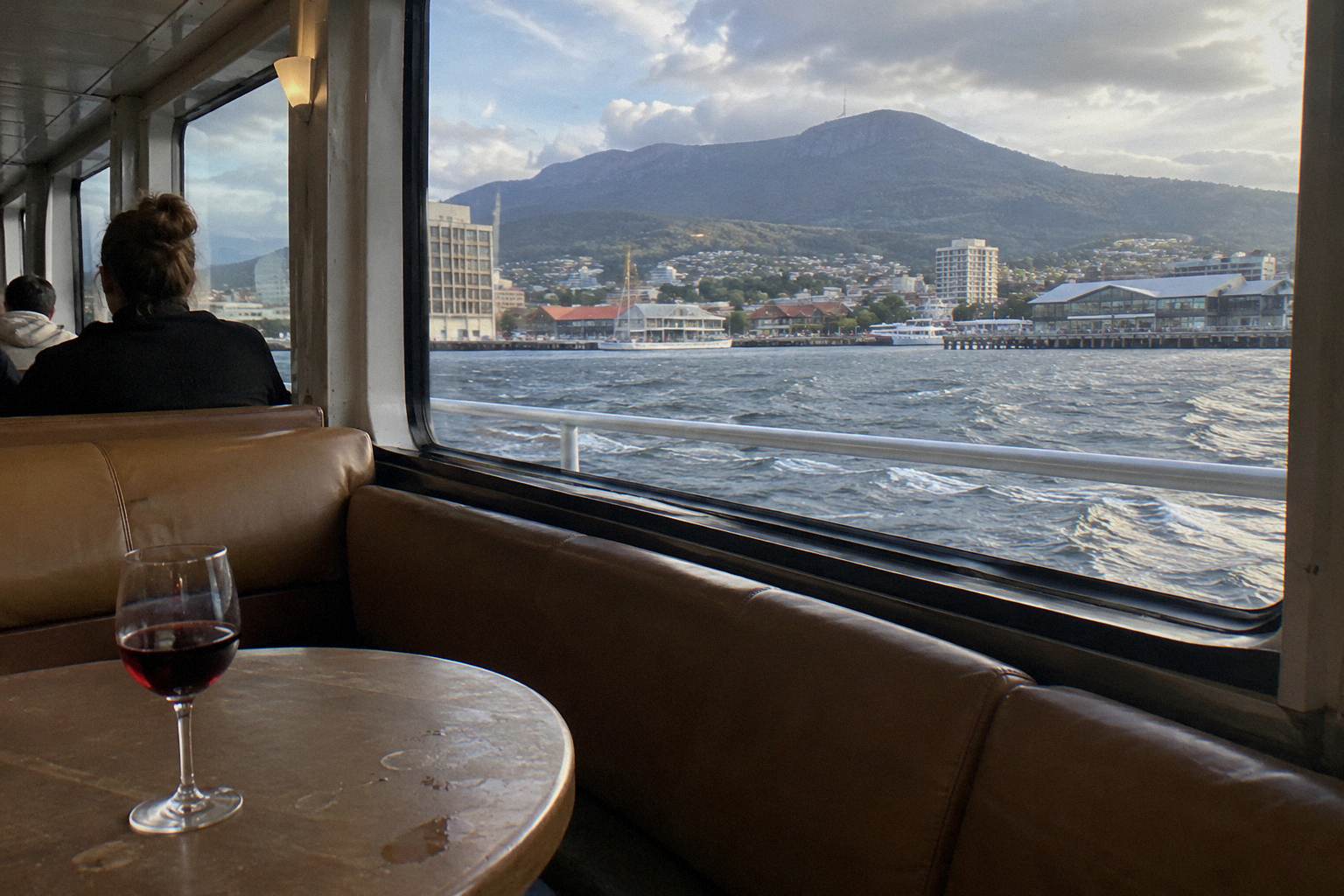
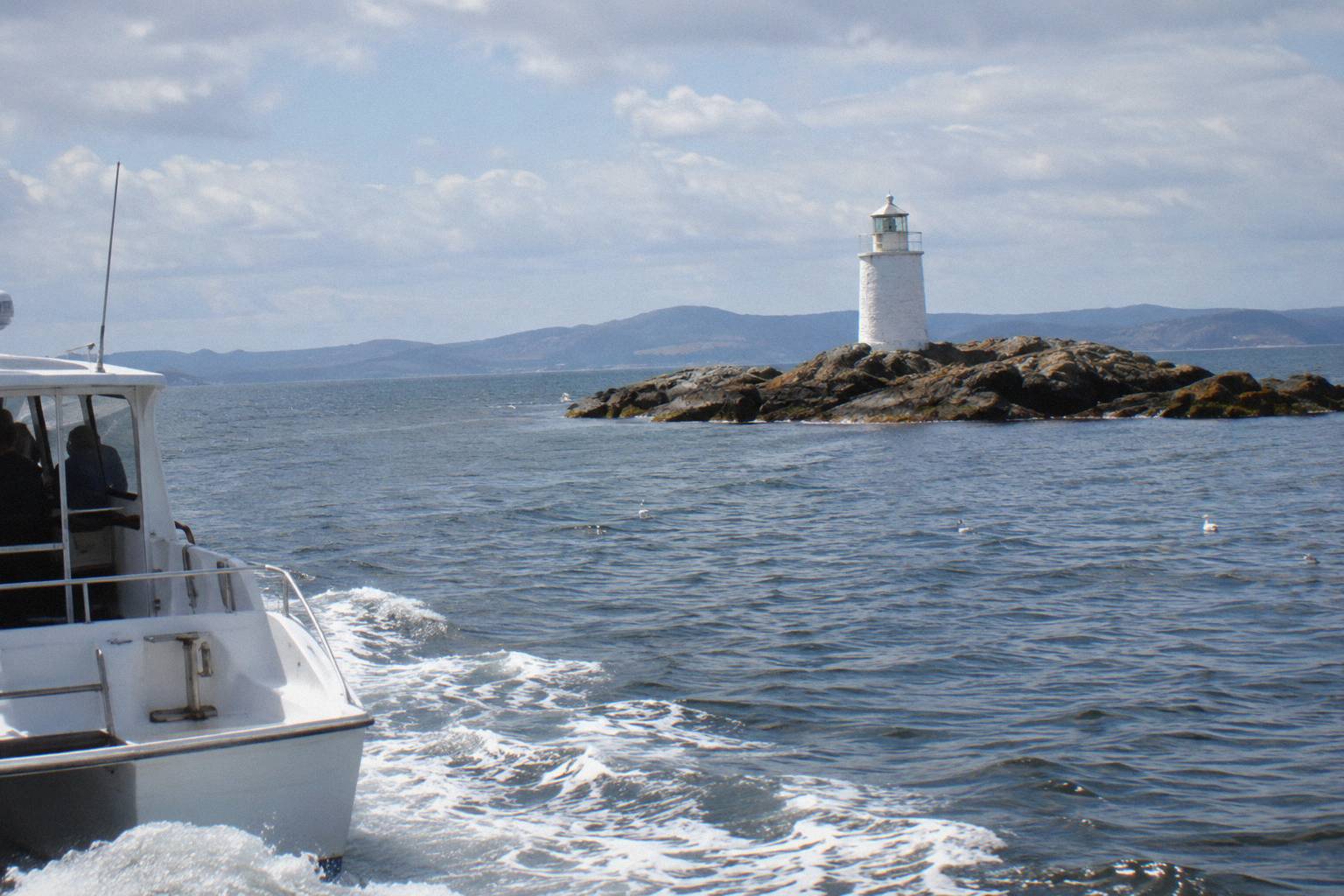
For most visitors the enclosed-cabin lighthouse cruise is the natural first pick: the terms are clear, the boats are described in concrete detail, and the route out to Tasmania's oldest lighthouse, built by convicts in 1832, is the one most people picture when they imagine a Hobart boat trip. An 11 metre sandstone tower with walls 1.5 metres thick, solar powered since 1977, standing on its island at the mouth of the Derwent: the destination is worth a little forecast risk, and the refund window removes most of it. The seafood and catamaran options cover the two other wet-day profiles: a long indulgent day mostly indoors, or a short sheltered sightseeing loop. More on the full field of choices sits in the guide to Hobart boat tours compared, and the broader case for spending your money at all is argued in whether a Hobart cruise is worth it.
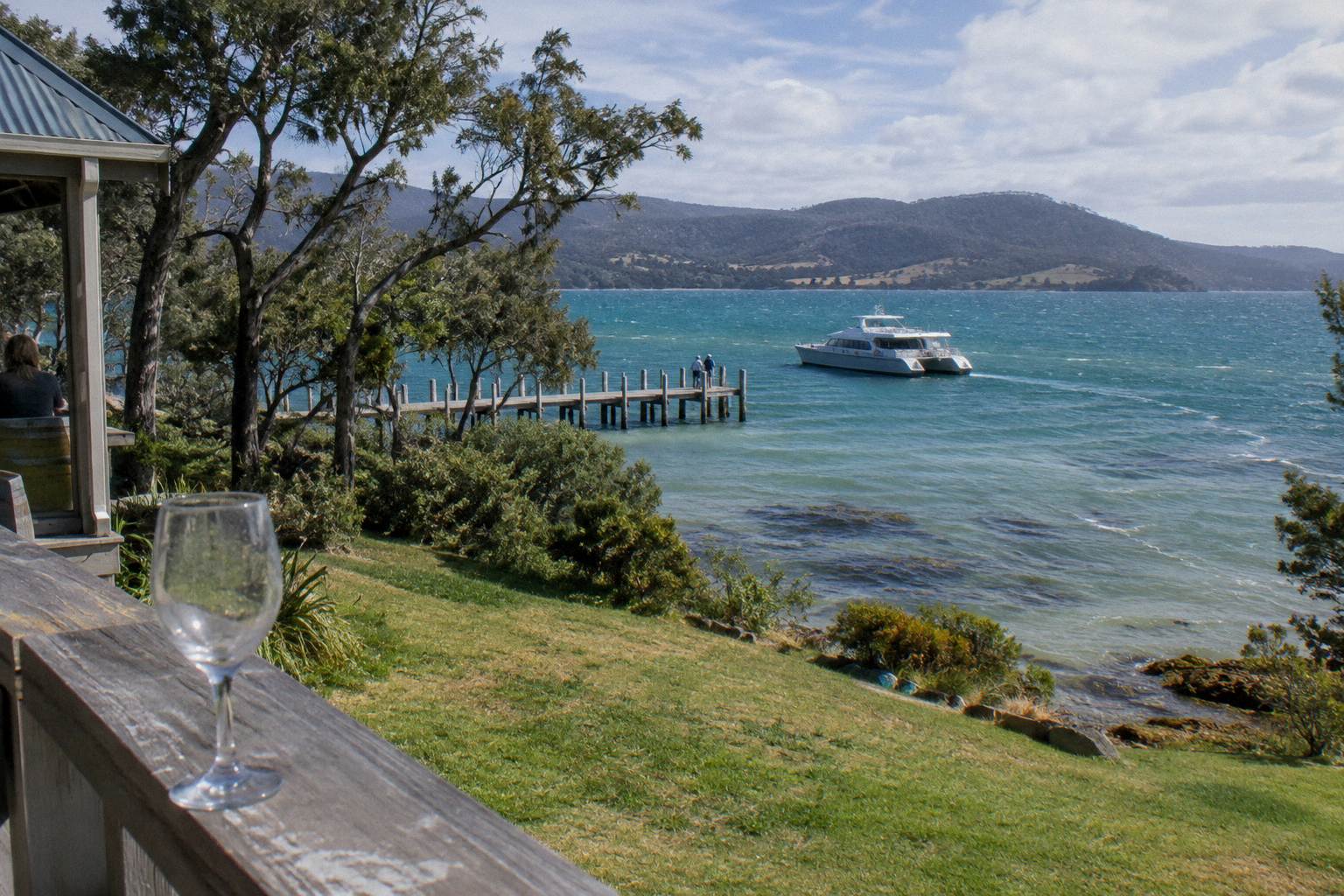
One scope note for completeness. None of the cruises covered on Hobart River Cruises is a whale-watching, sunset or New Year's Eve product, and no MONA departure time appears anywhere on this site, so none of those can be planned around as a weather fallback either. If your heart is set on the wild-water end of the spectrum, Tasman Island cruises leave from Port Arthur, about 90 minutes' drive away, under their own separate arrangements; the Tasman Island cruises guide covers that decision. For the Derwent itself, the rain plan is simple: book early in your stay, choose a boat with glass between you and the sky, and decide the evening before.
Common Questions About Hobart Cruises In Rain Or Wind
Do Hobart Cruises Run In Rain Or Wind?
No operator states a policy either way. No listing promises cruises run in all weather, and none sets a wind or rainfall limit for cancellation. The only stated rules are the cancellation terms: free cancellation up to 24 hours in advance on these booking pages, with Pennicott's broader terms charging 100 percent within 24 hours and 50 percent within 48 hours of departure.
Will I Get A Refund If The Operator Cancels My Cruise?
Not stated. The refund terms on the booking pages describe you cancelling, not the operator. What happens to your fare if a sailing is called off is not published, so ask the operator before booking. Pennicott Wilderness Journeys can be reached on (03) 6234 4270.
Which Hobart Cruise Is Best On A Wet Day?
The sheltered options are the enclosed-cabin Iron Pot boats and Full-Day Gourmet Seafood Cruise vessel, and the catamaran with two indoor levels and floor-to-ceiling windows. The sailing yacht is the most exposed. The catamaran's booking page also describes a wheelchair-friendly main deck.
How Many Rainy Days Does Hobart Actually Get?
On the long-run Bureau of Meteorology averages, 86.8 days a year with one millimetre of rain or more, ranging from 4.9 in February to 9.4 in October. Annual rainfall averages 610.5 millimetres. These are land-station figures and say nothing about conditions on the water.
When Can I Still Cancel For Free?
Up to 24 hours before departure on every booking page covered here. For the Iron Pot cruise, Pennicott's general terms apply a 50 percent charge within 48 hours and 100 percent within 24 hours, though the cruise's own booking page offers free cancellation up to 24 hours in advance. Third-party retailer bookings carry that retailer's policy instead.
Is Hobart Too Cold For A Winter Cruise?
Mean winter maximums run 11.9 to 13.2 degrees and minimums 4.7 to 5.3, but no operator publishes a comfort cut-off, and the only stated clothing advice is Pennicott's: dress children warmly, as it does get cold out on the water. Layer for wind chill on deck regardless of the season.