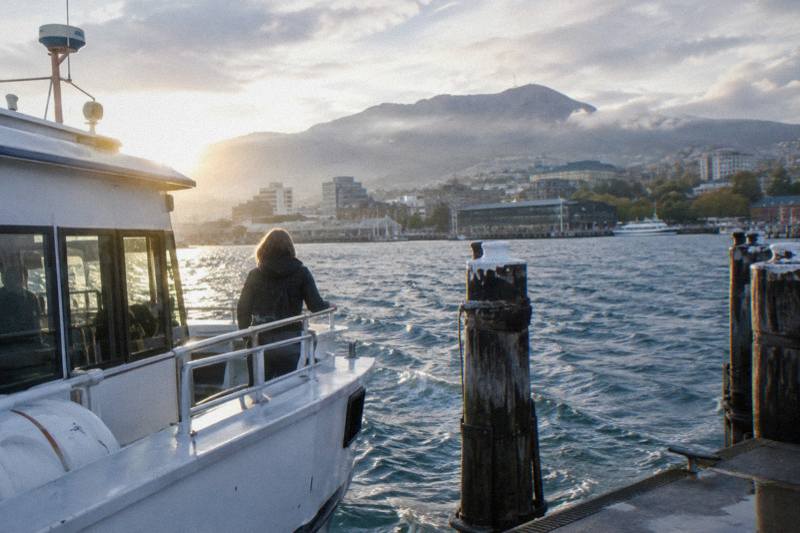
Will I Get Seasick On A Hobart Harbour Cruise?
Seasickness is the main objection to booking a boat trip. Here is what the operators actually state about Hobart cruises, exposure by duration, and how to pick the calmest-fit option.
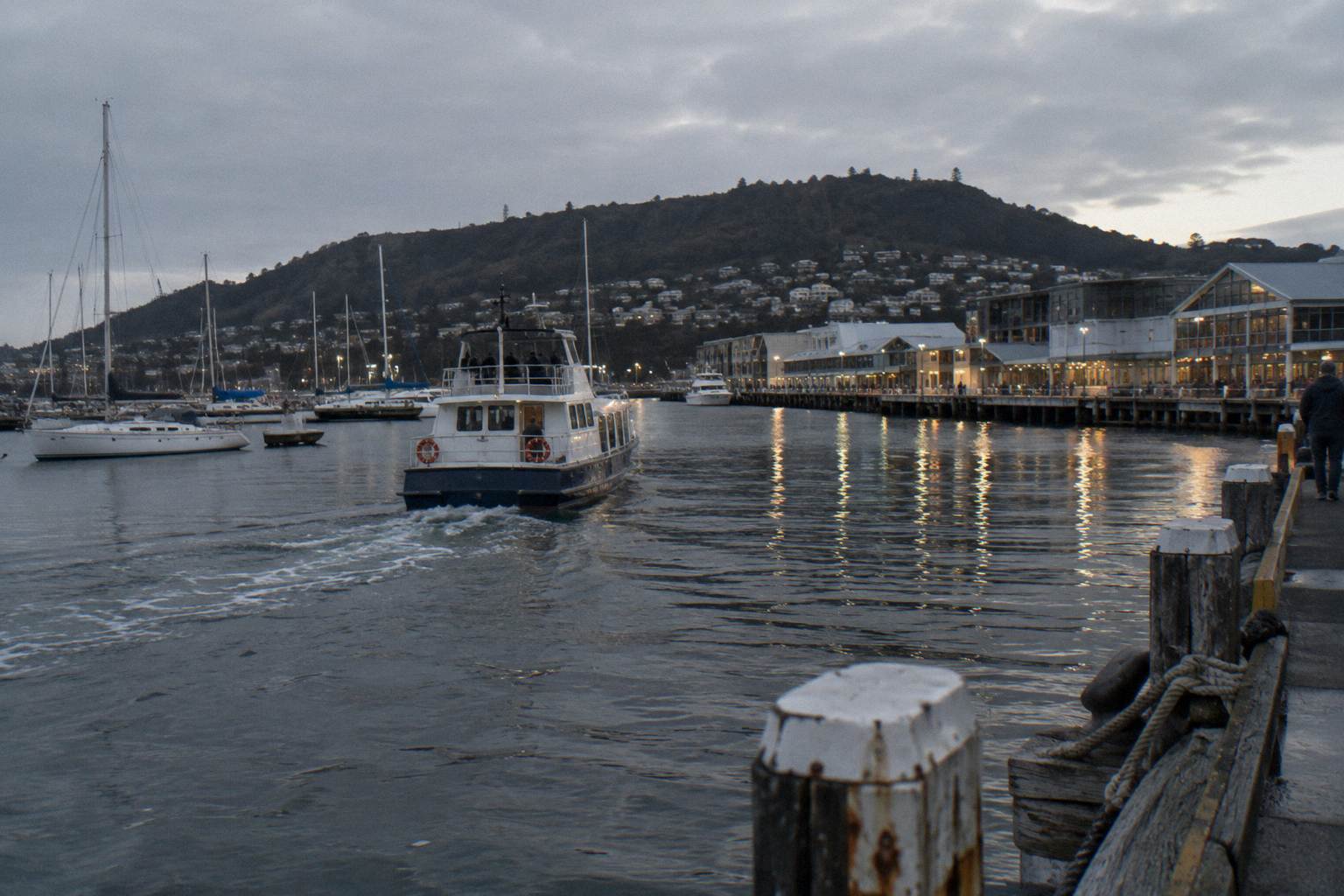
Probably not, and the operators themselves say so for their own boats: Pennicott Wilderness Journeys states that seasickness incidence is low on its Iron Pot cruises and carries Travel Calm Ginger tablets on board. But exposure genuinely differs by product. The short harbour and river loops run about one to two hours on sheltered Derwent water, while the lighthouse routes continue to Storm Bay, where the operator's own route text describes swell straight from the Southern Ocean.
That single distinction, river versus open bay, is the whole decision for a nervous passenger, and it is a decision you can make from duration alone. Nothing on this page is medical advice, and no operator publishes sea-state forecasts or cancellation triggers for wind or swell, because those facts are simply not stated anywhere in the tour data. What is stated, and all that can honestly be said, comes from the operators' own pages and booking listings.
Start with the exposure ladder. Every Hobart cruise in the roster runs by day, on the Derwent and the harbour, and the shortest options barely leave the cove at all. The Morning River Cruise from Murray Street Pier runs about one hour. The River Derwent Guided Cruise On A Catamaran runs about 1.5 to 2 hours. The Historic Lunch Cruise is about 1.5 hours and stays on a southern river route to Battery Point and Sandy Bay. At the far end, the Full-Day Gourmet Seafood Cruise runs about 7.5 hours, and the Iron Pot lighthouse cruise, about 2.5 hours, finishes its route in Storm Bay at the river's mouth.
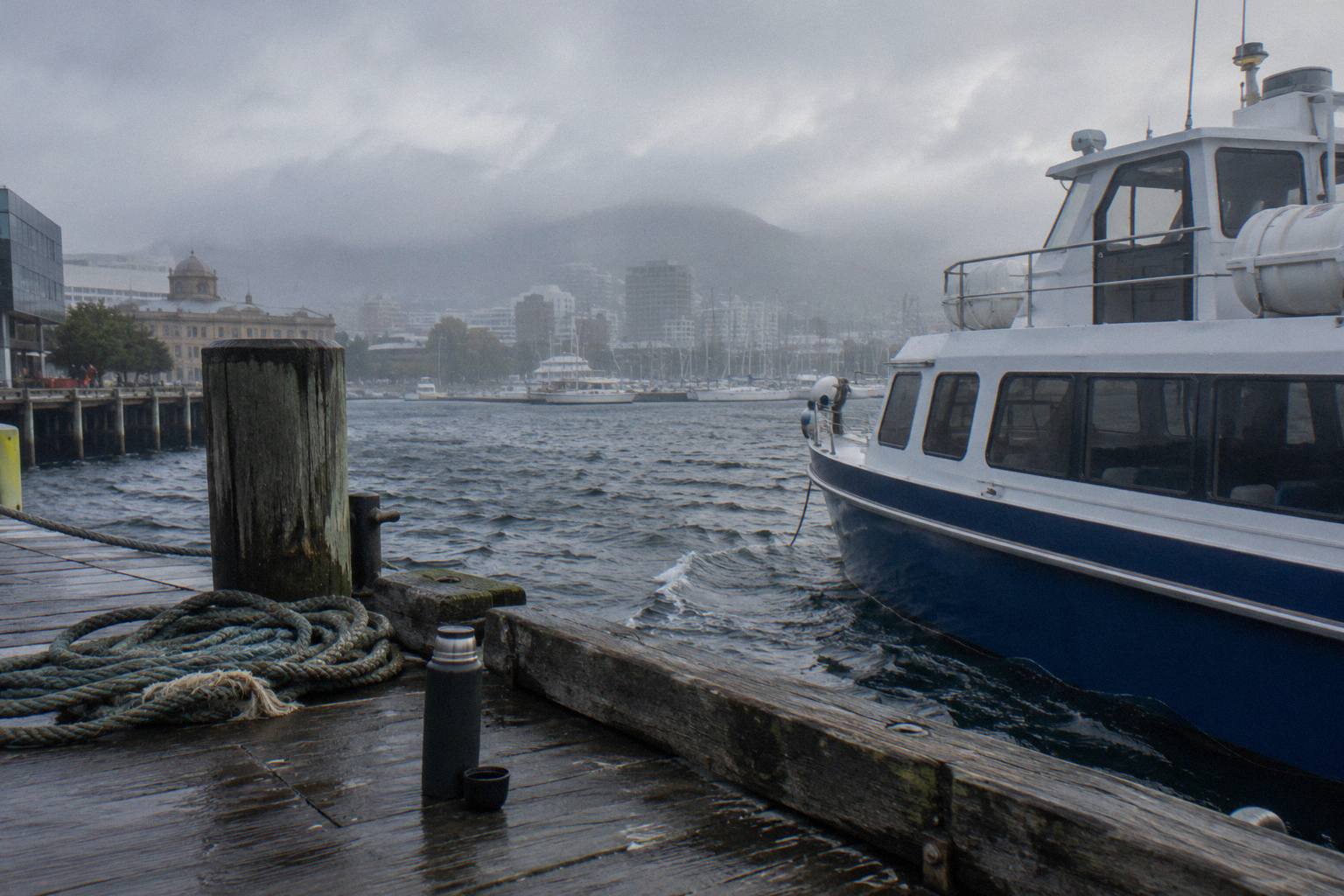
The other honest framing point: Hobart's weather numbers are land numbers. The Bureau of Meteorology's Hobart station at Ellerslie Road, records running from 1882, gives a mean maximum of 21.8 degrees in January and 11.9 in July, with mean rainfall days of 1 mm or more ranging from 4.9 in February to 9.4 in October. Those are shore averages for one city block. They say nothing about conditions on the water, and no article should pretend otherwise. If you want the sheltered-water logic in detail, the companion piece on which cruises leave Hobart maps every departure pier, and it pairs well with the wet-weather guidance in what to do when a Hobart cruise day looks grey.
What Do The Operators Actually Say About Seasickness?
Only one operator publishes a seasickness claim, and it is Pennicott Wilderness Journeys: seasickness incidence is low on its cruises, Travel Calm Ginger tablets are carried on board, and every boat has an onboard toilet. The operator also asks passengers not to travel if unwell or flu-like. No other operator in the roster states any seasickness data at all, and no cruise publishes a wind or swell cancellation policy.
That is the complete set of stated facts. Pennicott runs the 2.5-Hour Iron Pot Lighthouse Cruise and the Full-Day Gourmet Seafood Cruise, and its vessel description matters as much as the ginger tablets: the Iron Pot product runs on brand new vessels in a small group, with an enclosed cabin, leather seats and large awning windows. An enclosed cabin is not a seasickness cure, and this page will not pretend it is one, but it is the physical fact that separates this boat from an open pontoon.
The Iron Pot cruise is also the one product on this roster with a printable rating, 4.9 across 248 reviews, printed here with its count and not as praise. A review pool of that size on a boat that reaches Storm Bay is at least evidence that large numbers of ordinary passengers complete the trip.
Beyond Pennicott, the record goes quiet, and honesty means saying so. Hobart Historic Cruises, which runs the Morning River Cruise and the Historic Lunch Cruise from Murray Street Pier, has no verified operator website and states nothing on seasickness. Peppermint Bay Cruises, whose own site is at peppermintbay.com.au, publishes channel and river cruises but no seasickness figures. Wet Edge Enterprises and Hobart Yachts state none either. What you can lean on instead is duration and geography, which is the next section.
There is practical help in the phone number, too. Pennicott's booking line is (03) 6234 4270, and calling ahead about a specific concern is exactly what it is for.
Which Hobart Cruise Has The Least Time On The Water?
The Morning River Cruise, about one hour from Murray Street Pier, is the shortest exposure on the roster, and the Historic Lunch Cruise at about 1.5 hours is next. The River Derwent Guided Cruise On A Catamaran runs about 1.5 to 2 hours. Longer products scale up from there to 3, 4.5, 5.5 and 7.5 hours.
Duration is the only exposure measure the tour data actually supports, so here is the full ladder in one table. No sea-state figures exist in any operator statement, so treat minutes on the water as the planning proxy, not a promise of calm.
| Cruise | Duration | Departure point | Waters (as stated) |
|---|---|---|---|
| Morning River Cruise | about 1 hour | Murray Street Pier | Derwent and harbour |
| Historic Lunch Cruise | about 1.5 hours | Murray Street Pier | river route south to Battery Point and Sandy Bay |
| River Derwent Guided Cruise On A Catamaran | about 1.5 to 2 hours | Brooke Street Pier | Derwent; route lists the Shot Tower, Alum Cliffs, Iron Pot |
| 2.5-Hour Iron Pot Lighthouse Cruise | about 2.5 hours | Franklin Wharf | Derwent to Storm Bay and Hope Beach |
| Luxury Yacht Scenic Sailing Tour With Snacks | about 3 hours | Kings Pier Marina | harbour sailing |
| Ultimate Seafood Cruise On A Spacious Catamaran | about 4.5 hours | Elizabeth Street Pier | Derwent and harbour |
| Peppermint Bay Lunch Cruise | about 5.5 hours | Brooke Street Pier | Derwent and D'Entrecasteaux Channel to Woodbridge |
| Full-Day Gourmet Seafood Cruise | about 7.5 hours | Constitution Dock | Derwent and further afield |
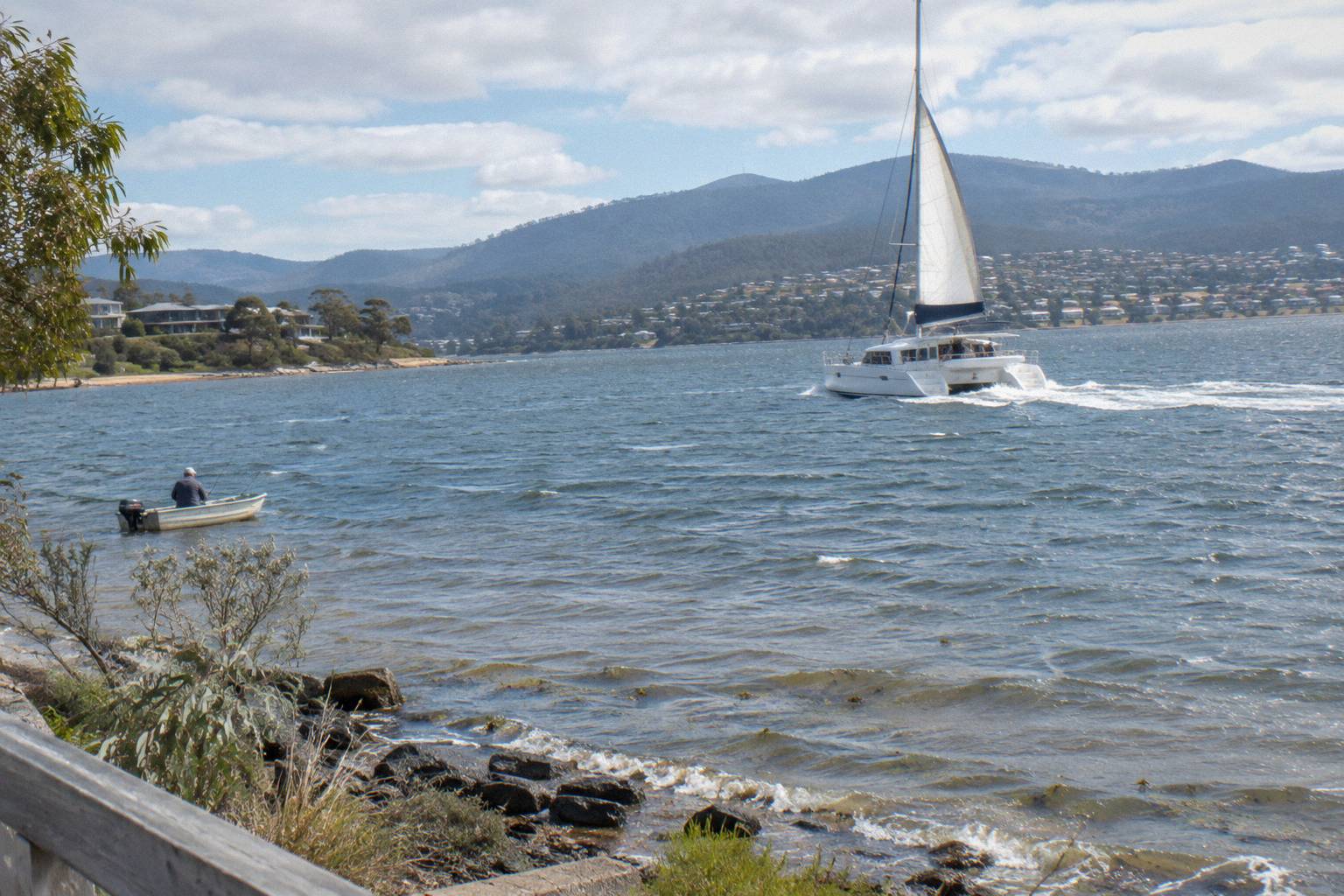
Read the table as an exposure ladder, not a comfort ranking. The one-hour Morning River Cruise from Murray Street Pier is the smallest possible dose of Hobart's water: an hour on the river, refreshments available to buy, and back at the pier. It is the product most nervous passengers should look at first, and its booking terms, read on a sister listing, offer cancellation up to 24 hours in advance for a full refund.
The catamaran is the second rung and, for some passengers, the better one. The booking page for the River Derwent Guided Cruise says the vessel has two indoor levels with floor-to-ceiling windows and three outdoor decks, and states the catamaran is wheelchair friendly on the main deck, with children, prams and service animals welcome. Attribute that to the booking page and extend it to no other boat. An indoor level you can retreat to is a genuinely useful feature when the breeze picks up on the outer decks.
The paragraph above discussed the catamaran, so it earns its tile here.
One nuance on the catamaran's duration: the operator's homepage says 90 minutes and a booking page says 1 hour 45, so the honest printed figure is the range, about 1.5 to 2 hours, never either number alone. If a tight schedule matters to you, check availability and confirm the running time for your date before you book.
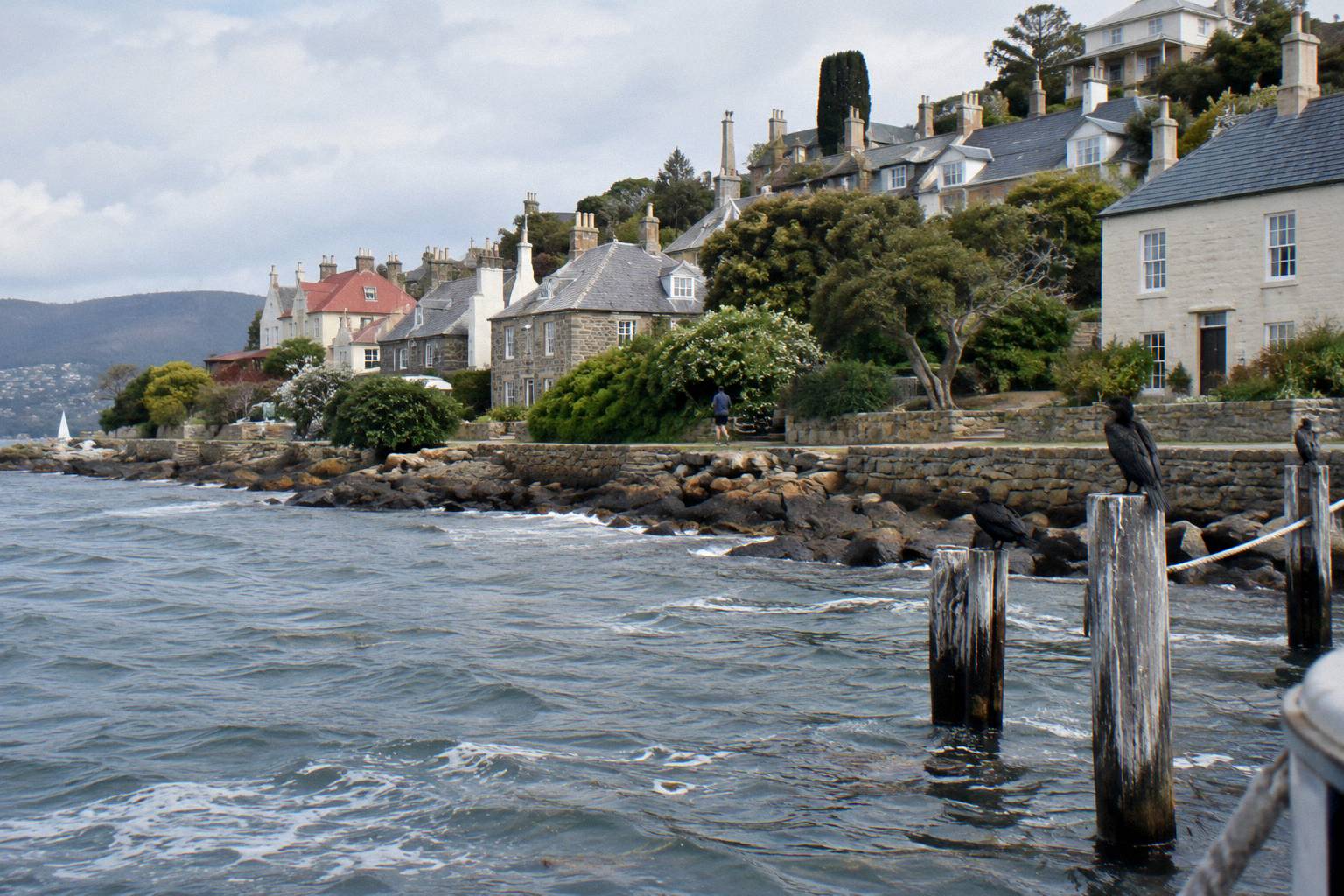
The Morning River Cruise, one deck earlier on the ladder, sits below.
Does The Iron Pot Cruise Hit Open Ocean?
Yes, by the operator's own route text: the cruise runs down the Derwent past Battery Point, Wrest Point Casino and the Shot Tower to Storm Bay, and passes Hope Beach close in, with swell straight from the Southern Ocean. It is the only roster route whose own description names Southern Ocean swell, and it runs about 2.5 hours.
That quoted phrase is the operator's route wording, said once here as such, and it is the single most useful sentence a nervous passenger can read. The lighthouse itself stands on Iron Pot island in Storm Bay at the mouth of the Derwent: Tasmania's oldest lighthouse, built by convicts in 1832, an 11 metre sandstone tower with walls 1.5 metres thick, solar powered since 1977, with a range of 11 nautical miles. The route also passes Betsey Island, uninhabited, with gulls, cormorants and white-bellied sea eagle noted in the route text, though no sighting of any bird is ever promised.
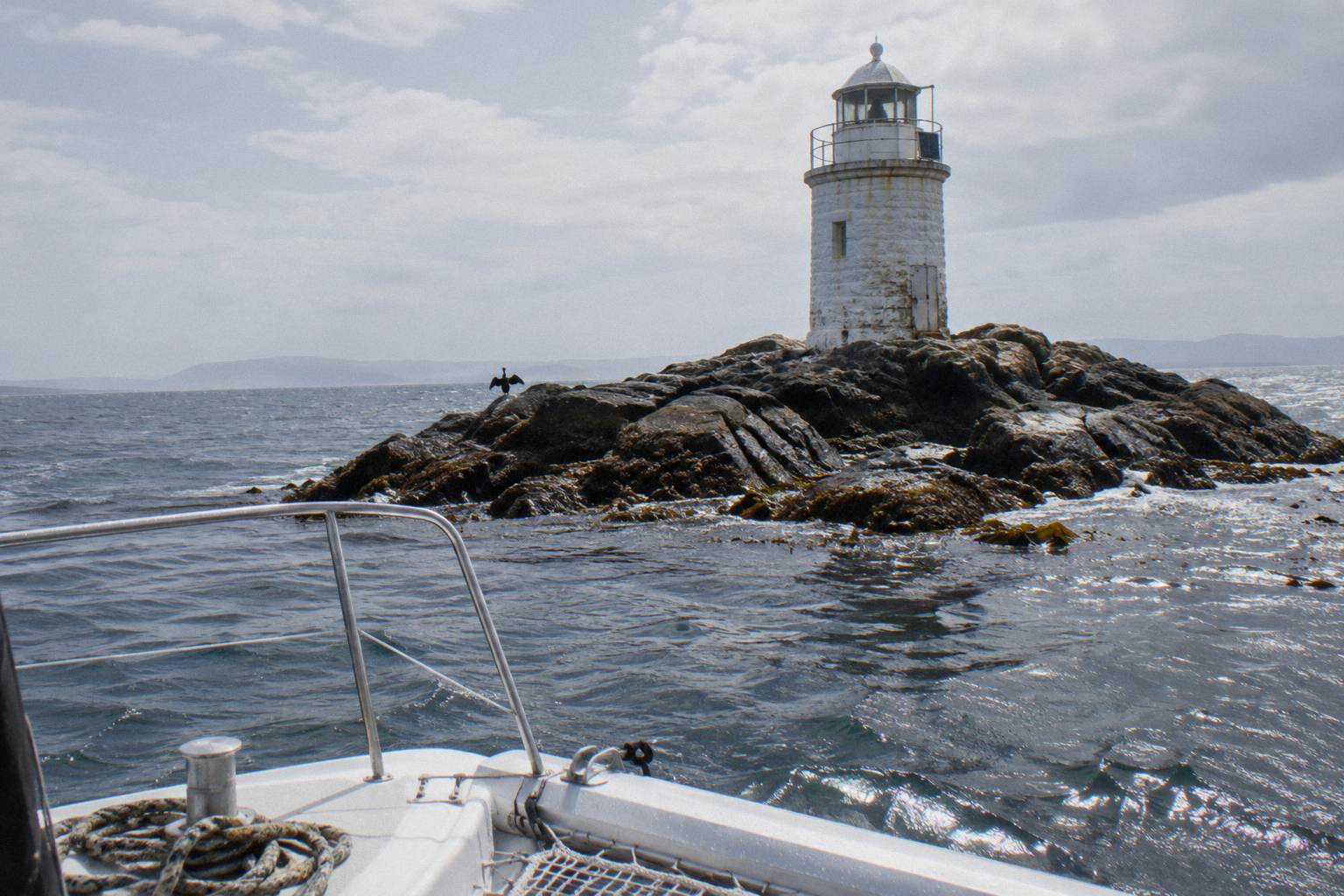
What balances the open-bay leg is the boat and the operator's stated record: enclosed cabin, leather seats, large awning windows, an onboard toilet on every vessel, ginger tablets carried, and a stated low incidence of seasickness. Children of all ages are welcome, with the child fare covering ages 1 to 16, and the operator's own advice is to dress children warmly as it does get cold out on the water. The adult fare is the operator's price of A$150, child A$130, and the booking page offers free cancellation up to 24 hours in advance.
Departures are stated plainly: 10.00am from December to April, and 2.00pm daily all year, operating daily except Christmas Day, bookings essential. For the fuller route story, see the Iron Pot lighthouse cruise guide, and for the operator behind it, the Pennicott Wilderness Journeys overview.
What About Longer Cruises, Lunch Boats And The MONA Ferry?
Longer products are longer exposure, plainly: the Ultimate Seafood Cruise about 4.5 hours, the Peppermint Bay Lunch Cruise about 5.5, the Full-Day Gourmet Seafood Cruise about 7.5. None of these operators states seasickness data. The MONA ferry is a separate museum ferry, about 30 minutes each way from Brooke Street Pier, from A$32, not a sightseeing cruise product on this roster.
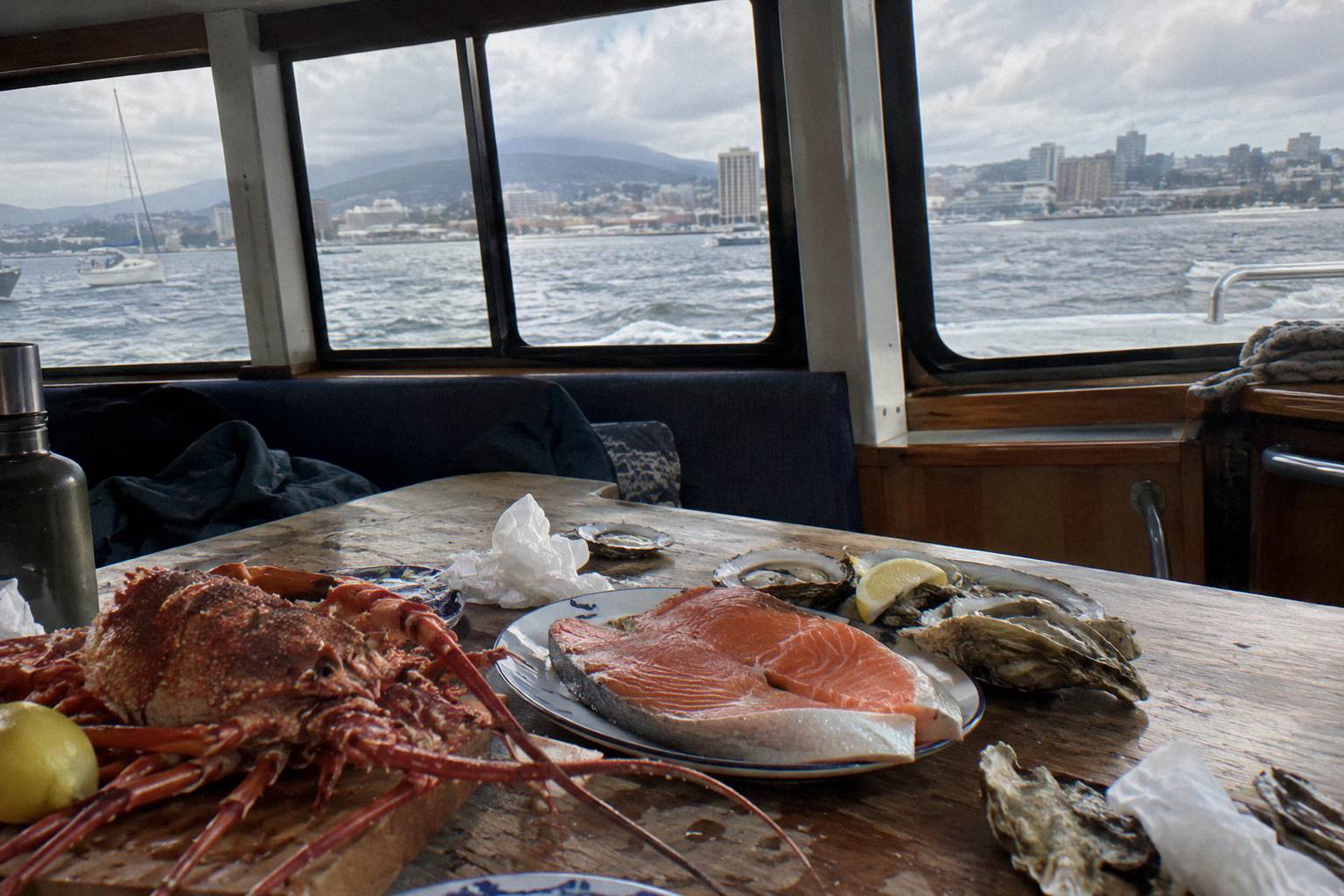
The lunch and seafood boats deserve their own framing because the meal changes the calculus. The Ultimate Seafood Cruise, run by Wet Edge Enterprises on a spacious catamaran from Elizabeth Street Pier, is crewed by commercial fishermen and women who own and operate the cruise, and its degustation runs to abalone, rock lobster, oysters, mussels, sea urchin, periwinkles and Tasmanian Atlantic salmon, with drinks, a fruit and cheese platter and cake. A four-and-a-half-hour seafood feast is a wonderful product and a poor first boat for a passenger who fears nausea; nothing in the booking data states otherwise.
The Full-Day Gourmet Seafood Cruise, Pennicott's Seafood Seduction, runs about 7.5 hours from Constitution Dock on a custom-built vessel with an enclosed cabin and leather seats, serving rock lobster, salmon and freshly shucked oysters with local wines, beers, ciders and juice. It carries the roster's other printable rating, 5.0 across 20 reviews, a much smaller pool, printed with its count and no praise. Its price is not stated; check the booking page.
The MONA ferry deserves a paragraph because worried passengers often conflate it with the cruises. It is run by the museum, departs Brooke Street Pier, takes about 30 minutes each way, costs from A$32 with the return fare the same as one way, and its lower deck is accessible for mobility aids and prams, with a bar and an accessible toilet on that deck. The museum's own site, mona.net.au, carries the live timetable, which loads dynamically and shifts from 3 December, so no departure time is printed here. A 30-minute river crossing on a big ferry is, by duration and vessel type, the gentlest motor-boat experience on the waterfront, but it is a museum ferry, not one of this site's bookable cruises. The full comparison lives in the MONA ferry or cruise guide.
Two scope gaps, stated once each, because searching readers deserve straight answers. There is no bookable dinner cruise among the tours covered here, and there is no whale-watching cruise, no sunset cruise and no Hobart-departing boat to Tasman Island or Bruny Island; those islands' cruises leave from Port Arthur and Adventure Bay, with Hobart appearing only as a coach pick-up on full-day tours. The Tasman Island cruises guide covers that operator's Port Arthur departures, adult A$190, child A$115, family A$590 for 3 hours.
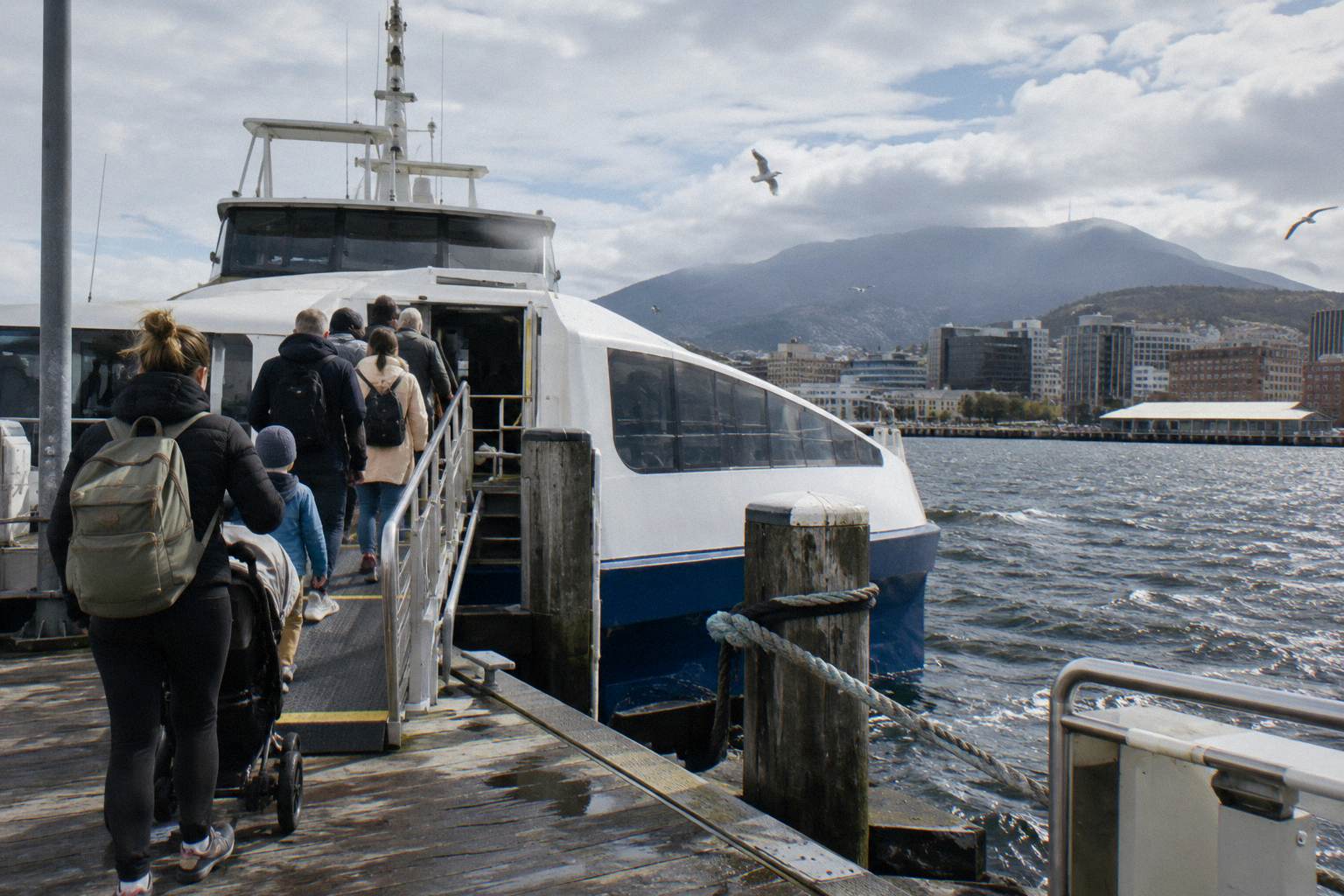
How Do Hobart's Months And Weather Affect The Decision?
Bureau of Meteorology averages for Hobart show mean maximums of 21.8 degrees in January and December-adjacent summer, falling to 11.9 in July, with mean rain days of 1 mm or more ranging from 4.9 in February to 9.4 in October. These are land-station figures from a site recording since 1882. They describe the city, not the water, and no operator states a weather-cancellation policy.
The table gives the honest monthly picture. Use it for clothing and picnic planning, not for sea-state prediction.
| Month | Mean max (C) | Mean min (C) | Mean rain days 1 mm+ |
|---|---|---|---|
| January | 21.8 | 12.1 | 5.6 |
| February | 21.8 | 12.1 | 4.9 |
| March | 20.3 | 11.0 | 6.1 |
| April | 17.5 | 9.0 | 6.8 |
| May | 14.6 | 7.0 | 7.0 |
| June | 12.1 | 5.2 | 7.2 |
| July | 11.9 | 4.7 | 7.8 |
| August | 13.2 | 5.3 | 8.4 |
| September | 15.2 | 6.5 | 8.5 |
| October | 17.1 | 7.9 | 9.4 |
| November | 18.8 | 9.4 | 7.9 |
| December | 20.4 | 10.9 | 7.2 |
The practical reading: summer brings the warmest days and the extra 10.00am Iron Pot departures from December to April, while October is the wettest by rain days and February the driest. None of that forecasts swell. The only weather-linked advice any operator gives is Pennicott's line about dressing children warmly, and the general packing logic is covered properly in what to wear on a Hobart cruise.
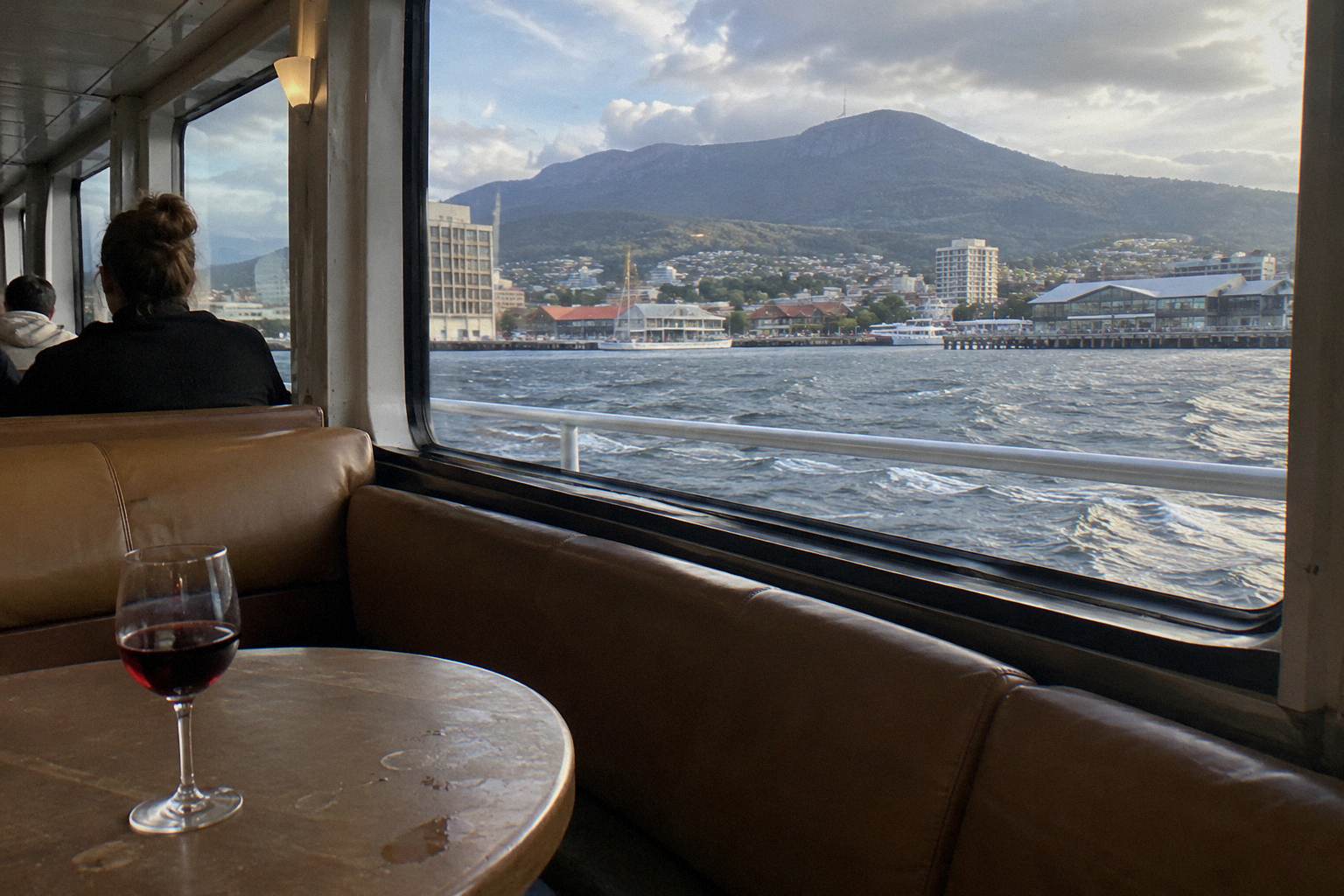
Cancellation terms are the nervous passenger's real safety net, and it is a good one: across the roster, a full refund is available up to 24 hours before departure. That means you can book ahead for a busy summer week and still step back if the day turns or a stomach turns with it. How far ahead cruises sell out is not stated anywhere, so book early for December-to-April dates rather than guessing.
Which Boat Should A Nervous Passenger Actually Book?
Start with the Morning River Cruise, about one hour on the river, as the smallest dose. Step up to the enclosed-cabin Iron Pot cruise if you want the lighthouse and Storm Bay with the operator's stated low seasickness incidence and ginger tablets on board. Choose the catamaran if an indoor level matters. Skip the 4.5-hour-plus boats until you know how your body handles the shorter ones.
That is a decision tree built only from stated facts: durations, vessel descriptions, departure piers and the one operator seasickness claim on record. It requires no forecast, no promise and no invented sea state. If seasickness is the main thing standing between you and a booking, its 24-hour refund window makes the hour-long river loop a reversible one.
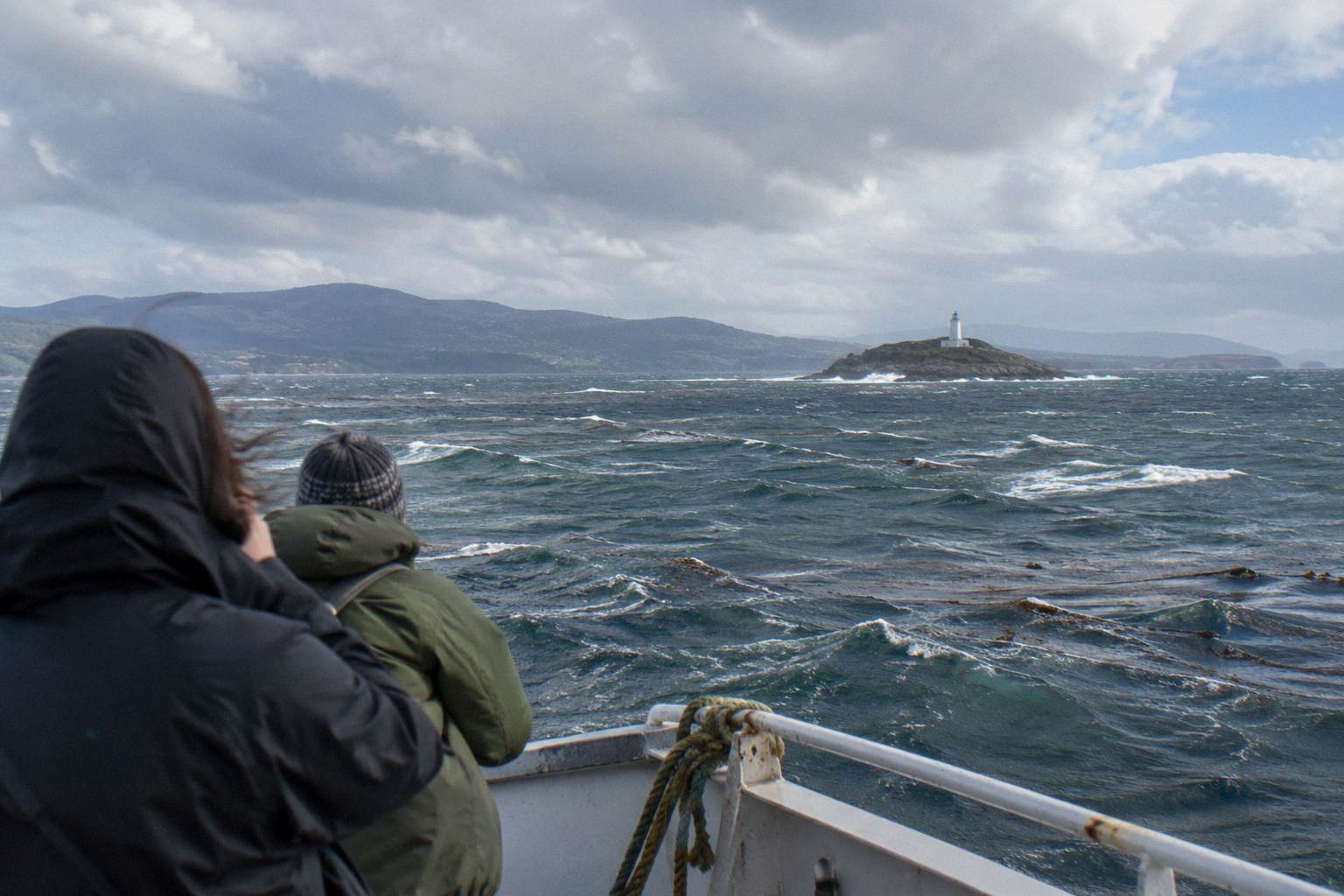
The featured pick for this article is the 2.5-Hour Iron Pot Lighthouse Cruise, and the reasoning is on the record rather than in adjectives: enclosed cabin, leather seats, an awning-window view from inside, a toilet on every vessel, ginger tablets carried, low stated incidence, a 4.9 rating across 248 reviews, the operator's price of A$150 adult and A$130 child, and free cancellation up to 24 hours ahead. For a fuller picture of the site's coverage, Hobart River Cruises publishes guides on every departure pier and product family.
Whichever you choose, do not travel if you are already unwell or flu-like; the operator says so itself. And if your worry is a child's stomach rather than yours, the family-side details, fares for ages 1 to 16 and the warm-clothing advice, are collected in taking a Hobart cruise with kids.
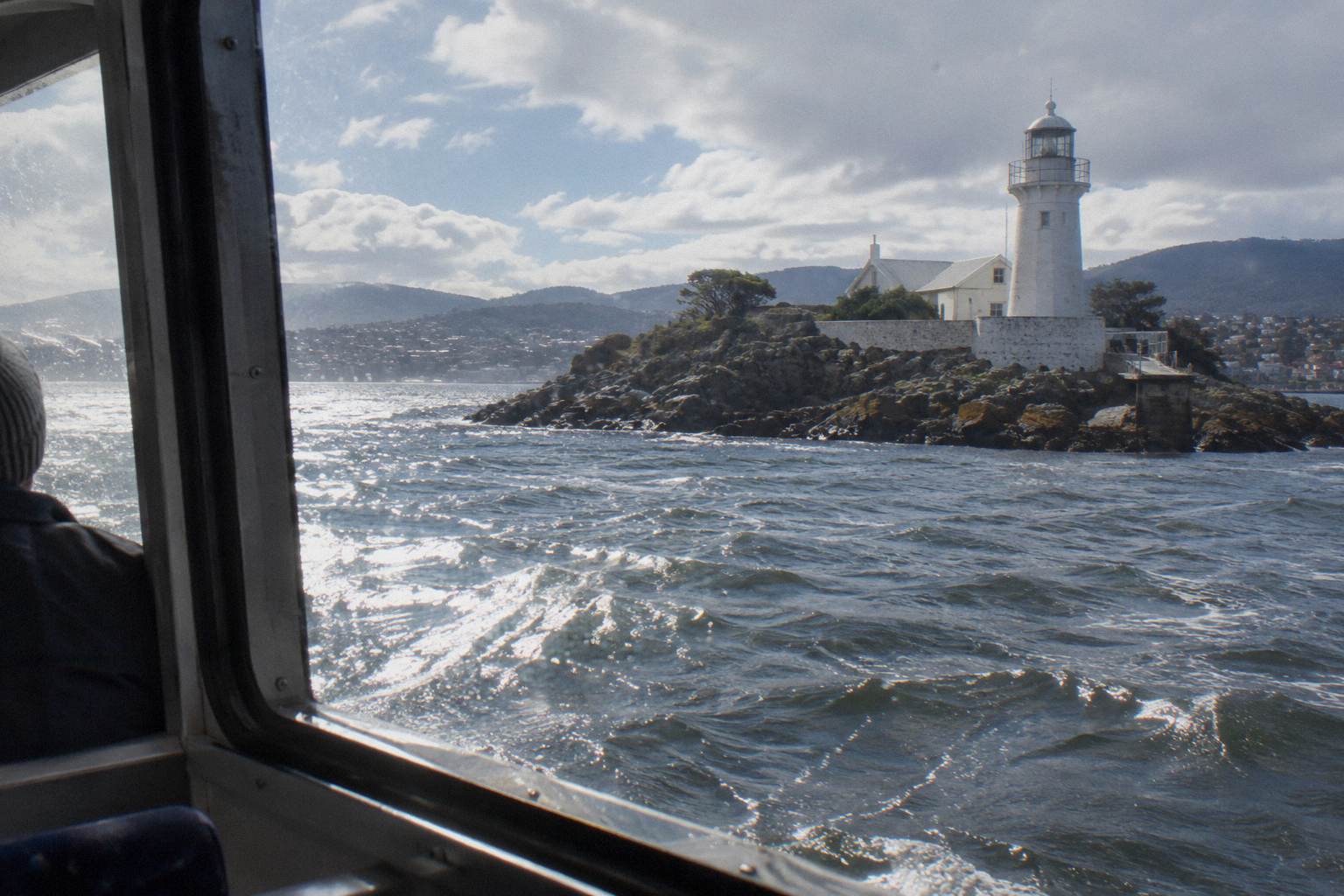
Before the close, the full trio once more: the enclosed-cabin lighthouse cruise, the one-hour river loop, and the indoor-level catamaran.
Common Questions About Hobart Cruise Seasickness
Will I Get Seasick On A Hobart Harbour Cruise?
Probably not. The one operator statement on record says seasickness incidence is low on Pennicott's cruises, with Travel Calm Ginger tablets on board. Exposure varies by product: the short river loops run one to two hours on sheltered water, while the Iron Pot route reaches Storm Bay and passes Hope Beach, where the operator's route text describes swell straight from the Southern Ocean.
Which Hobart Cruise Is Shortest If I Worry About Seasickness?
The Morning River Cruise, about one hour from Murray Street Pier, is the shortest on the roster. The Historic Lunch Cruise, about 1.5 hours on a river route south to Battery Point and Sandy Bay, is next. The River Derwent Guided Cruise On A Catamaran runs about 1.5 to 2 hours.
Does Any Operator Supply Seasickness Tablets?
Yes, one. Pennicott Wilderness Journeys states that Travel Calm Ginger tablets are carried on board its boats and that seasickness incidence is low. No other operator on the roster states any seasickness provision or data.
Can I Cancel A Hobart Cruise If I Feel Unwell On The Day?
The booking pages for the roster's cruises allow cancellation up to 24 hours in advance for a full refund, and the Iron Pot booking page states free cancellation up to 24 hours ahead. Inside 24 hours, Pennicott's own terms charge 100%; inside 48 hours, 50%. The operator also asks passengers not to travel if unwell or flu-like.
Is The Iron Pot Cruise Rough?
Its route finishes in Storm Bay and passes Hope Beach close in, where the operator's own route text mentions swell straight from the Southern Ocean. The boat, however, has an enclosed cabin, leather seats and large awning windows, and the operator states seasickness incidence is low with ginger tablets on board.
Is The MONA Ferry A Smoother Option Than A Cruise?
It is a different thing: a museum ferry, about 30 minutes each way from Brooke Street Pier, from A$32, not one of this site's bookable sightseeing cruises. By duration alone it is the shortest motor trip on the waterfront, and its lower deck is accessible for mobility aids and prams. Museum entry is a separate ticket.