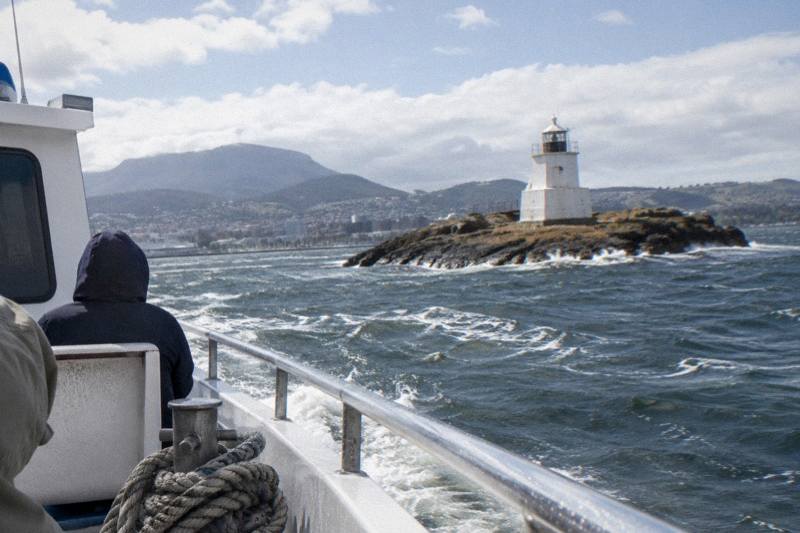
Iron Pot Lighthouse: Seeing Tasmania's Oldest Lighthouse From A Boat
The Iron Pot lighthouse has stood on its tiny Storm Bay island since 1832, and the only practical way to see it is from a boat. This guide covers the building itself, the cruise that takes you there, and the alternatives worth knowing about.
Short answer
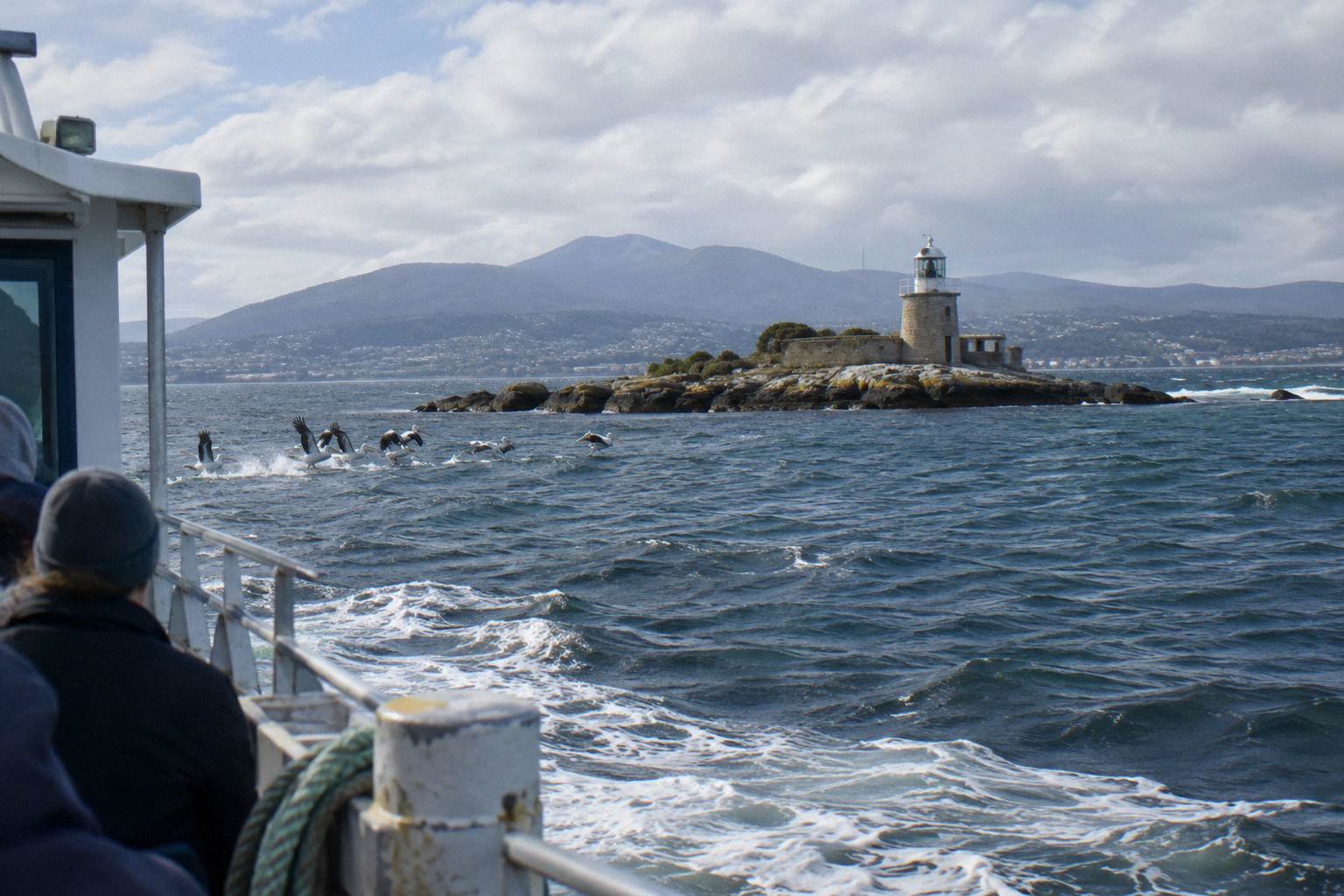
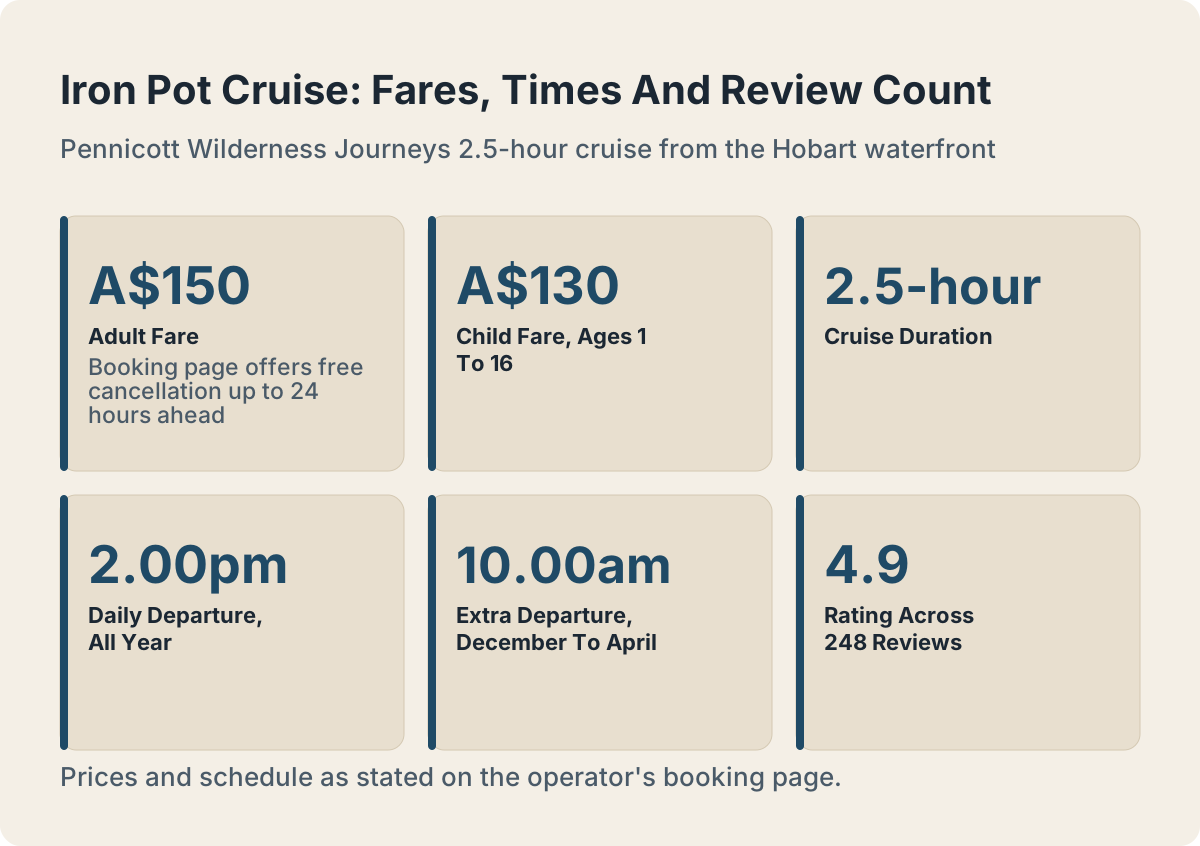
The Iron Pot lighthouse stands on an island in Storm Bay at the mouth of the Derwent, built by convicts in 1832. The 2.5-Hour Iron Pot Lighthouse Cruise from Franklin Wharf runs daily except Christmas Day, departing 2.00pm all year and 10.00am from December to April, at the operator's price of A$150 adult and A$130 child.
A squat sandstone tower on a bare island at the mouth of the Derwent is the oldest lighthouse in Tasmania, built by convicts in 1832, and there is no road to it. No bridge, no ferry service, no walking track. The island sits in Storm Bay where the river meets the open Southern Ocean, and the only realistic way for a visitor to see the lighthouse properly is from the water, which is exactly why Hobart's cruise operators run trips out past it.
The best-known of those trips is the 2.5-Hour Iron Pot Lighthouse Cruise, run by Pennicott Wilderness Journeys from the Hobart waterfront. It carries a rating of 4.9 across 248 reviews, the largest review pool of any cruise on this site's roster, and it combines the lighthouse with a run down the Derwent past Battery Point, Wrest Point Casino and the Shot Tower. This guide covers the lighthouse itself, the cruise, what it costs, when to go, and what the alternatives look like if a 2.5-hour open-water trip is not quite the right fit.
What Is The Iron Pot Lighthouse?
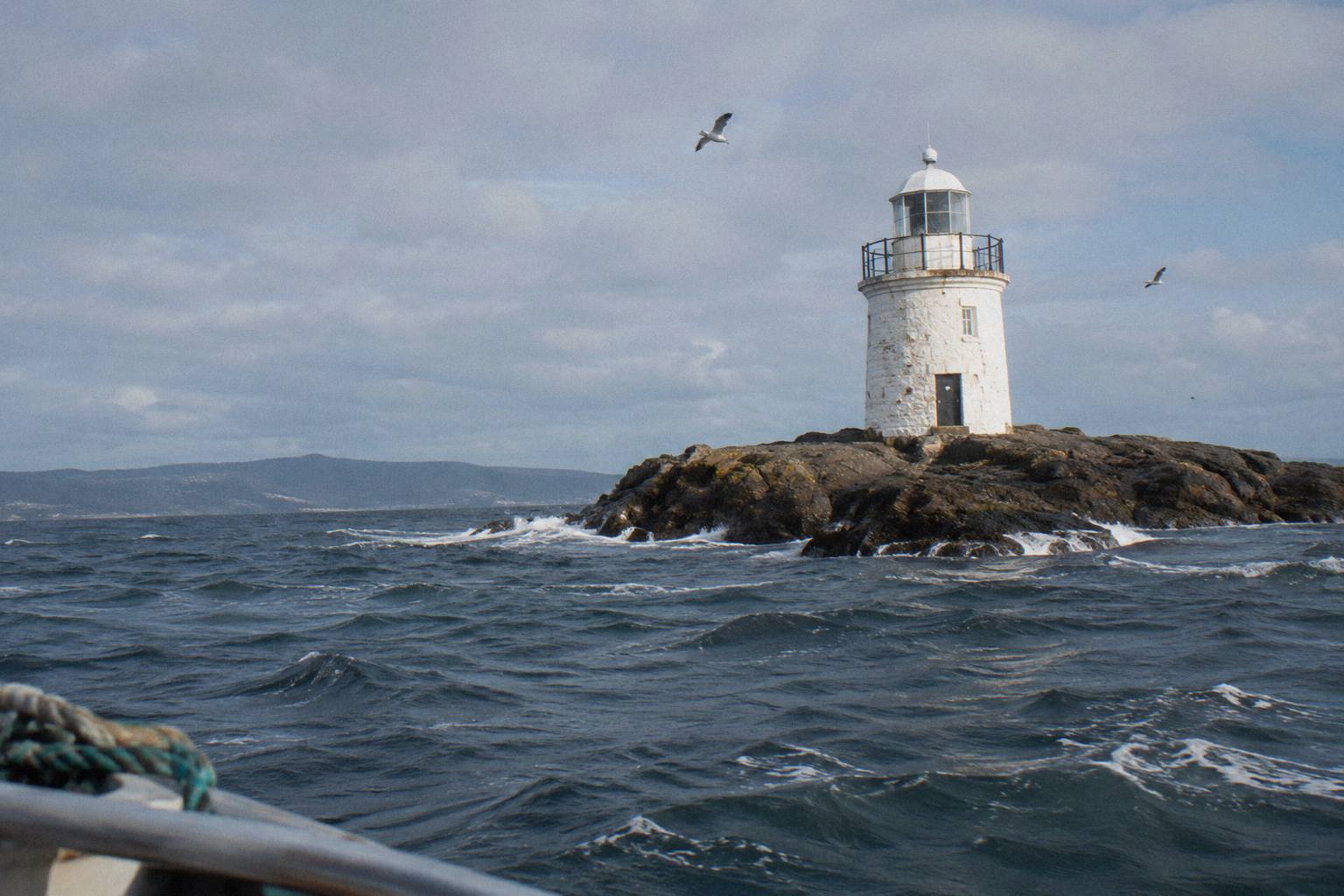
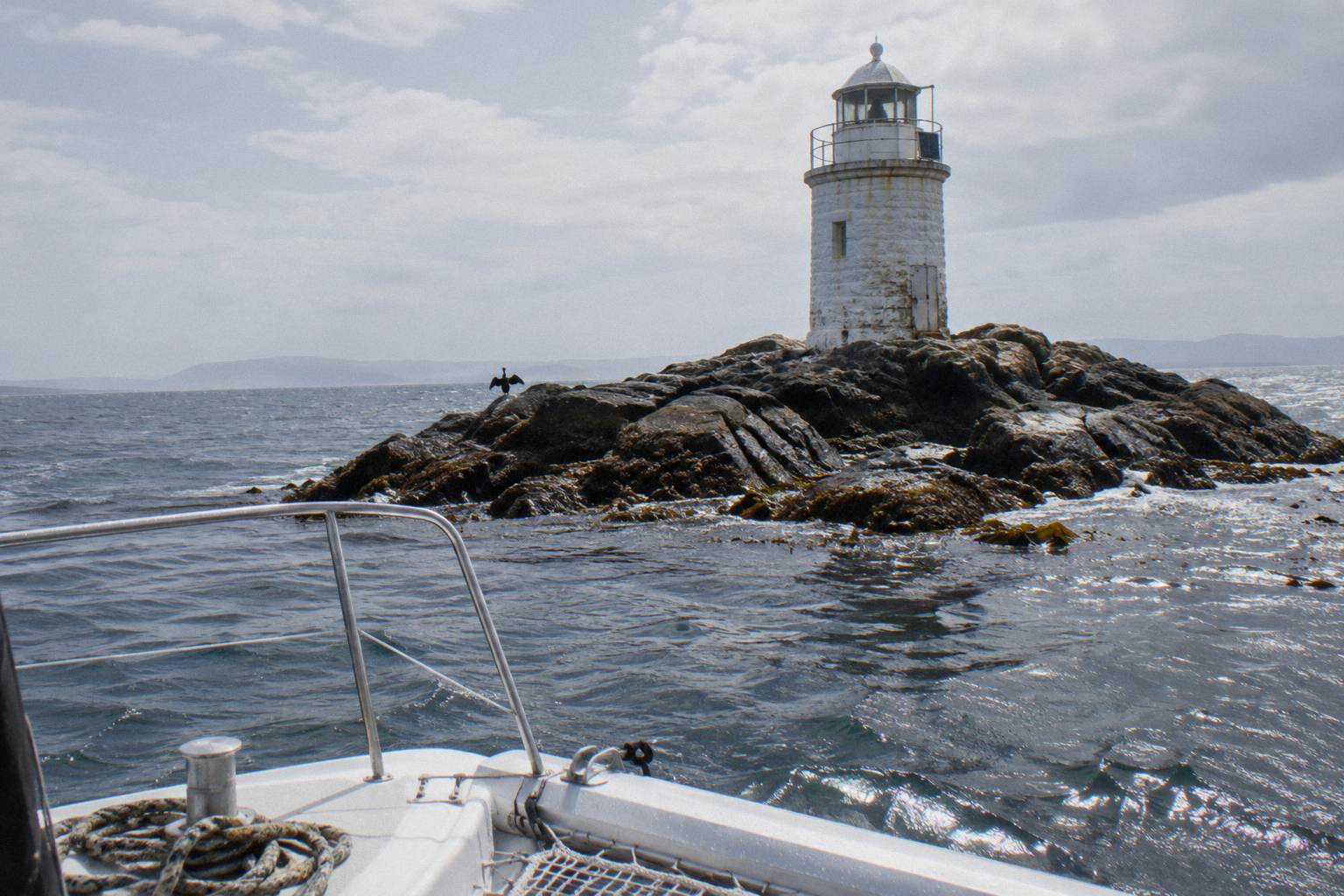
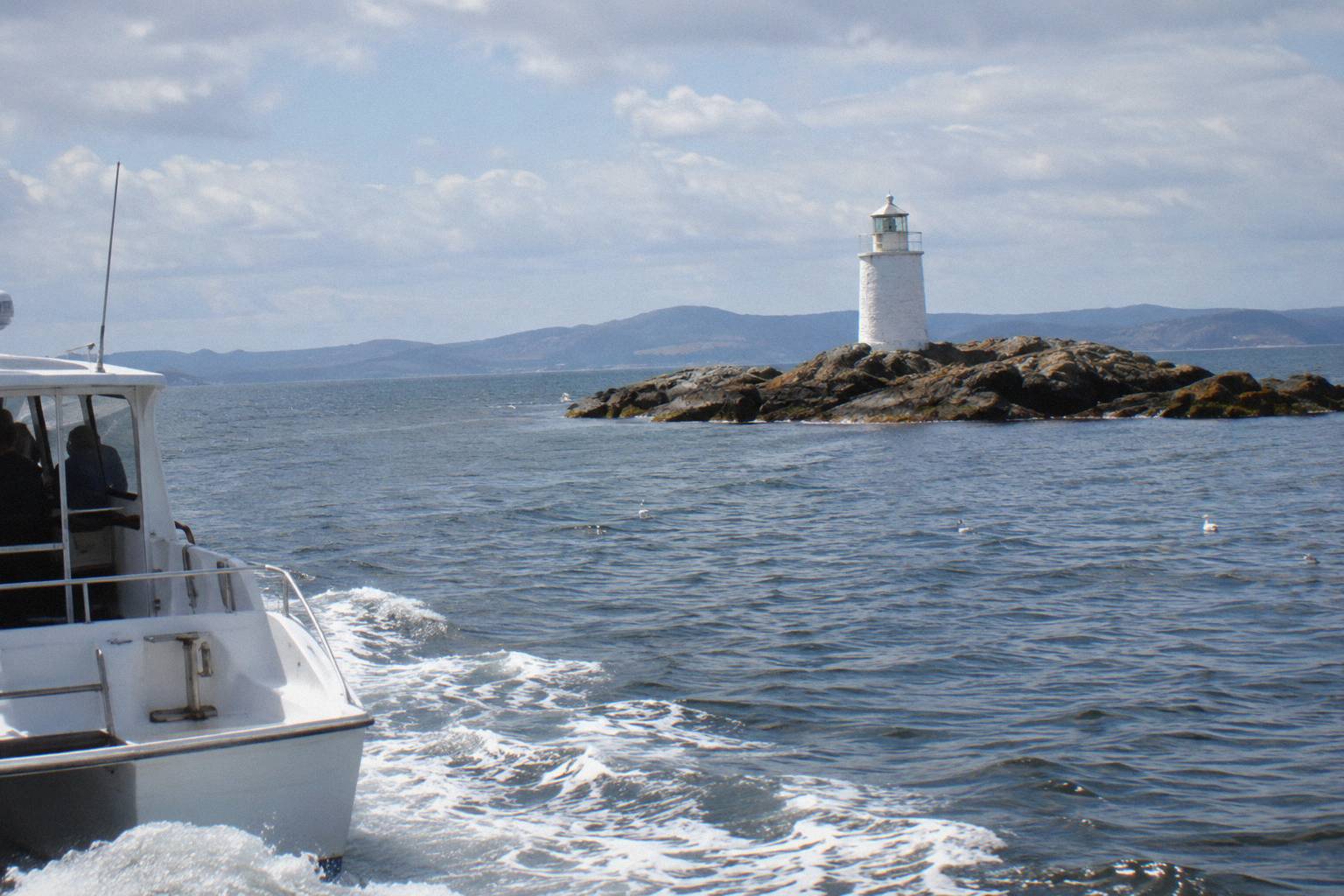
The Iron Pot is an 11-metre sandstone lighthouse on a small island in Storm Bay at the mouth of the Derwent River, built with convict labour in 1832. It is the oldest lighthouse in Tasmania, with walls 1.5 metres thick, an 11 nautical mile range, and solar power since 1977.
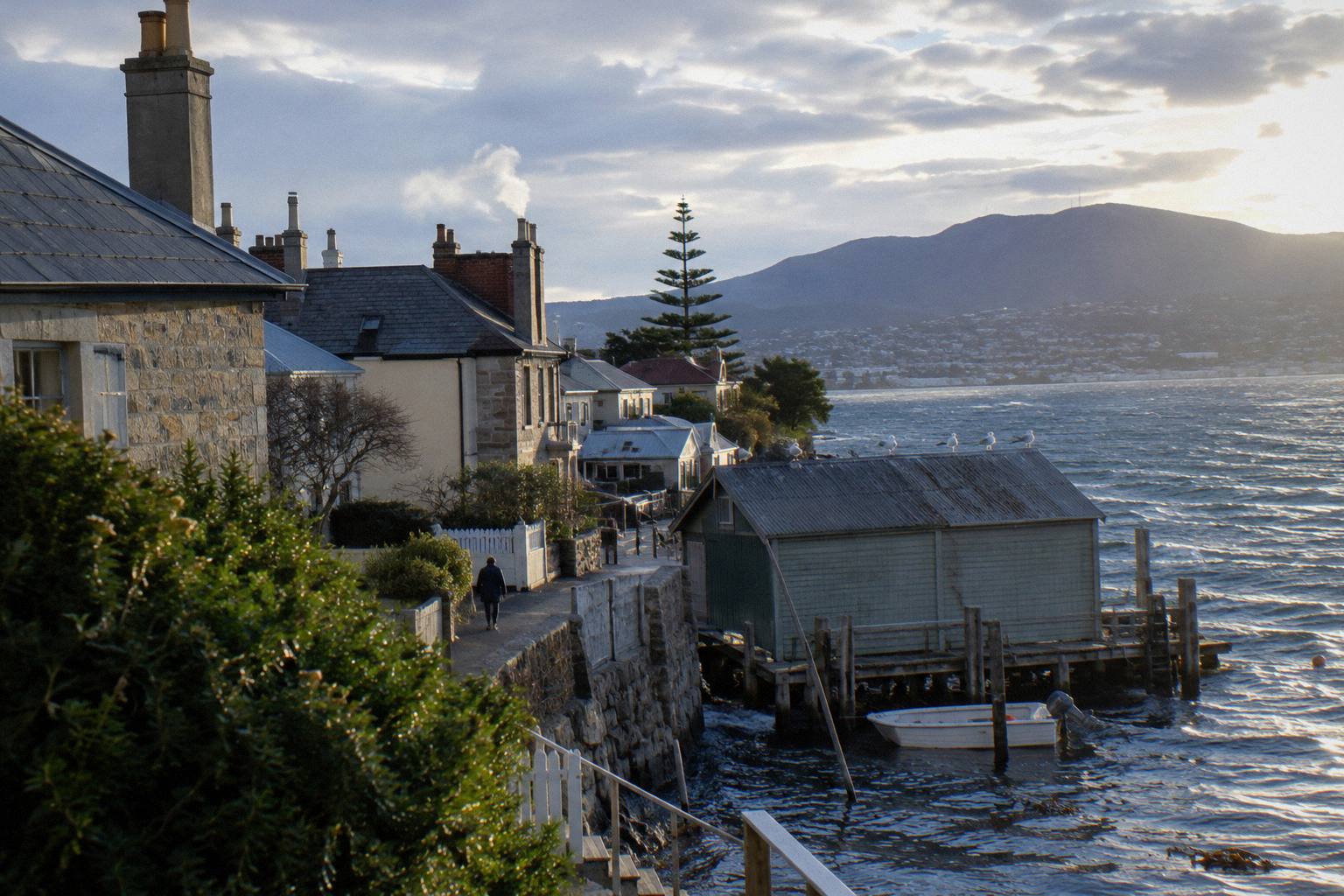
Those are the plain facts of the building, and they are more remarkable than they first sound. When the tower was raised in 1832, Hobart was a colonial port town barely three decades old, and the trade route up the Derwent to the docks at Sullivans Cove needed marking. Convict labour cut and laid the sandstone, and the walls, at a metre and a half thick, were built to shrug off weather arriving uninterrupted from the Southern Ocean. The island it stands on is small enough that from a passing boat the lighthouse appears to rise almost directly from the water.
The lamp has been solar powered since 1977, and its range is 11 nautical miles. Beyond that, little is published about the island itself. It is not stated whether anyone can land there, how close a cruise boat comes, or what, if anything, else occupies the rock. What is certain is that the lighthouse cannot be seen properly from anywhere on the Hobart shore: it sits well out in Storm Bay, past the shelter of the river, and the viewing platform is a boat's deck.
If you are interested in the river the lighthouse watches over, the guide to Derwent River facts every cruiser should know covers the waterway in more detail.
The 2.5-Hour Iron Pot Lighthouse Cruise From Hobart
The 2.5-Hour Iron Pot Lighthouse Cruise is run by Pennicott Wilderness Journeys aboard small, enclosed-cabin vessels with leather seats and an onboard toilet, departing from the Dock Head Building on Franklin Wharf. It departs at 2.00pm daily all year, with an extra 10.00am departure from December to April, and bookings are essential.
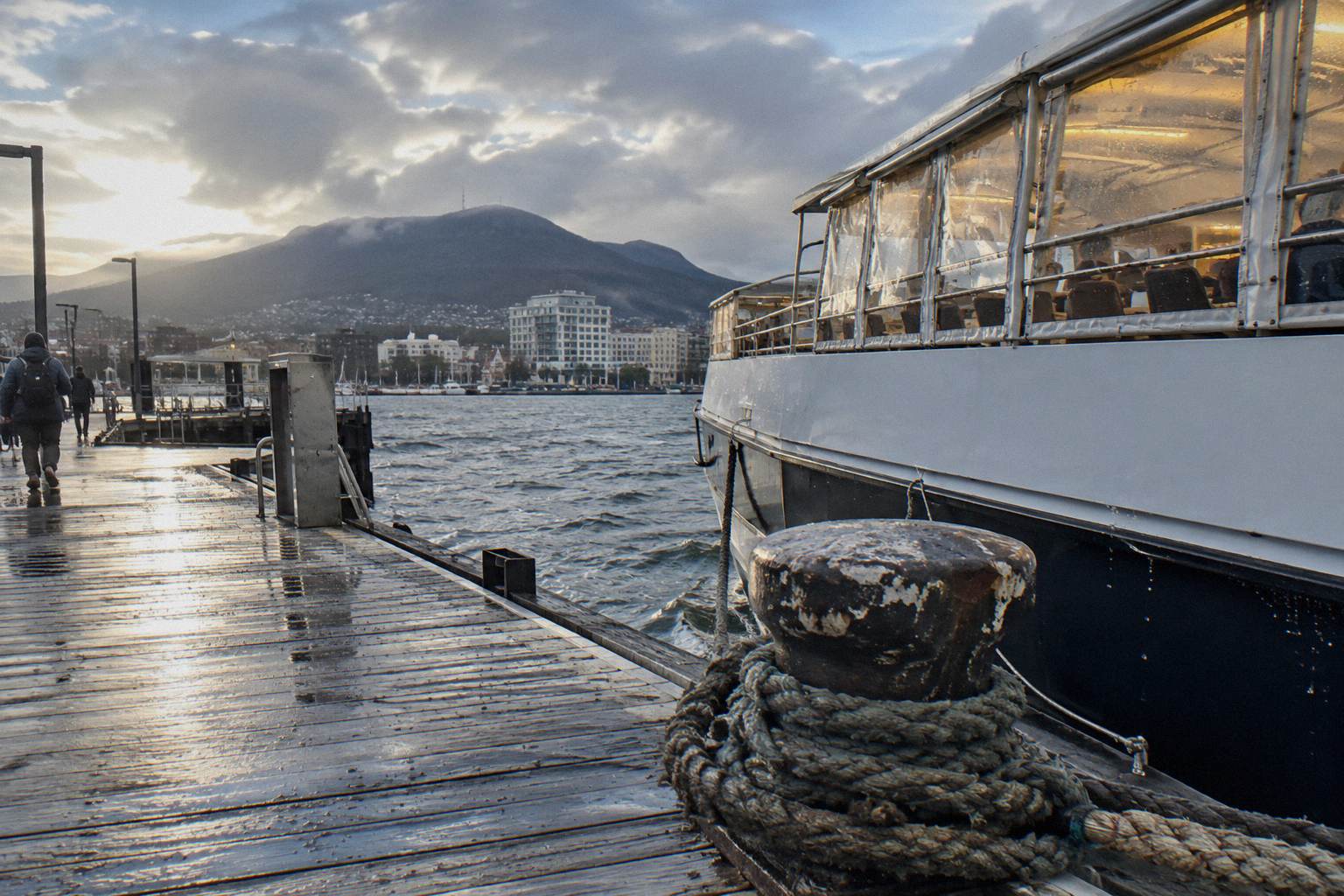
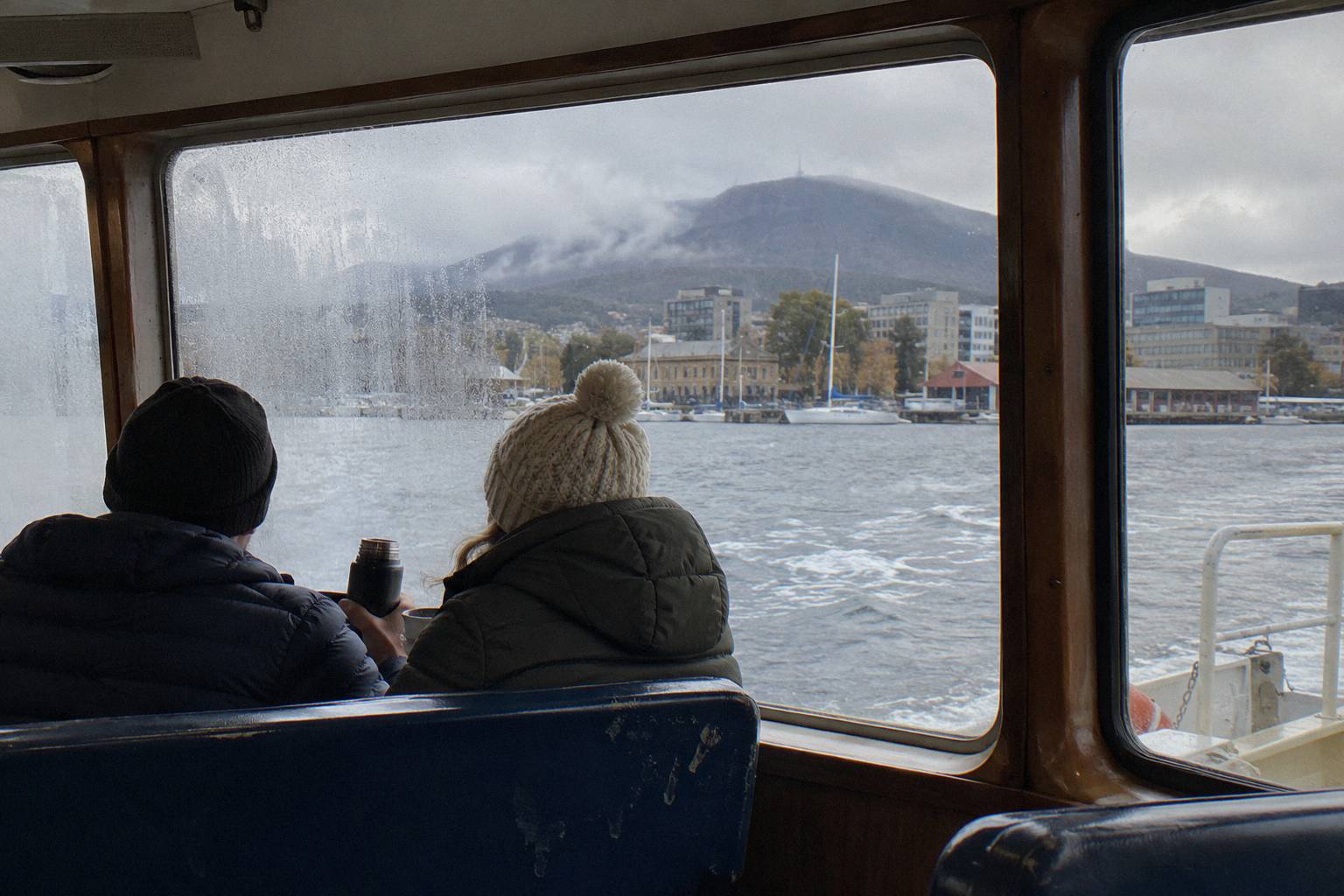
The operator describes the product as a 2.5-hour cruise from Hobart's waterfront on brand new vessels in a small group. The boats have an enclosed cabin with leather seats and large awning windows, which matters more than it sounds: the cruise leaves the sheltered river for Storm Bay, and an enclosed cabin means you can watch the coastline without standing in the breeze the whole way. Every boat carries an onboard toilet.
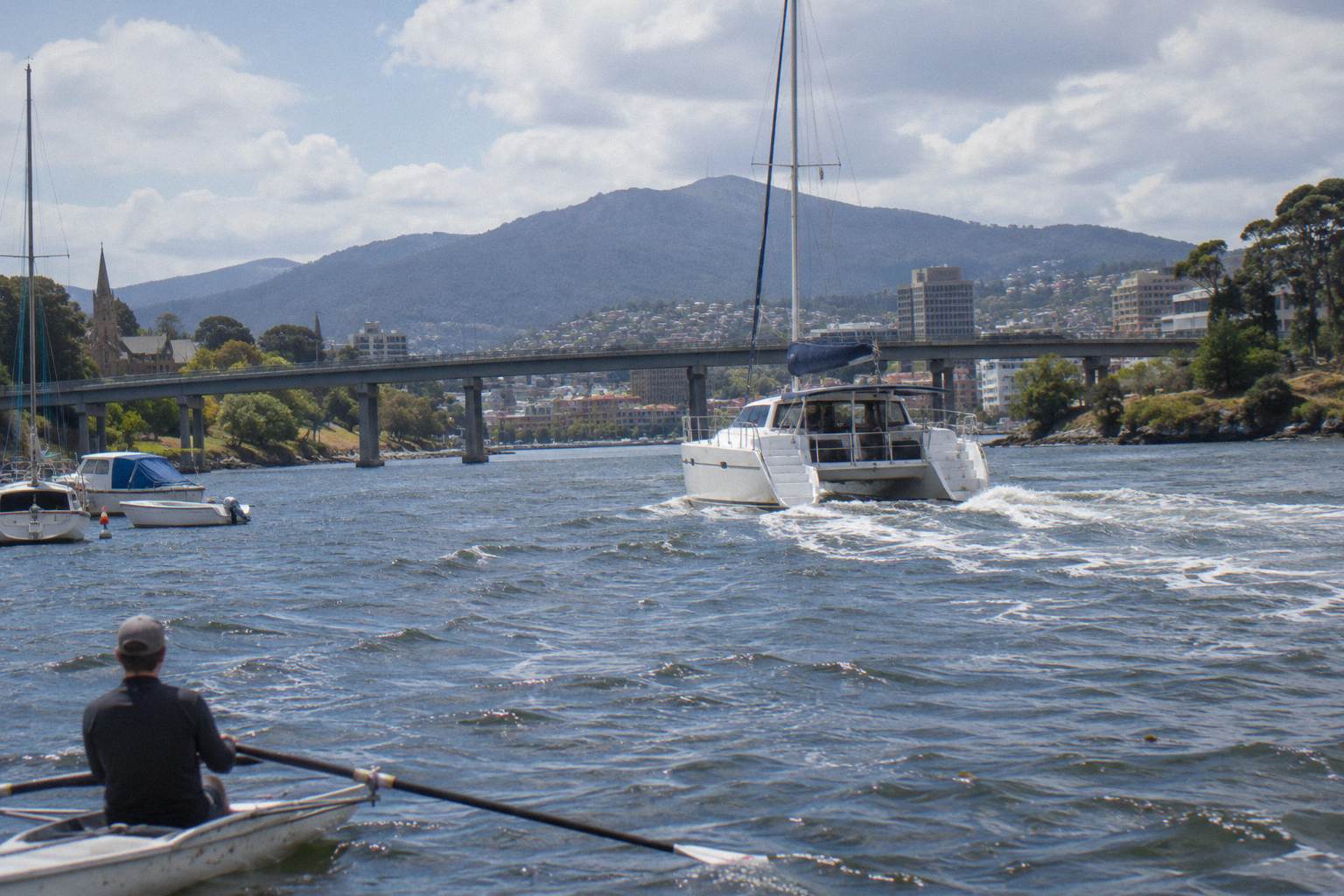
The route, in the operator's own words, runs down the Derwent past Battery Point, Wrest Point Casino and the Shot Tower, with Mount Wellington towering over the city behind you, out into Storm Bay to the lighthouse, and past Betsey Island, which is uninhabited and home to gulls, cormorants and white-bellied sea eagles. Hope Beach is seen close in, with swell arriving straight from the Southern Ocean, a favourite of local surfers. The skipper gives live commentary throughout, including what the operator calls the city's rich maritime past. No sighting of any bird or animal is promised, and none should be assumed; the islands and their residents are wild, and the cruise treats them that way.
A few practical points. The cruise operates daily except Christmas Day. Children of all ages are welcome, with the child fare covering ages 1 to 16, and the operator's own advice is to dress children warmly "as it does get cold out on the water", in summer as much as in winter. On the seasickness question, the operator says incidence is low and that Travel Calm Ginger tablets are carried on board; anyone feeling unwell or flu-like is asked not to travel. If you are worried about the water specifically, it is worth reading up on whether Hobart cruises cause seasickness before you commit.
This cruise is a standout for good reason: it is the one product built entirely around the lighthouse.
The rest of this guide works through how they differ.
How Much The Iron Pot Cruise Costs
Pennicott Wilderness Journeys' own price for the Iron Pot cruise is A$150 for an adult and A$130 for a child aged 1 to 16, and the booking page offers free cancellation up to 24 hours in advance. That is the only lighthouse cruise price that is published at all; the alternatives' prices are not stated, and you should check their booking pages directly.
Two details sit behind those numbers and are worth knowing before you book. First, the operator's own terms apply a 100% charge for cancellations within 24 hours of departure and 50% within 48 hours, and a booking made through a third-party retailer carries that retailer's policy instead. The booking page for the Iron Pot cruise itself offers free cancellation up to 24 hours ahead, which lines up with the operator's terms: inside that final day, the fare is committed. Book early in your trip if your plans might shift.
Second, that child fare is unusually broad. Most cruise products define children as under 12 or under 16 at the outside; here the A$130 fare covers every child from 1 to 16, which makes a family booking materially cheaper than you might expect from adult pricing alone. No other child discount on this site's roster is stated beyond Iron Pot's and Peppermint Bay's.
For orientation, the Pennicott booking centre is the Dock Head Building on Franklin Wharf, next to the Constitution Dock lifting bridge. There is no parking at the booking centre itself; the nearby options are the Argyle Street Car Park and the Market Place Car Park. For anyone weighing the other ways to spend a cruise budget in Hobart, what Hobart cruise prices cover breaks down the full roster.
If the Iron Pot cruise fits, there is little reason to hesitate on price grounds alone: it is the only published-price cruise on the roster, the cancellation window is generous, and the product it delivers, a small-group run out to a lighthouse most visitors never see, is not duplicated anywhere else on the Hobart waterfront.
The Route Down The Derwent To Storm Bay
The cruise runs from Franklin Wharf down the Derwent past Battery Point, Wrest Point Casino and the Shot Tower, out to the Iron Pot lighthouse in Storm Bay, past uninhabited Betsey Island and the surf swell of Hope Beach, with Mount Wellington over the city the whole way and live skipper commentary on Hobart's maritime past.
Each landmark on the way out tells its own part of the story. Battery Point is Hobart's oldest maritime suburb, its cottages and former sail-makers' lofts facing the working docks. Wrest Point Casino tower is the modern landmark of the western shore, and the Shot Tower at Taroona, a 48-step sandstone column once used to drop molten lead into water to make shot, is the strangest sight on the southern river, though the tower's dimensions are not part of what the tour data states. The Derwent between them is wide, working water: the river runs through Hobart and reaches Storm Bay at its mouth, and this cruise follows that line all the way out.
Past the lighthouse, Betsey Island sits uninhabited, its birds, gulls, cormorants and white-bellied sea eagles, part of what the operator points out without promising anything. Hope Beach is seen close in, and the operator's route text notes the swell there arrives straight from the Southern Ocean with nothing between it and Antarctica, which is why local surfers favour it and why the enclosed cabin on the boats earns its keep on the return leg.
| Leg of the cruise | What the operator's route text says you pass |
|---|---|
| Leaving the waterfront | Franklin Wharf and the city docks, Mount Wellington over the city |
| Down the Derwent | Battery Point, Wrest Point Casino, the Shot Tower |
| Storm Bay | Iron Pot island and the 1832 lighthouse |
| The return leg | Uninhabited Betsey Island, Hope Beach and its Southern Ocean swell |
What the route does not include is equally worth knowing. It is not stated which, if any, cruise passes under the Tasman Bridge; the guide to whether Hobart cruises go under the Tasman Bridge covers that question separately. Nor is it stated how close the boat comes to the lighthouse or whether landing is ever possible; treat the Iron Pot as a pass-by sight, which is how the product is built.
When To Take The Iron Pot Cruise
The cruise departs at 2.00pm daily all year, with an additional 10.00am departure from December to April, and operates every day except Christmas Day. Hobart's land-station averages show the warmest months are January and February at 21.8 °C mean maximum, but the water is cold in every season, so warm layers matter year-round.
The scheduling logic is straightforward. The 10.00am departure only exists in the December-to-April window, which is Hobart's summer and early autumn and the season with the most daylight and the calmest-looking mornings. The 2.00pm departure runs all year, which means a winter visit, June, July, August, still gets you out to the lighthouse; the trade-off is in the land-station averages, where July's mean maximum is 11.9 °C against January's 21.8 °C. Those figures come from the Bureau of Meteorology's Hobart station at Ellerslie Road, records from 1882, and they are land averages: they say nothing about conditions on the water in Storm Bay, where the swell at Hope Beach comes straight from the Southern Ocean regardless of the month.
| Month | Mean maximum C | Mean minimum C | Mean rain days (1mm+) |
|---|---|---|---|
| January | 21.8 | 12.1 | 5.6 |
| April | 17.5 | 9.0 | 6.8 |
| July | 11.9 | 4.7 | 7.8 |
| October | 17.1 | 7.9 | 9.4 |
Rain is a fair worry in Hobart at any time of year, and the honest answer is that the yearly mean is 86.8 rain days of 1mm or more, spread fairly evenly, with October the wettest at 9.4 such days and February the driest at 4.9. It is not stated whether any cruise is cancelled for wind or rain; the only published terms are the cancellation charges described earlier. The practical read is to book with the free-cancellation window in mind and let the operator make the call on the day. If you are planning around Hobart weather more broadly, which months suit a Hobart boat trip goes deeper, and the same thinking applies to what to wear on a Hobart cruise.
Which Other Cruises Pass The Iron Pot Lighthouse
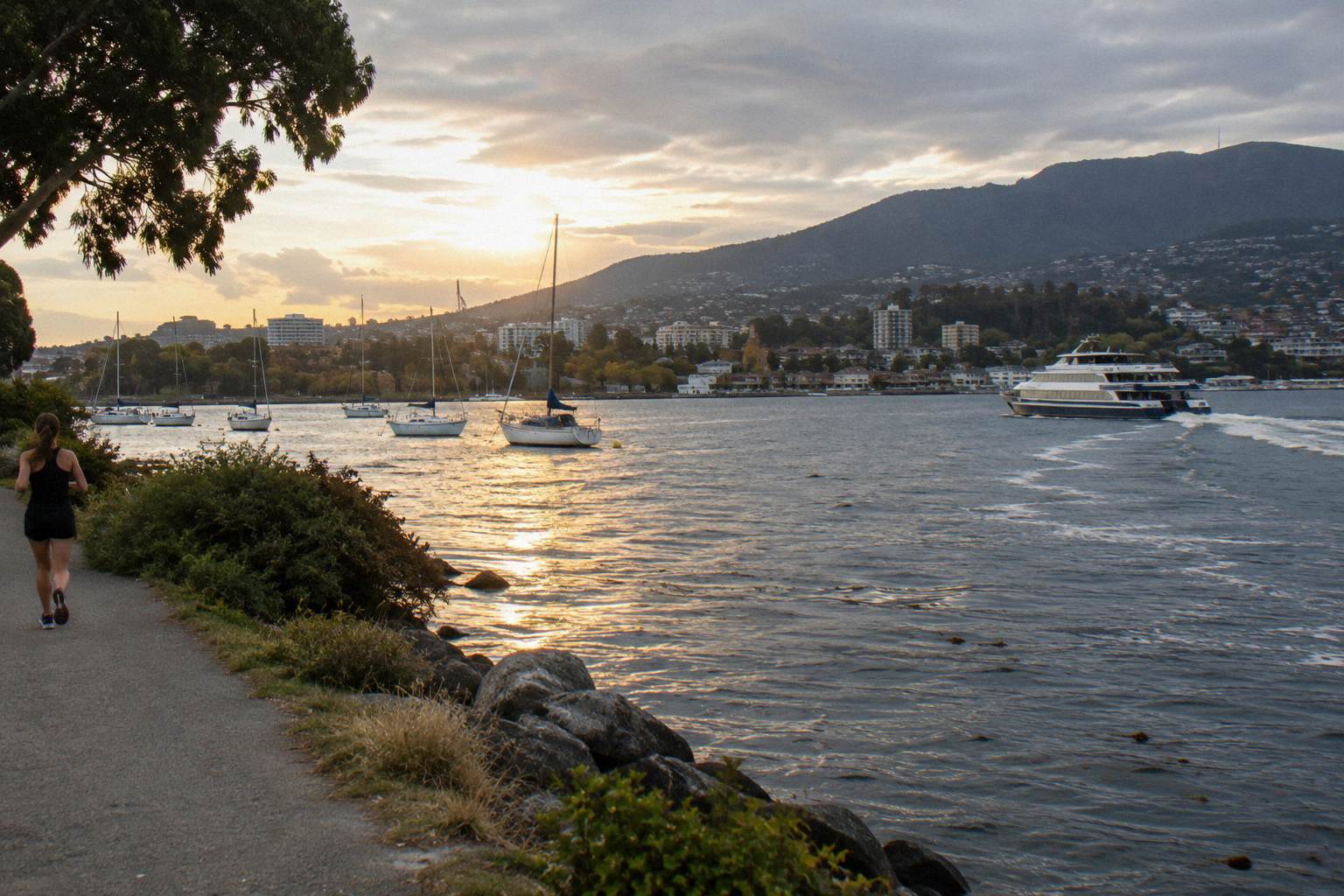
The catamaran is a genuinely different product rather than a cheaper copy. It is a large vessel with three outdoor decks and, per its booking page, two indoor levels with floor-to-ceiling windows, running a guided commentary along the Derwent. The duration is stated differently in different places, the operator's homepage says 90 minutes and a booking page says 1 hour 45 minutes, so the honest range is about 1.5 to 2 hours. Its booking page also states the catamaran is wheelchair friendly on the main deck, with children, prams and service animals welcome; that is a claim about this boat only, and it should not be extended to any other cruise in Hobart.
For boarding, the catamaran leaves from Brooke Street Pier, gate one, with boarding on the level 15 minutes before departure; start times are not stated, so check availability. Whether it gives you the same lighthouse experience as the Iron Pot cruise is another matter: a big catamaran on the river is a steadier, more sheltered trip, while the small Pennicott boats are built for the run out into Storm Bay and the story of the lighthouse itself. For more departure-point detail, what leaves from Brooke Street Pier covers the pier and everything sailing from it.
There is also a boundary worth drawing clearly: no whale-watching cruise, sunset cruise or New Year's Eve cruise is bookable among the tours this site covers, and none of the Iron Pot trips promise a whale, a sunset or fireworks. The roster's cruises run by day. If whales are the goal, the honest answer is in whether whales are seen from Hobart cruises, and the short version is that no product here is built around them.
Kids, Accessibility And Being Out On The Water
On the Iron Pot cruise, children of all ages are welcome with the child fare covering ages 1 to 16, every boat has an onboard toilet, and the operator says to dress children warmly because it gets cold out on the water. Wheelchair access is not claimed for these vessels; the operator publishes an accessibility guide and can be phoned directly on (03) 6234 4270.
That accessibility point deserves precision, because it is easy to get wrong. Pennicott publishes an Accessibility Guide for the Iron Pot cruises as a PDF, along with an ATIC Accessibility Report, but the Iron Pot boats are not in the operator's list of named wheelchair-accessible vessels, its Wineglass Bay and Cape Raoul boats are. So the correct position is: no wheelchair-access claim, a published accessibility guide, and a phone number for questions before booking. That is more information than most operators give, and it should be used.
For families, the Iron Pot product is among the friendlier options in Hobart precisely because nothing about it excludes children: the fare structure covers them to 16, the cabin is enclosed, and the duration, 2.5 hours, is short enough for most attention spans. The practical risks are cold and queasiness rather than age limits. The operator's seasickness guidance is that incidence is low with ginger tablets carried on board, and the standard advice applies: do not travel if unwell. Families weighing the whole question should read taking a Hobart cruise with kids, and anyone with mobility questions about other boats should see Hobart cruise wheelchair access, which notes that for the Historic, seafood, yacht and Peppermint Bay Lunch cruises the wheelchair and pram facts are not stated at all and the operator should be asked directly.
| Question | Iron Pot cruise | Guided catamaran |
|---|---|---|
| Children | All ages; child fare 1 to 16 | Booking page: children welcome |
| Wheelchair access | Not claimed; accessibility guide published, phone (03) 6234 4270 | Booking page: wheelchair friendly on main deck |
| Toilet | Onboard on every boat | Not stated |
| Seasickness guidance | Incidence low; ginger tablets on board | Not stated |
Booking, Cancellation And What To Know Before You Go
Bookings are essential for the Iron Pot cruise. Free cancellation applies up to 24 hours in advance; inside 48 hours Pennicott charges 50%, and inside 24 hours, 100%, while a booking made through a third-party retailer carries that retailer's own policy. The phone number for Pennicott is (03) 6234 4270.
Put plainly: the free-cancellation promise and the operator's own charge schedule are two sides of the same rule. Cancel more than 24 hours out and you pay nothing; cancel with 24 to 48 hours to go and half the fare is kept; cancel inside the final day and the full fare applies. Book direct through the operator's live listing rather than a third party if you want those terms to be the ones that govern your booking. How far ahead the cruise sells out is not stated, so the safe habit, especially in the December-to-April peak with its extra 10.00am departure, is to book as soon as your Hobart dates are firm. The wider question of timing is covered in how far ahead to book a Hobart cruise.
The other roster tours' booking pages say cancel up to 24 hours in advance for a full refund, with the Morning River Cruise's terms read on a sister listing, so a 24-hour threshold is a reasonable planning assumption across the board, while always checking the live listing you actually book through. What none of the pages state is a weather-cancellation or rain-check policy, so if a stormy forecast has you worried, the operator's phone line is the honest answer, and what to do when it rains on cruise day lays out the realistic options.
A quick clarification, because searches often arrive here with the wrong expectation: Hobart River Cruises covers the Derwent and harbour cruise products that depart from the Hobart waterfront, plus the operator pages for the Tasman Island and Bruny Island boats that leave from Port Arthur and Adventure Bay respectively. It does not cover cruise-ship schedules or the Sydney to Hobart yacht race, and no TasPorts shipping timetable is published by any operator covered here.
Alternatives If You Want A Different Day On The Water
If the Iron Pot cruise does not fit, the closest alternatives by kind are the guided catamaran on the river, the seafood lunch cruises, a three-hour sailing yacht tour from Kings Pier Marina, and, further afield, the Tasman Island and Bruny Island boats that depart from Port Arthur and Adventure Bay, not from Hobart by boat.
The seafood cruises are the clearest contrast. The Ultimate Seafood Cruise On A Spacious Catamaran, run by Wet Edge Enterprises from Elizabeth Street Pier, runs about 4.5 hours crewed, as its booking page says, by commercial fishermen and women who own and operate the cruise, serving a degustation of abalone, rock lobster, oysters, mussels, sea urchin, periwinkles and Tasmanian Atlantic salmon, with Tasmanian drinks, a fruit and cheese platter and freshly made cake. The Historic Lunch Cruise from Murray Street Pier is the short version, about 1.5 hours with a one-course onboard lunch of steak, fish, chicken or vegetarian, live captain commentary and a route south to Battery Point and Sandy Bay. Both are covered in the guide to Hobart lunch cruise options, and for the evening question, no dinner cruise is bookable among the tours covered here, which the dinner cruise guide states plainly.
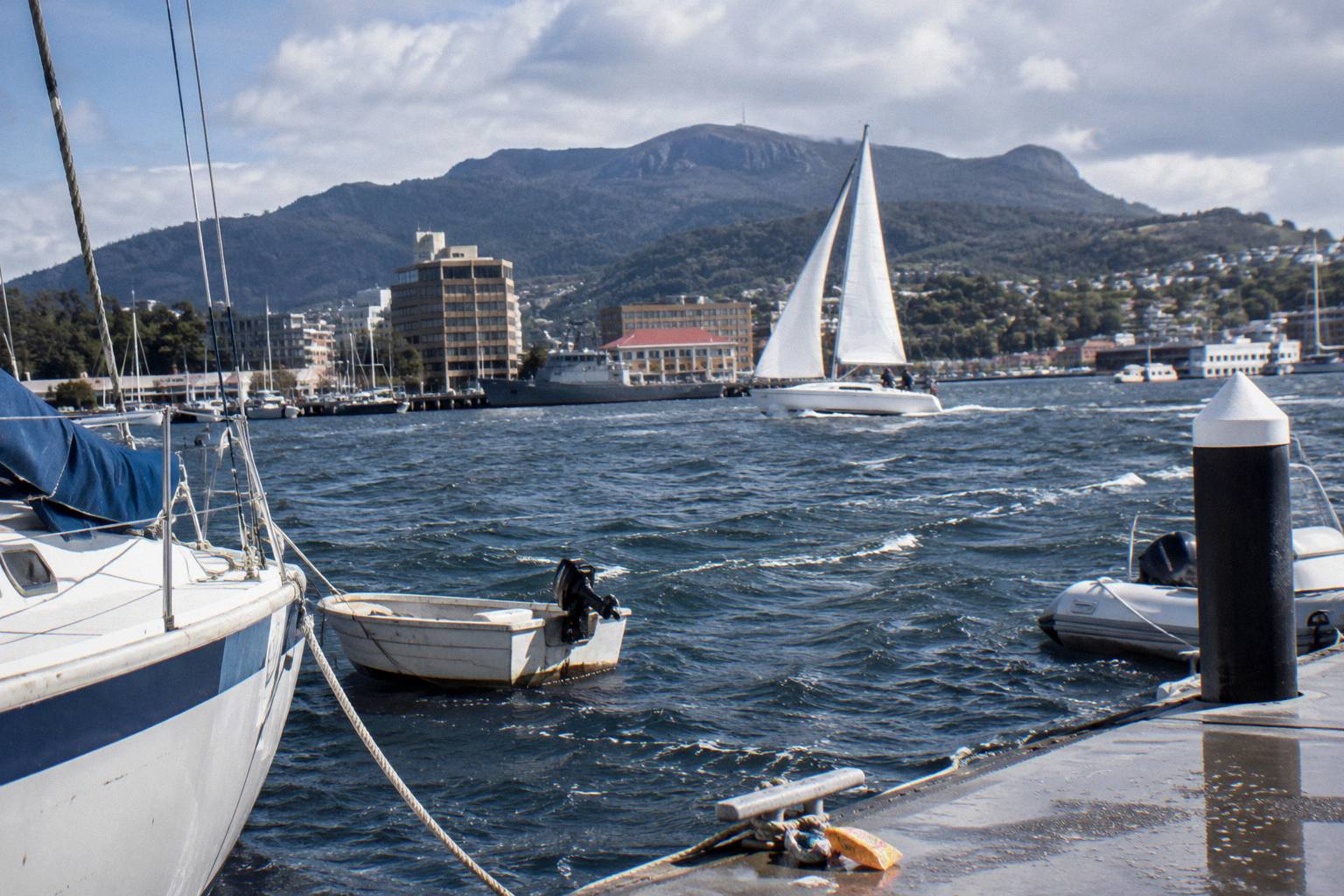
The Luxury Yacht Scenic Sailing Tour With Snacks, about 3 hours from Kings Pier Marina in a morning or afternoon slot, is the pick for anyone who wants wind in the sails rather than an engine, with snacks and non-alcoholic drinks included; its price is not stated. For islands rather than rivers, be careful with geography: Pennicott's Tasman Island cruises depart Port Arthur, about 90 minutes' drive from Hobart, at adult A$190, child A$115, family A$590, and its Full Day Tour from Hobart is a 7.30am bus from Franklin Wharf, 10 and a quarter hours, adult A$290, child A$215, so Hobart is the coach pick-up, not the departure port. Bruny Island cruises leave from Adventure Bay on Bruny Island itself. The full picture, including whether the day trip justifies the drive, is in the Tasman Island cruises guide and cruising or taking the ferry to Bruny.
| Cruise | Duration | Departs from | What it is built around |
|---|---|---|---|
| 2.5-Hour Iron Pot Lighthouse Cruise | About 2.5 hours | Franklin Wharf | The lighthouse and Storm Bay |
| River Derwent Guided Cruise On A Catamaran | About 1.5 to 2 hours | Brooke Street Pier | River sightseeing on a big catamaran |
| Full-Day Gourmet Seafood Cruise | About 7.5 hours | Constitution Dock | Seafood and a full day out |
| Ultimate Seafood Cruise | About 4.5 hours | Elizabeth Street Pier | A seafood degustation |
| Luxury Yacht Scenic Sailing Tour | About 3 hours | Kings Pier Marina | Sailing rather than motoring |
The Iron Pot remains the distinguishing sight among all of these. Every cruise above is a good day on the Derwent or its approaches; only the lighthouse cruises deliver the 1832 tower and the open water of Storm Bay, and that difference is what the 2.5-hour product is priced and built around.
If you are still weighing whether a boat trip earns its place in a short Hobart stay, is a Hobart cruise worth it works through the value question honestly, and comparing Hobart's boat tours puts the whole roster side by side.
Common Questions About The Iron Pot Lighthouse Cruise
How Old Is The Iron Pot Lighthouse?
It was built in 1832 with convict labour, making it the oldest lighthouse in Tasmania. The tower is 11 metres tall with sandstone walls 1.5 metres thick, and it has been solar powered since 1977.
How Much Does The Iron Pot Cruise Cost?
The operator's own price is A$150 per adult and A$130 per child aged 1 to 16. The booking page offers free cancellation up to 24 hours in advance; within 48 hours Pennicott charges 50%, and within 24 hours, 100%.
What Time Does The Iron Pot Cruise Depart?
At 2.00pm daily all year, with an additional 10.00am departure from December to April. It operates every day except Christmas Day, lasts about 2.5 hours, and bookings are essential.
Where Does The Iron Pot Cruise Leave From?
The Dock Head Building on Franklin Wharf, next to the Constitution Dock lifting bridge. There is no parking at the booking centre; the nearby options are the Argyle Street Car Park and the Market Place Car Park.
Can You Land On Iron Pot Island?
Not stated. The cruise is built as a pass-by trip, and whether any landing is possible or how close the boat comes to the lighthouse is not published. Treat the lighthouse as a sight seen from the deck.
Is The Iron Pot Cruise Suitable For Children?
Children of all ages are welcome, with the child fare covering ages 1 to 16. The operator advises dressing children warmly because it gets cold out on the water, and every boat has an onboard toilet.