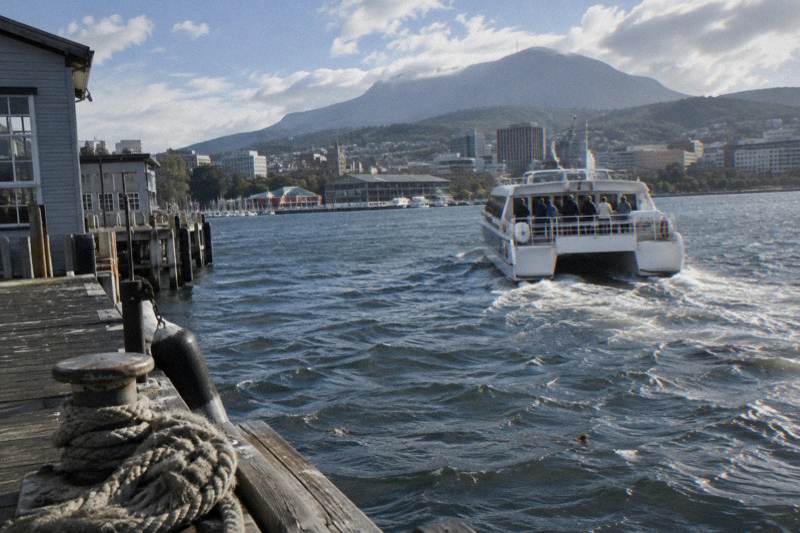
Mona Ferry Timetable: Departures, Return Sailings And Planning Your Day
The MONA ferry's timetable is loaded dynamically on the museum's own page rather than published as a fixed schedule, so this guide sets out what is stated, the fare structure, and how to plan a day around two roughly 30-minute crossings.
Short answer
The MONA ferry departs Brooke Street Pier, 12 Franklin Wharf, and each crossing takes about 30 minutes. Fares start from A$32, a return ticket costs the same as one way, and museum entry is a separate ticket. The museum notes a different timetable applies from 3 December, so check the operator's live page for departure times before you commit to a schedule.
Brooke Street Pier is the busiest single departure point on Hobart's waterfront, and one of the boats that leaves from it is not a cruise at all. The MONA ferry is a museum ferry, run by the museum itself to carry visitors across the Derwent, and it is not one of the sightseeing cruises this site covers. That distinction matters for planning, because the ferry runs to serve the museum rather than to show you the river.
The timetable itself is the one thing nobody can print for you here. The museum loads its departure times dynamically on its own page, and the operator notes that a different timetable applies from 3 December, which means any schedule copied today could be wrong within weeks. What is stated is fixed and useful: where it leaves, how long it takes, what it costs, and what the ticket covers. This guide sets all of that out, then does the part a timetable cannot, which is helping you plan a whole day around two crossings.
Where The Mona Ferry Leaves From And How Long Each Sailing Takes
The MONA ferry departs from Brooke Street Pier, at 12 Franklin Wharf on Sullivans Cove, and each crossing takes about 30 minutes. No departure time is published in a fixed schedule, because the museum loads its timetable dynamically and notes a different timetable applies from 3 December, so treat the operator's own live page as the only source of times.
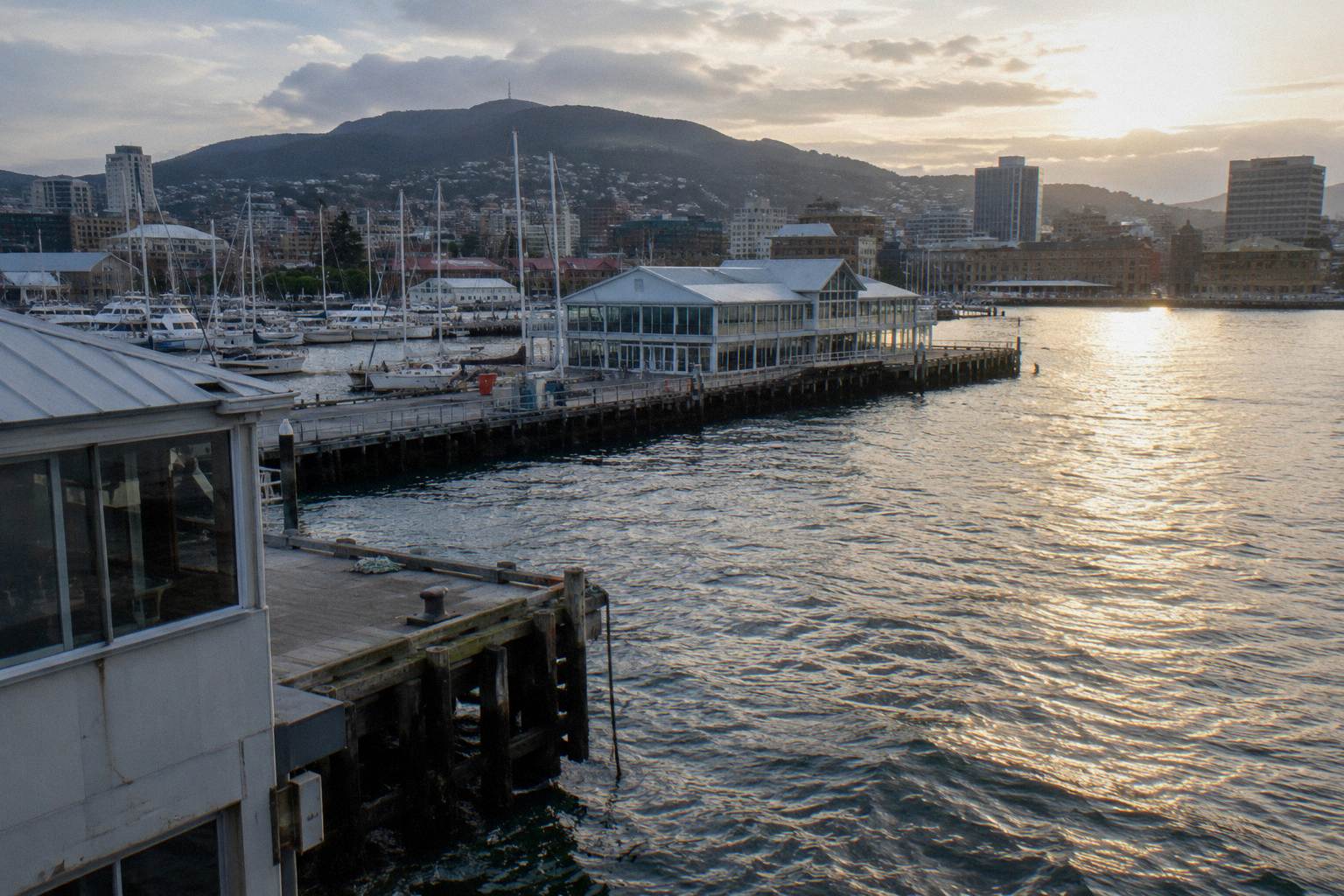
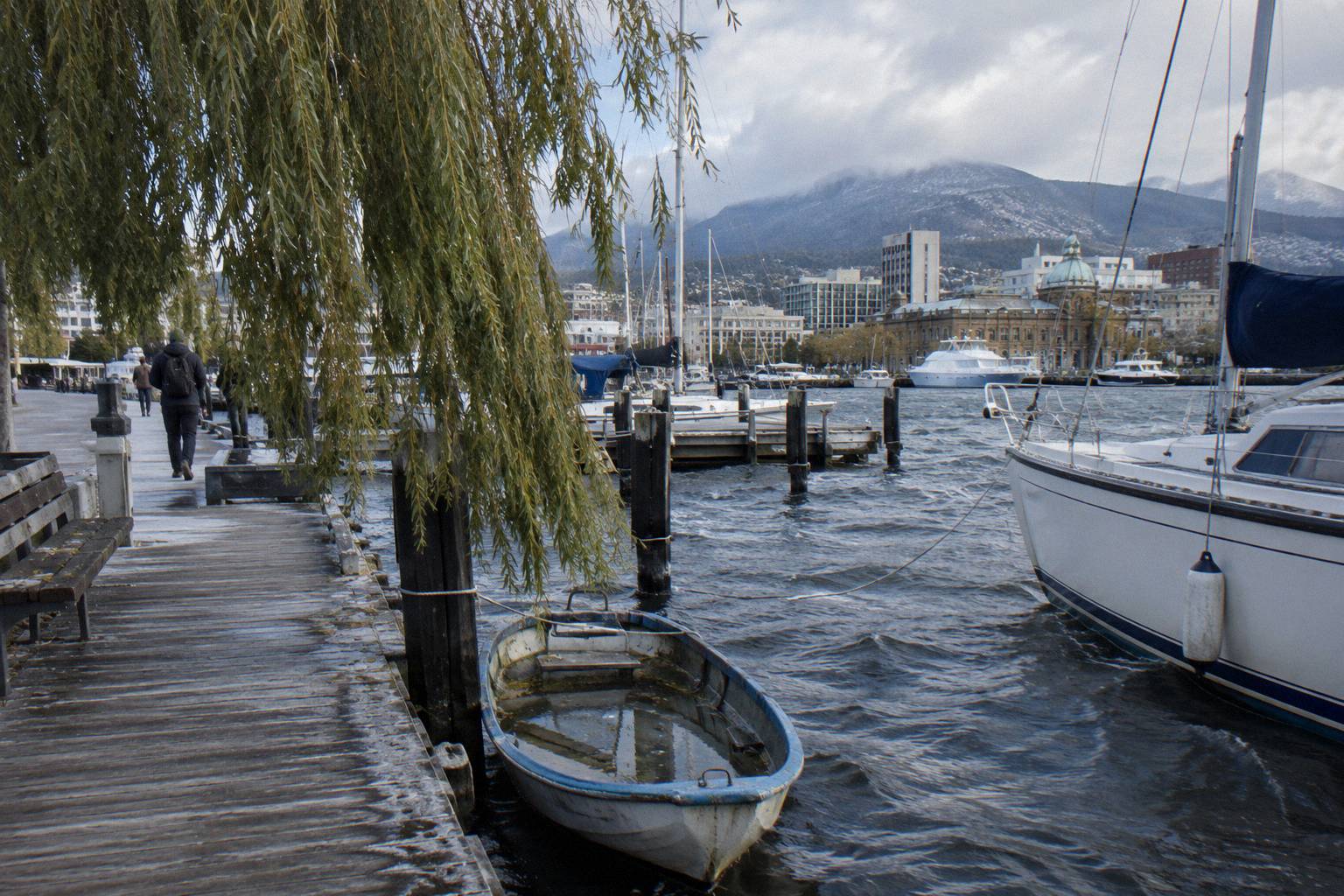
Brooke Street Pier sits at the northern end of the Sullivans Cove waterfront, and the ferry is one of several products using it. The same pier is the departure point for the River Derwent Guided Cruise On A Catamaran, with boarding at level one, gate one, 15 minutes before departure, and for the Peppermint Bay Lunch Cruise. Drop-off for arriving passengers is in front of the pier. If you are staying anywhere in the Hobart CBD, the pier is walkable from most of it, though no walking time between piers or attractions is stated anywhere in the operator material.
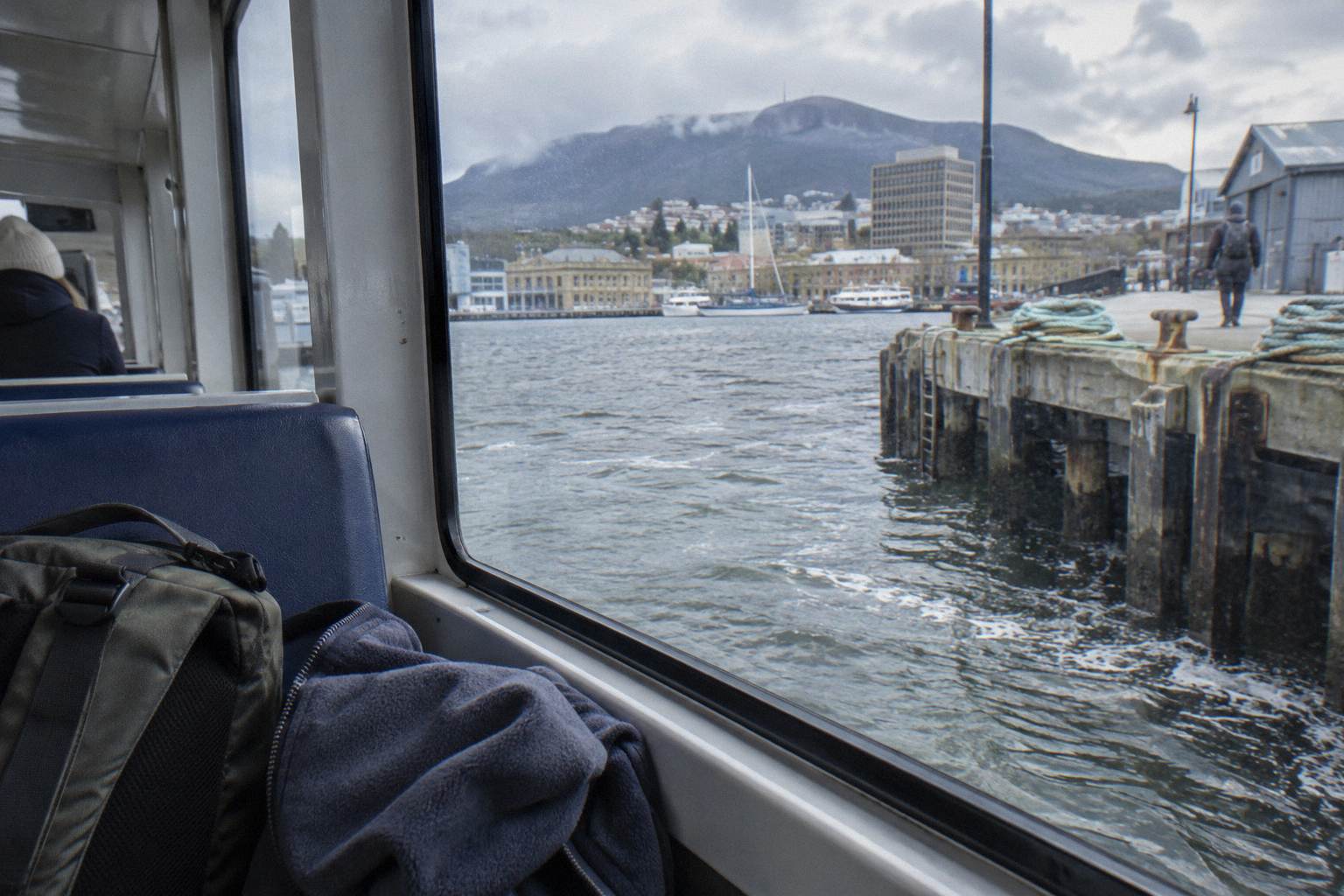
The 30-minute crossing time is each way, so a visit involves roughly an hour on the water across the day. That is fast enough that the ferry works as ordinary transport rather than as an excursion, and it is short enough that seasickness is rarely the deciding factor it can be on longer trips. Readers weighing that question more broadly may find the guide on how rough Hobart cruises can get useful, since the same body of water is involved.
Two practical points follow from the dynamic timetable. First, do not build an itinerary around a departure time you found in a forum post or a blog from another season, because the operator has already flagged that the schedule shifts. Second, when you check the live page, look at the return sailings as carefully as the outbound ones. A day planned around the last ferry back is a day with a hard edge to it, and the museum does not state how long a visit takes, so the return time you choose is a guess you should make generously.
| What is stated | The detail |
|---|---|
| Departure point | Brooke Street Pier, 12 Franklin Wharf, Sullivans Cove |
| Crossing time | About 30 minutes each way |
| Timetable | Loaded dynamically on the museum's page; a different timetable applies from 3 December |
| Fares | From A$32 |
| Return vs one way | A return ticket costs the same as a one-way fare |
| Concessions | None |
| Children under 4 | Free, but need a ticket |
| Transaction fee | A$3.50 on most advance bookings |
| Museum entry | A separate ticket even with a ferry ticket |
Planning A Day Around Two Crossings
Plan the ferry as a bracket around your museum time, not as the event itself: budget about 30 minutes out, your visit, and about 30 minutes back, and pick a return sailing with slack in it. Because the museum states no visit length and no opening hours in the material here, the safest structure is a late-morning outbound ferry and a return sailing you could miss without stranding yourself.
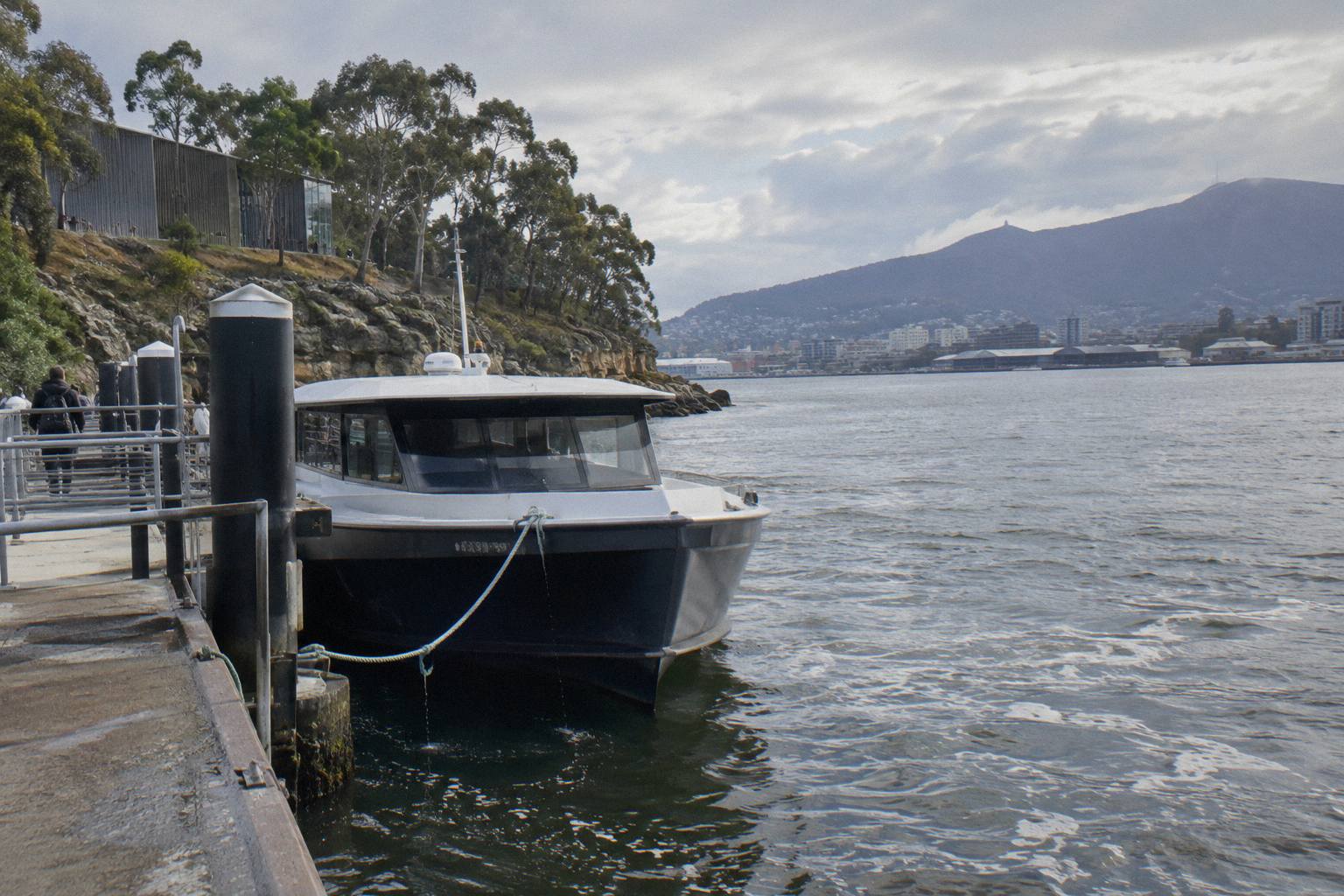
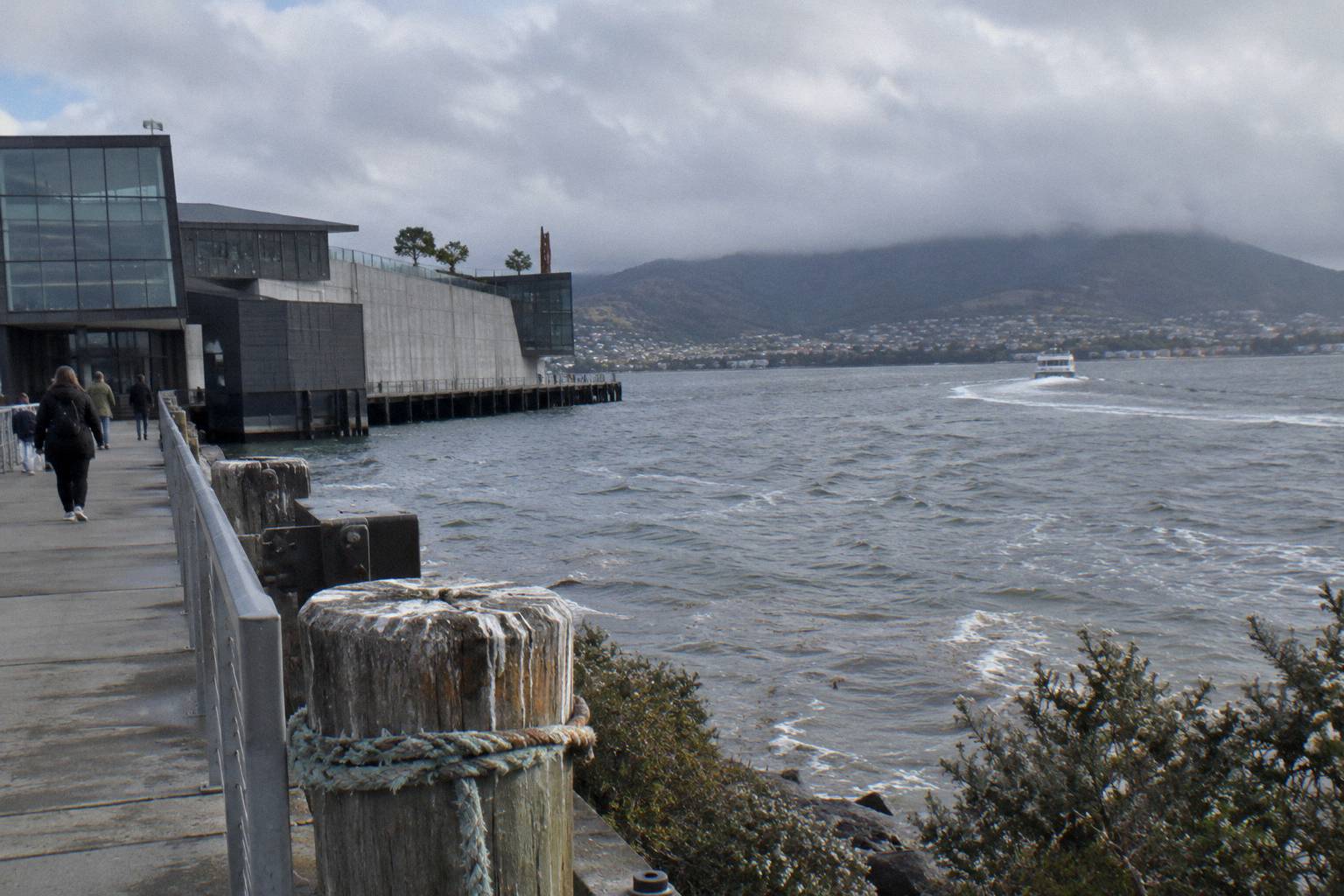
The trap in a two-crossing day is the return leg. Outbound, you control the timing; coming home, you are choosing in advance how long you will want at the museum, and the honest answer is that nobody can tell you. The museum does not publish a suggested visit duration in the material verified here, so a practical approach is to plan the return for later than you expect to need and treat an earlier sailing as a bonus if space allows. The ferry departs from the museum's own jetty on the return, and the museum's page is where any same-day change would be resolved.
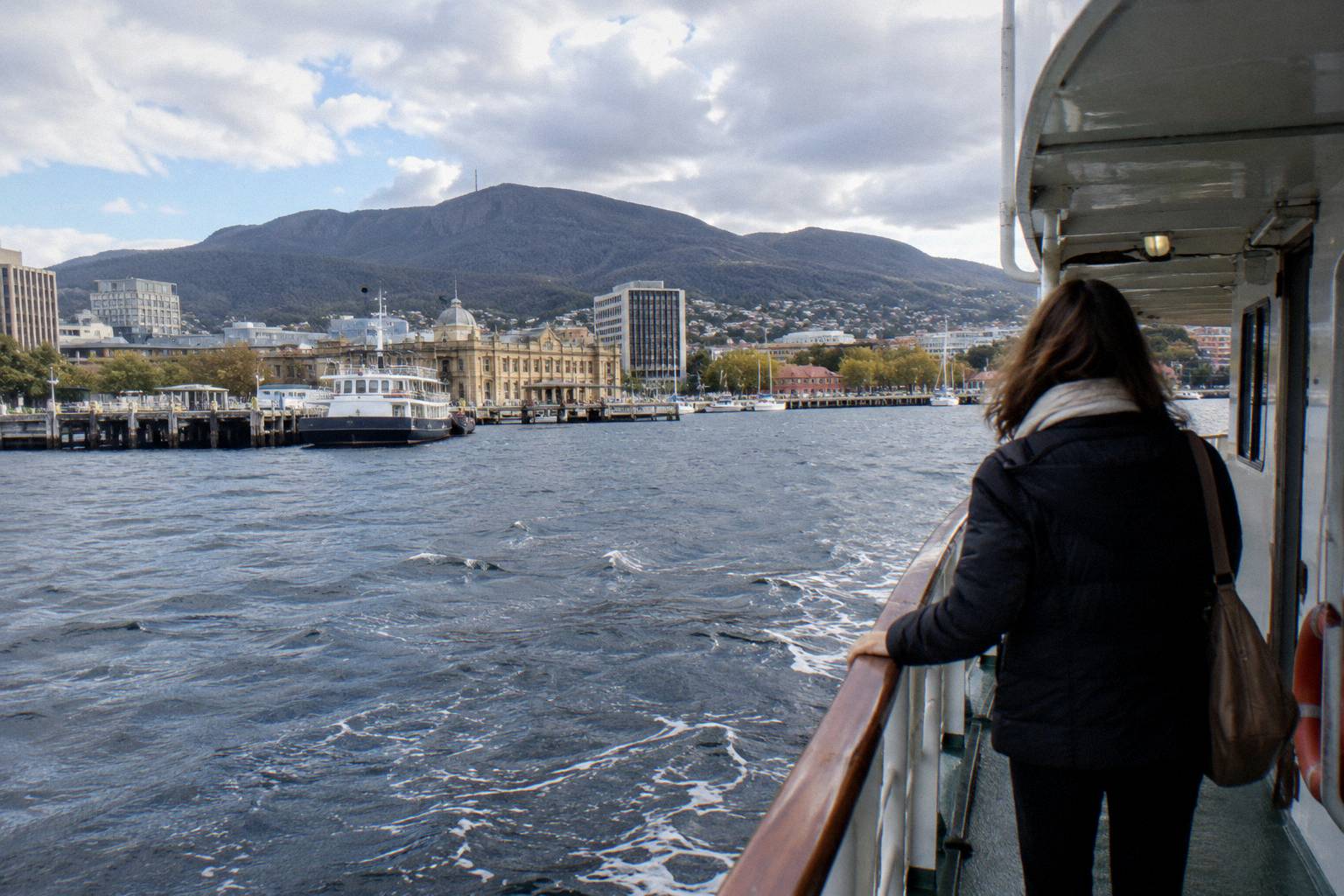
The other half of the bracket is the city side. Brooke Street Pier sits among the piers that carry most of Hobart's water traffic, and the Salamanca end of the cove is close by for the hours before or after your sailing. If you want more time on the Derwent than the ferry's two short hops give you, the sightseeing side of the waterfront offers real alternatives: the Morning River Cruise runs about an hour from Murray Street Pier, the River Derwent Guided Cruise On A Catamaran runs about 1.5 to 2 hours from Brooke Street Pier itself, and the 2.5-Hour Iron Pot Lighthouse Cruise runs down the river to Storm Bay from Franklin Wharf. Here are those three side by side.
A ferry day and a cruise day are different animals, and mixing them needs a calendar rather than ambition. The ferry's crossings are short enough to slot around almost anything, but a 2.5-hour lighthouse cruise or a 4.5-hour seafood cruise eats the middle of a day, so the workable combinations are a morning cruise followed by an afternoon ferry, or the ferry first with a cruise to finish. Readers closer to booking may want the site's rundown of how far ahead to book a Hobart cruise, since the same logic of committing to a time applies to both kinds of boat.
Weather belongs in the plan too, though only as a land-station fact. The Bureau of Meteorology's Hobart station, Ellerslie Road, records from 1882, and its averages are the only weather figures this site uses: mean maximums of 21.8 degrees in January and 11.9 in July, and mean rainfall spread fairly evenly across the year, from 38.6mm in February to 61.8mm in October. Averages from a city station say nothing about conditions on the water on any given day, and the material here states nothing about whether the ferry or any cruise is cancelled for wind or rain, so the live forecast and the operator are your guides on the day.
Tickets, Fares And What The Price Covers
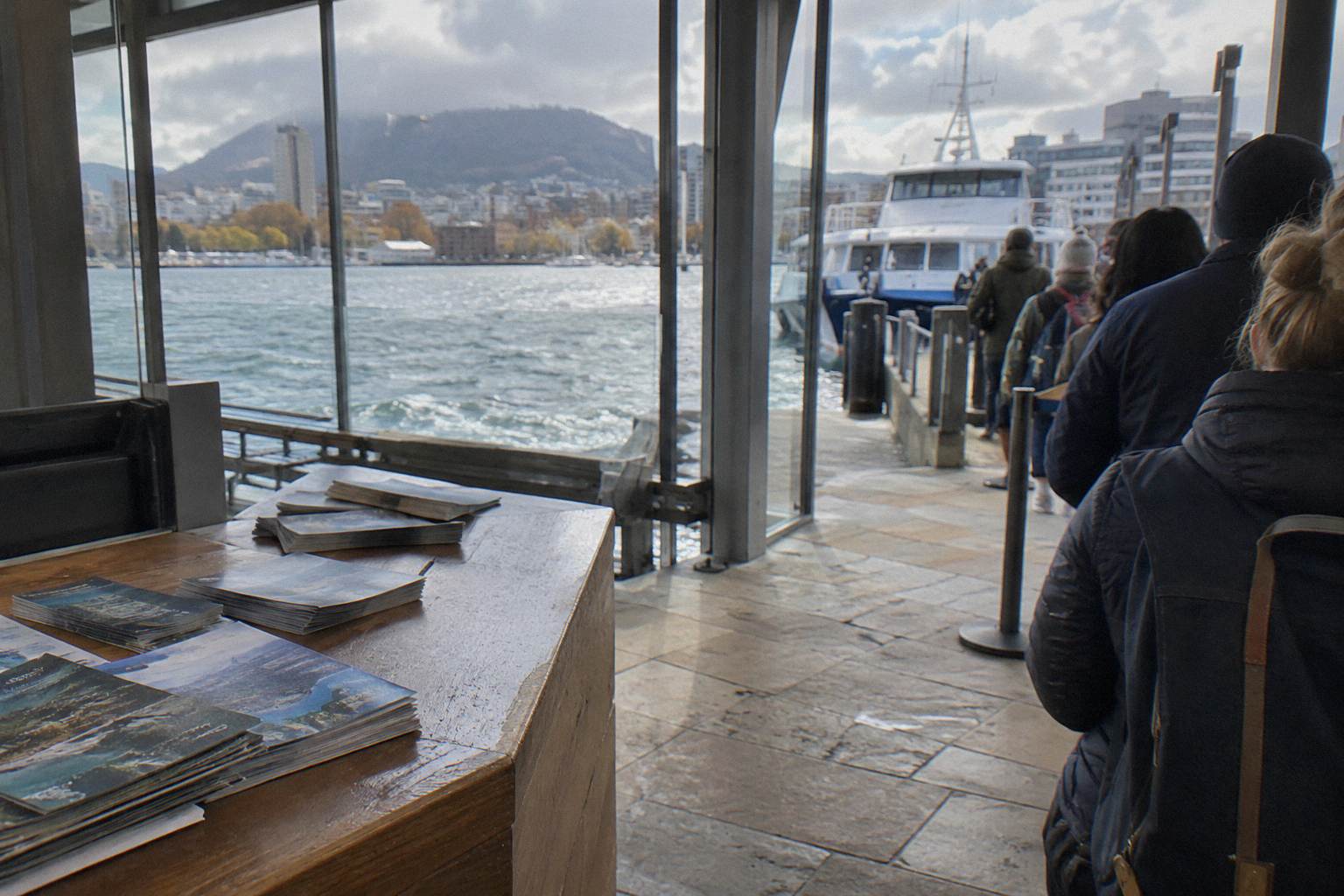
A one-way ferry fare starts from A$32, a return costs the same as one way, and children under 4 travel free but still need a ticket. Most advance bookings carry a A$3.50 transaction fee, no concessions apply, and, the detail people miss, museum entry is a separate ticket even with a ferry ticket in hand.
The fare structure is unusually flat, which makes budgeting simple. One way and return cost the same, so there is no saving in committing to a return, and no penalty for deciding your homeward leg later if ticketing allows it. The A$3.50 transaction fee applies to most advance bookings, so a family of four should expect it to appear on the total. With no concessions, the child story is limited to the under-4 rule: free, but ticketed, which means even a lap infant needs to be counted when you book.
The separate-entry point deserves its own sentence. The ferry buys you the crossing, not the museum, and arriving at the jetty with only a ferry ticket means sorting entry on arrival. The Posh Pit is the other paid extra worth knowing about: a private lounge, bar and deck on the ferry with complimentary drinks and small food. Its price is not stated in the verified material, so check the museum's page if that appeals.
For readers whose real interest is a relaxed morning on the river rather than a museum run, the Morning River Cruise from Murray Street Pier covers similar water at a gentler pace, about an hour with refreshments available to buy on board. Its price is not stated; check the booking page. The two products share the Derwent but not much else: the ferry is transport with a destination, the cruise is the destination itself.
One scope note, stated once and plainly: this site's bookable cruises are sightseeing and lunch cruises on the Derwent and the harbour. The ferry is covered here because it is the boat most visitors ask about, and its facts, fares and quirks are the museum's own, published on the operator's page at mona.net.au, which is also where the live timetable lives.
Which Months Suit A Mona Ferry Day
Hobart's land-station averages say summer days reach about 21.8 degrees and winter days about 12, with rainfall fairly even year-round, so no month is ruled out on climate alone. The timetable change from 3 December matters more than the weather: a different schedule applies either side of that date, so any timing you researched before it may not hold after.
The Bureau of Meteorology's long Hobart record is the only weather basis this site prints, and it is worth reading as averages rather than forecasts. Mean maximums run 21.8 in January, 20.3 in March, 17.5 in April, 14.6 in May, 12.1 in June, 11.9 in July, then climbing again through 15.2 in September and 18.8 in November. Mean minimums sit at 12.1 in the warmest months and 4.7 in July. Rain tells a flatter story: between 38.6mm and 61.8mm per month across the year, with October the wettest on average and February the driest, and rain days of 1mm or more ranging from 4.9 in February to 9.4 in October.
None of that describes the river. These are city-station figures, and the material verified here states nothing about sea state, wind or swell, and nothing about weather-related cancellations for the ferry or any cruise. What the averages do support is wardrobe planning, and the operator advice that recurs across Hobart boats, dress children warmly as it does get cold out on the water, applies as well to a 30-minute ferry deck as to anything longer. The site's guide on what to wear on a Hobart cruise works for the ferry too.
| Month | Mean maximum (C) | Mean minimum (C) | Mean rain (mm) |
|---|---|---|---|
| January | 21.8 | 12.1 | 46.3 |
| February | 21.8 | 12.1 | 38.6 |
| March | 20.3 | 11.0 | 44.1 |
| April | 17.5 | 9.0 | 49.1 |
| May | 14.6 | 7.0 | 47.6 |
| June | 12.1 | 5.2 | 53.6 |
| July | 11.9 | 4.7 | 51.9 |
| August | 13.2 | 5.3 | 53.8 |
| September | 15.2 | 6.5 | 52.8 |
| October | 17.1 | 7.9 | 61.8 |
| November | 18.8 | 9.4 | 54.0 |
| December | 20.4 | 10.9 | 56.6 |
What Else Departs Brooke Street Pier
Brooke Street Pier hosts three water products: the MONA ferry, the River Derwent Guided Cruise On A Catamaran, and the Peppermint Bay Lunch Cruise, with drop-off in front of the pier. That concentration makes it the natural pivot of a Hobart waterfront day, since two of the three run longer than the ferry and one can fill a whole afternoon.
Knowing the pier's lineup saves you from zigzagging along the waterfront. The catamaran cruise boards at level one, gate one, 15 minutes before departure, and runs about 1.5 to 2 hours, with the operator's homepage saying 90 minutes and a booking page saying 1 hour 45 minutes, which is why this site prints the range rather than either figure. Its booking page lists the Shot Tower, Alum Cliffs and Iron Pot Lighthouse on the route, and says the catamaran has three outdoor decks and two indoor levels with floor-to-ceiling windows. The Peppermint Bay Lunch Cruise, about 5.5 hours, is the pier's long commitment, cruising down the Derwent and the channel to Woodbridge for lunch at the Peppermint Bay restaurant.
| Product at Brooke Street Pier | Duration | Type |
|---|---|---|
| MONA ferry | About 30 minutes each way | Museum ferry, not a sightseeing cruise |
| River Derwent Guided Cruise On A Catamaran | About 1.5 to 2 hours | Guided sightseeing cruise |
| Peppermint Bay Lunch Cruise | About 5.5 hours | Cruise and restaurant lunch at Woodbridge |
The other piers are a short stretch away and worth naming so you do not turn up at the wrong one. Pennicott's booking centre is the Dock Head Building on Franklin Wharf, next to the Constitution Dock lifting bridge, and its Iron Pot cruise departs from there at 2.00pm daily all year, plus 10.00am from December to April. Murray Street Pier, 28 Morrison Street, is where Hobart Historic Cruises runs its Morning River Cruise and Historic Lunch Cruise. The Full-Day Gourmet Seafood Cruise starts at Constitution Dock, the Ultimate Seafood Cruise meets at Elizabeth Street Pier, and the yacht sailing tour at Kings Pier Marina, 2 Franklin Wharf. There is no parking at Pennicott's booking centre, with the Argyle Street and Market Place car parks nearby, and MONA's own parking guide lists multi-storey options at Argyle Street, Centrepoint, Market Place and Dunn Place.
For a full orientation to the pier and everything around it, the site's Brooke Street Pier departure guide covers the detail. The broader comparison of every Hobart boat tour side by side handles the question of which cruise suits which day.
Accessibility, Kids And Dietary Needs On The Ferry
The MONA ferry's lower deck is accessible for mobility aids and prams, with a bar and an accessible toilet, while arrival at MONA involves 99 steps, with an accessible entrance via a tunnel if you tell onboard staff. Children under 4 travel free but need a ticket, and the ferry cannot cater for coeliac or severe allergies, wanting 24 hours notice for any dietary need.
The 99 steps are the number that surprises people. The ferry delivers you low on the museum's hillside, and the standard arrival is a climb; the alternative is a tunnel entrance with accessible access, which staff need to know about in advance, so mention it when you board rather than when you dock. On board, the lower deck is the accessible one, which also means the enclosed one, a fair trade on a cold crossing.
Dietary limits are firm. The ferry cannot cater for coeliac or severe allergies, and the Posh Pit's food offering inherits that limit; 24 hours notice is wanted for any dietary need. The museum's own page carries the detail. For the sightseeing side of the waterfront, the accessibility picture varies by boat: the catamaran's booking page says the main deck is wheelchair friendly, with children, prams and service animals welcome, while for the Historic, seafood, yacht and Peppermint Bay lunch cruises wheelchair and pram facts are not stated; ask the operator. The site's longer piece on wheelchair access for Hobart cruises sets that out in full.
Families managing small children have a simpler calculation here. Under-4s ride free on the ferry, the crossing is short, and the lower deck has an accessible toilet. On the cruise side, the 2.5-Hour Iron Pot Lighthouse Cruise welcomes children of all ages with a child fare covering ages 1 to 16, carries Travel Calm Ginger tablets on board, and the operator's blunt advice is to dress children warmly, as it does get cold out on the water. The site's guide to taking a Hobart cruise with kids is the deeper answer if a longer boat is on the table.
If The Ferry Does Not Fit Your Day: Derwent Cruises
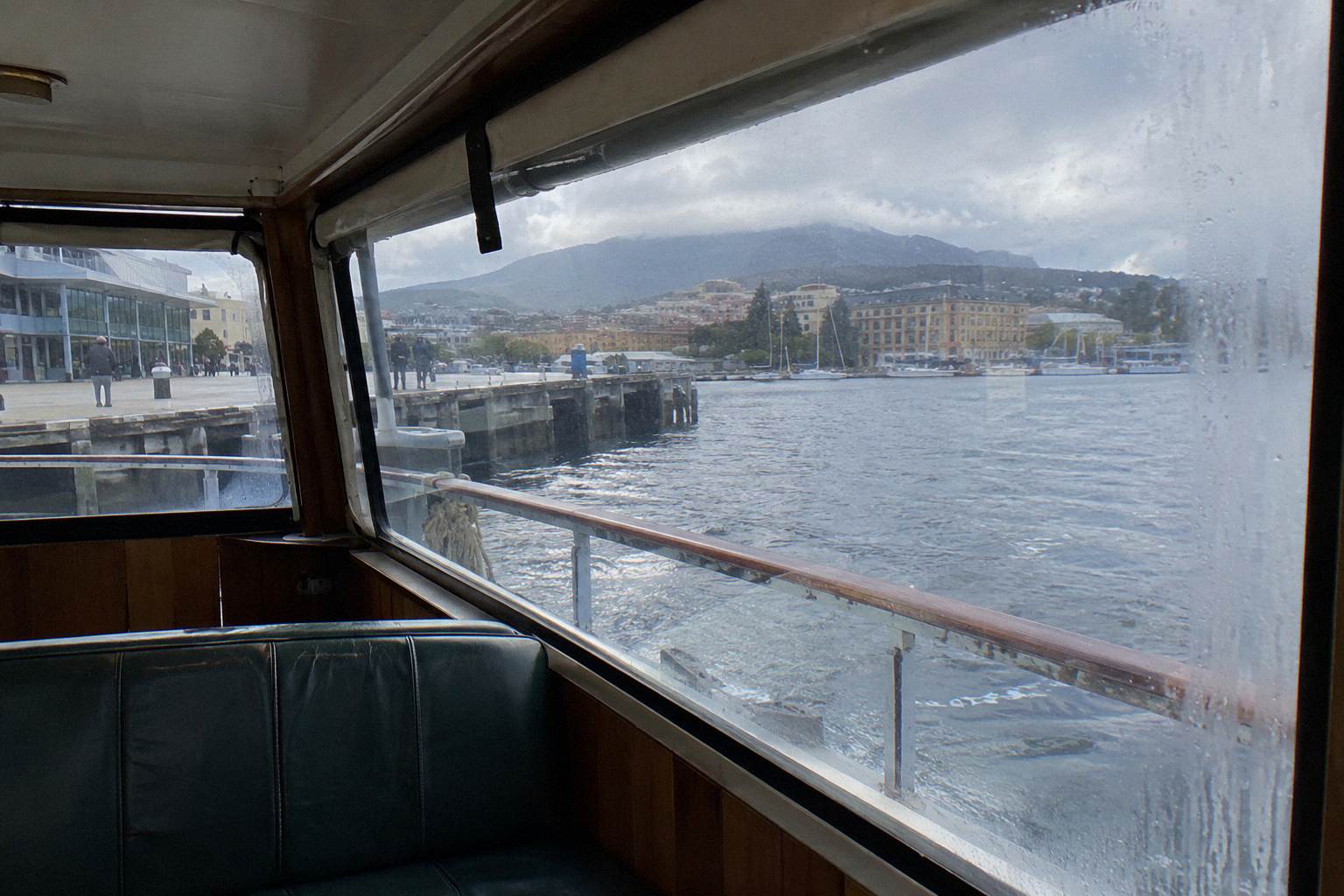
If the ferry's schedule or the museum's separate entry does not suit, the Derwent cruises give you the same water without a timetable bracket: a one-hour morning cruise, a 1.5 to 2 hour catamaran cruise, a 3 hour sailing tour, or the 2.5 hour run down to Iron Pot Lighthouse, Tasmania's oldest lighthouse, built by convicts in 1832.
Each fills a different shaped gap. The Morning River Cruise, about an hour from Murray Street Pier, is the smallest commitment on the waterfront and works as a first morning in the city. The catamaran cruise covers the middle river with commentary and enclosed comfort. The Luxury Yacht Scenic Sailing Tour With Snacks, about 3 hours from Kings Pier Marina in a morning or afternoon slot, is a sailing yacht rather than a motor cruise, with snacks and non-alcoholic drinks included. The Iron Pot cruise, Pennicott's, runs on brand new vessels in a small group with an enclosed cabin, leather seats and an onboard toilet, and carries a 4.9 rating across 248 reviews.
Cancellation terms are consistent enough across the roster to plan against. The booking pages for the roster's tours say cancel up to 24 hours in advance for a full refund, and Pennicott's Iron Pot booking page offers free cancellation up to 24 hours ahead, though Pennicott's broader terms apply a 100% charge within 24 hours of departure and 50% within 48, and a booking made through a third-party retailer carries that retailer's policy instead. None of that is stated for the ferry beyond what the museum publishes, so check its page. Hobart River Cruises covers the sightseeing side of this waterfront, and the operator pages behind each product are where the live detail lives, including Peppermint Bay's own site at peppermintbay.com.au.
One gap to state plainly, because search results imply otherwise: there is no bookable dinner cruise, sunset cruise or whale-watching cruise among the tours covered here, and no standalone MONA sightseeing cruise apart from the museum's own ferry. The bookable products run by day, and the seafood and lunch cruises are the closest things to an event on the water. If the day you want is Tasman Island or Bruny Island, those boats leave from Port Arthur and Adventure Bay respectively, not from Hobart by water, a distinction the site's Tasman Island cruise guide explains.
Common Questions About The Mona Ferry Timetable
Where Does The MONA Ferry Depart From?
Brooke Street Pier, 12 Franklin Wharf, on Sullivans Cove. Drop-off for arriving passengers is in front of the pier.
How Long Does The MONA Ferry Take Each Way?
About 30 minutes each way, so a round trip puts you on the water for roughly an hour across the day.
Is The MONA Ferry Timetable Published Anywhere Fixed?
No. The museum loads departure times dynamically on its own page and notes that a different timetable applies from 3 December, so check the live page rather than any copied schedule.
How Much Does The MONA Ferry Cost?
Fares start from A$32, a return ticket costs the same as one way, there are no concessions, children under 4 travel free but need a ticket, and a A$3.50 transaction fee applies to most advance bookings.
Does The Ferry Ticket Include Museum Entry?
No. Museum entry is a separate ticket even with a ferry ticket.
Can I Take A Wheelchair Or Pram On The Ferry?
The lower deck is accessible for mobility aids and prams, with a bar and an accessible toilet. There are 99 steps on arrival at MONA, with an accessible entrance via a tunnel; tell onboard staff.